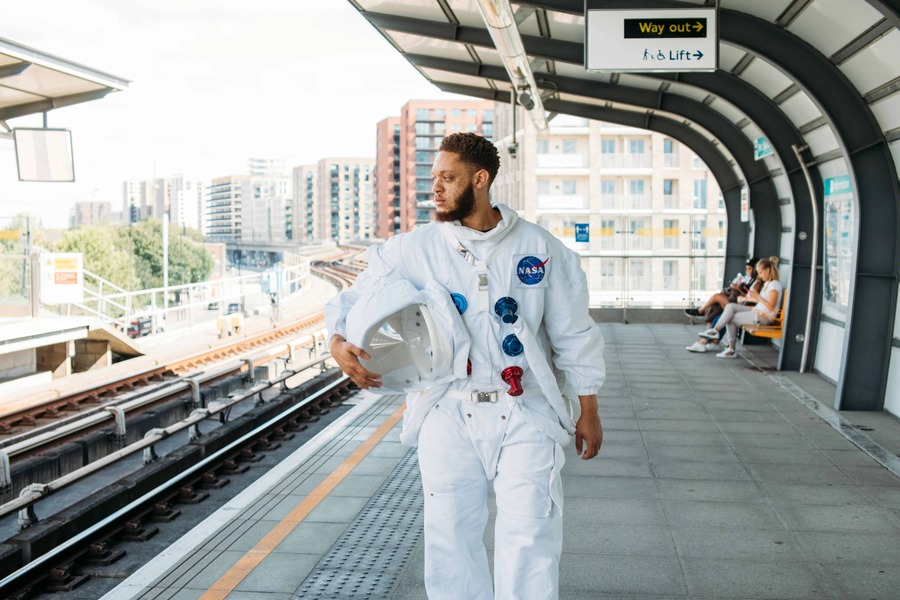

Sci-fi outfits used to be confined to movies and games, with metallic fabrics and sharp silhouettes that felt more fantasy than fashion. Today, they increasingly influence everyday style, driven by pop culture and AI fashion design tools. AI lets designers experiment with futuristic concepts, turning bold sci-fi ideas into wearable fashion and reshaping how we imagine the future of style.
What is Sci-Fi Outfit?
A sci-fi outfit is a fashion style inspired by science fiction, where imagination, technology, and futuristic aesthetics come together. Instead of referencing the past, it looks ahead—drawing ideas from space exploration, artificial intelligence, and digital worlds. This is why many sci fi costumes and science fiction costume ideas feel bold, experimental, and visually striking.
Today, sci-fi fashion goes beyond costumes. Elements once seen only in science fiction costumes female collections or on movie sets are now adapted into wearable designs. From sculptural jackets to futuristic science fiction dresses, modern sci-fi outfits balance concept and practicality, turning fantasy into fashion.
Key features of a Sci-Fi Outfit
Sci-fi outfits are defined by a fusion of innovative materials like metallic and smart fabrics, sleek or angular silhouettes, and bold monochromatic or neon color palettes that convey a high-tech, futuristic aesthetic.
- Futuristic Silhouettes: Structure shapes, sharp lines, asymmetry, and exaggerated proportions
- Tech-Inspired Materials: Metallic fabrics, PVC, leather, reflective or high-shine finishes
- Bold Color Palettes: Silver, black, white, chrome tones, and occasional neon accents
- Functional Details: Zippers, harnesses, modular pieces, and utility-style elements
- Digital or AI aesthetics: Clean, almost unreal visuals inspired by virtual humans and technology
Designing Sci-Fi Outfits with AI Fashion Design Tools
Designing sci-fi outfits often involves imagining silhouettes, materials, and aesthetics that don’t yet exist. Traditional design tools can make it difficult to visualize these futuristic ideas, especially in the early concept stage. This is where AI fashion design tools offer a faster and more flexible way to explore sci-fi outfit concepts.
Fashion Diffusion, in particular, is built with fashion logic in mind. Rather than generating random visuals, it understands garments, proportions, and styling, allowing designers to translate science fiction ideas into wearable designs more efficiently and with less technical effort.
Through text-based prompts, sketches, and visual refinement, designers can quickly experiment with futuristic silhouettes, materials, and color palettes. This makes it easier to test sci-fi outfit ideas for both menswear and womenswear without long production cycles.
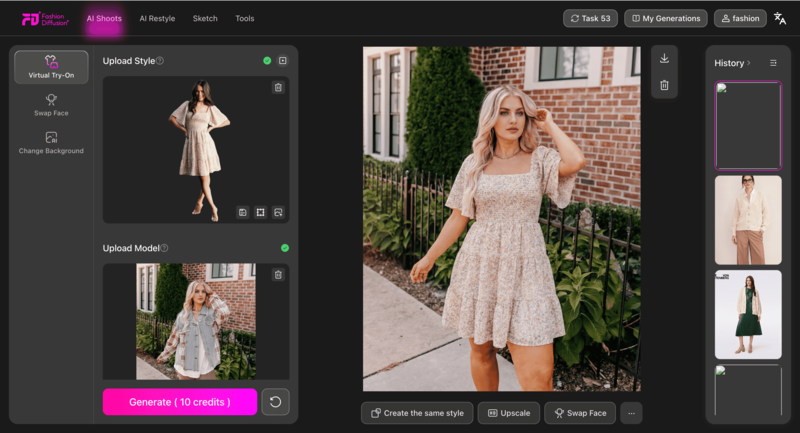
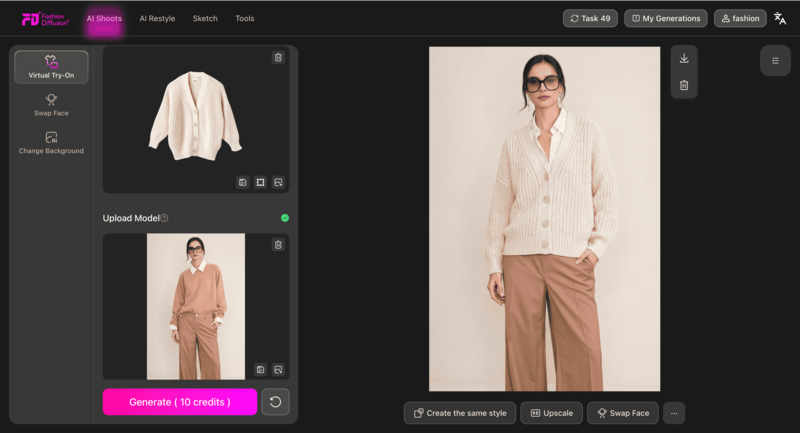
In addition, features like style fusion and virtual try-on help creators compare different directions and present designs on diverse virtual models. These tools are especially useful for visualizing how sci-fi outfits might look across genders, body types, and editorial scenarios—making AI a practical companion for futuristic fashion design.
Sci Fi Outfit Ideas
Sci-fi fashion goes far beyond movie costumes—it’s a design language shaped by technology, imagination, and future lifestyles. From cyberpunk streetwear to futuristic armor and space-inspired elegance, different sci-fi styles offer unique visions of what people might wear in tomorrow’s worlds.
In this section, we explore a selection of men’s and women’s sci-fi outfits, each highlighting a distinct aesthetic and approach to futuristic fashion.
Sci Fi Outfit for Women
These womenswear looks explore elegance, power, and fantasy through a futuristic lens. From space nobility to cyber heroines, each outfit blends strength with dramatic style.
Space Aristocracy Sci-Fi
This is what you wear to a gala on a luxury space station—minimal yet striking.
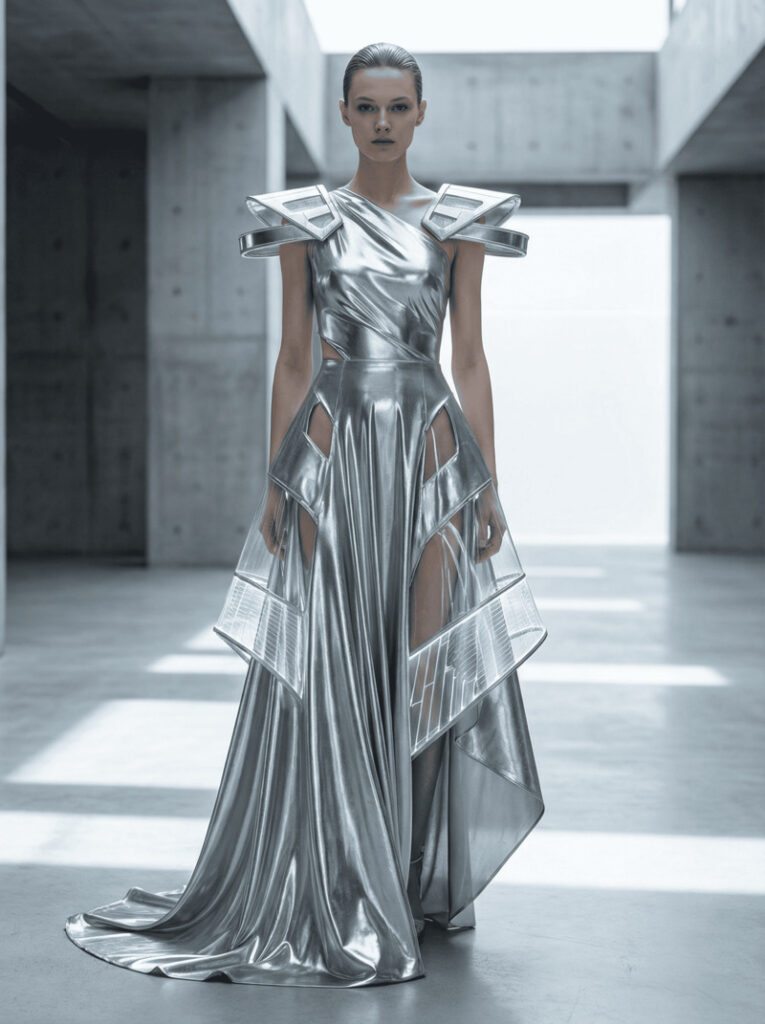
Key Features:
- Fabric: Mirror-finish metallic satin that reflects light like a spacecraft hull
- Design: Asymmetrical one-shoulder cut with sharp, wing-like shoulders for an alien diplomat presence
- Details: Cut-outs and transparent panels balance elegance with avant-garde futurism
Cyberpunk Superhero Sci-Fi
A battle-ready look for a hero fighting rogue AI by day—and dominating the runway by night.
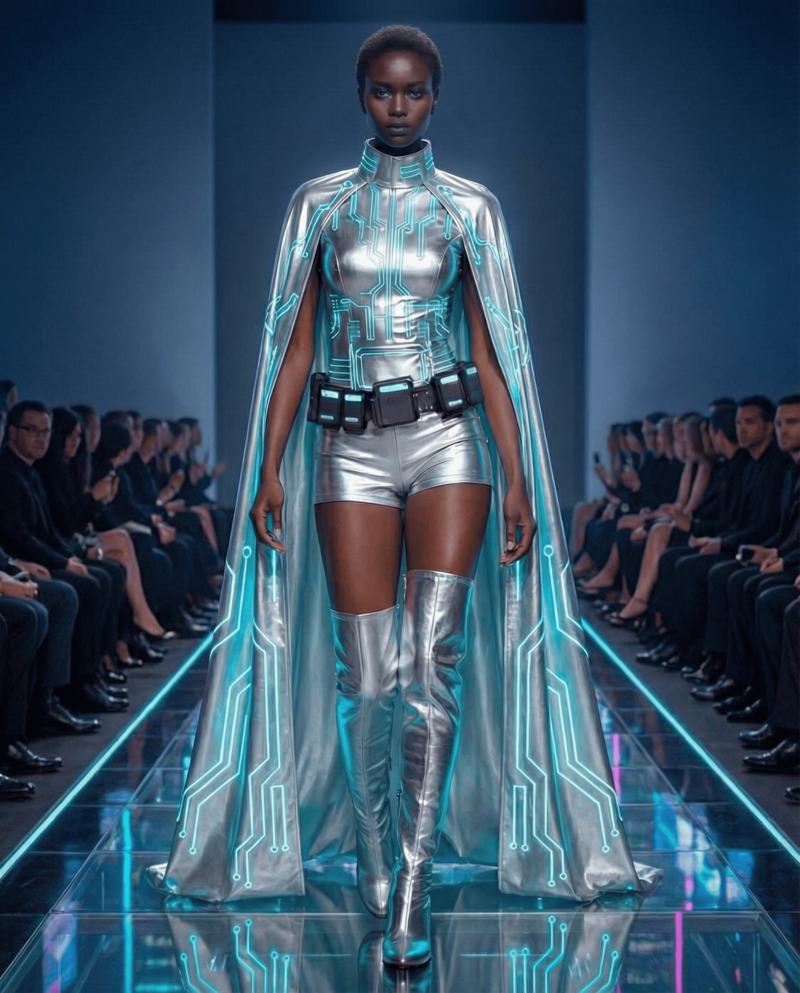
Key Features:
- Prints: Neon-lit circuit patterns that suggest a suit powered by advanced technology
- Silhouette: Metallic bodysuit paired with thigh-high boots and a floor-length cape for maximum drama
- Accessories: Utility belt with modular tech elements, reinforcing a mission-ready aesthetic
Post-Apocalyptic Cool Girl Sci-Fi
Built for navigating graffiti-covered ruins without sacrificing style.
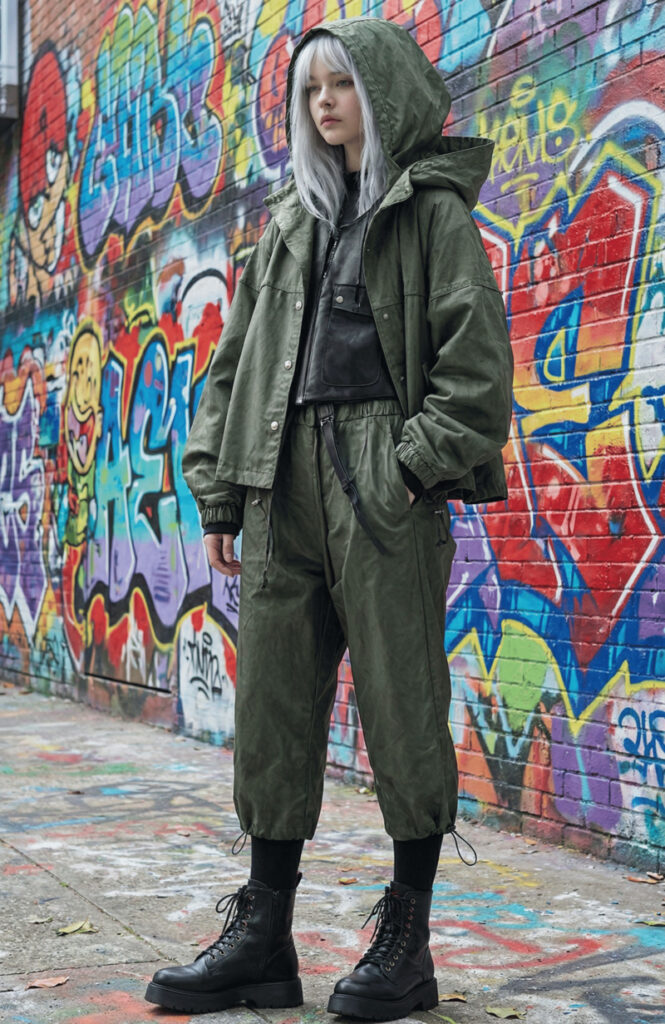
Key Features:
- Color palette: Low-saturation olive green for both camouflage and fashion appeal
- Layering: Oversized hooded jacket over a cropped leather vest, blending protection with edge
- Details: Adjustable drawstrings at sleeves and waist, plus chunky combat boots designed for broken concrete terrain
Regal Tactical Sci-Fi
This look feels like a uniform for high-ranking officials in a controlled future society.
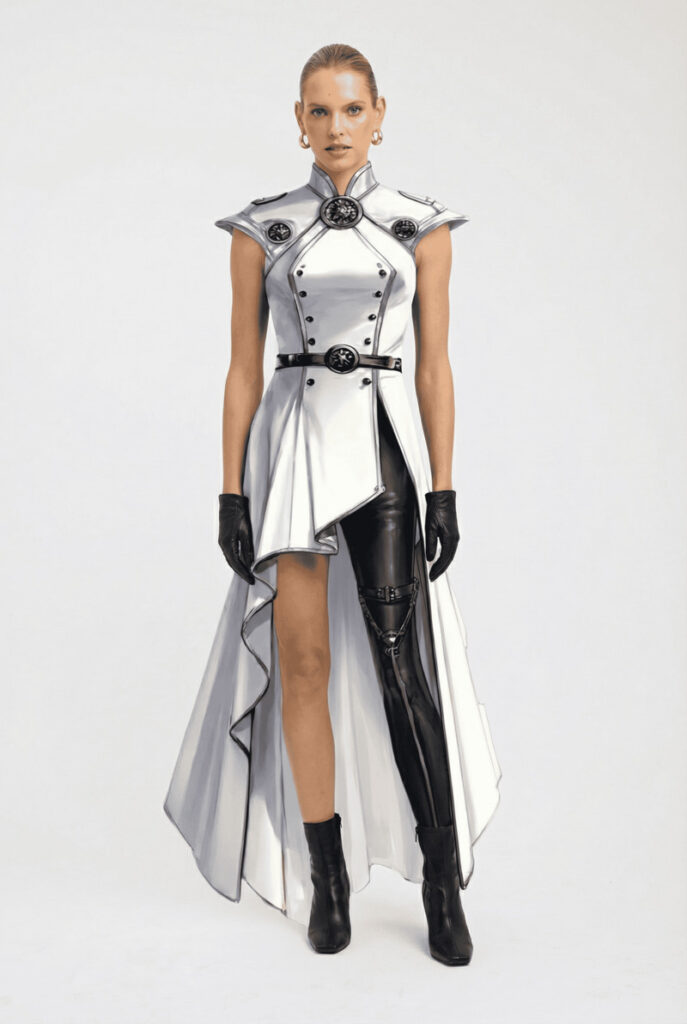
Key Features:
- Materials: Crisp white satin contrasted with black leather accents to convey authority
- Structure: Sharp shoulder pads, metal buttons, and an asymmetrical hemline that reads both uniform and eveningwear
- Highlight: Thigh holster straps subtly signal power—and danger
Mecha × Club Sci-Fi
Perfect for a cyborg bounty hunter heading straight from a mission to a neon-lit club.
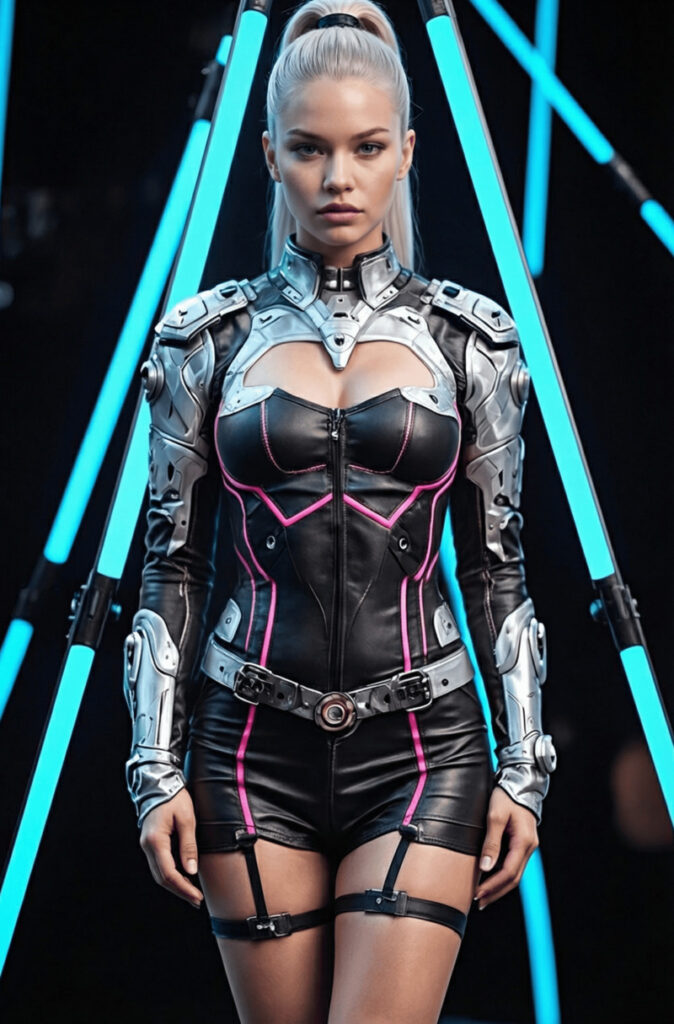
Key Features:
- Materials: Black leather paired with silver armor panels for protection and allure
- Accents: Hot pink piping that pops against the dark base, like a custom cyber upgrade
- Details: Complex buckle systems and chest cut-outs balance toughness with femininity
Luxury Desert Futurism
This outfit belongs to a traveler from a gold-rich alien planet—opulent yet practical.
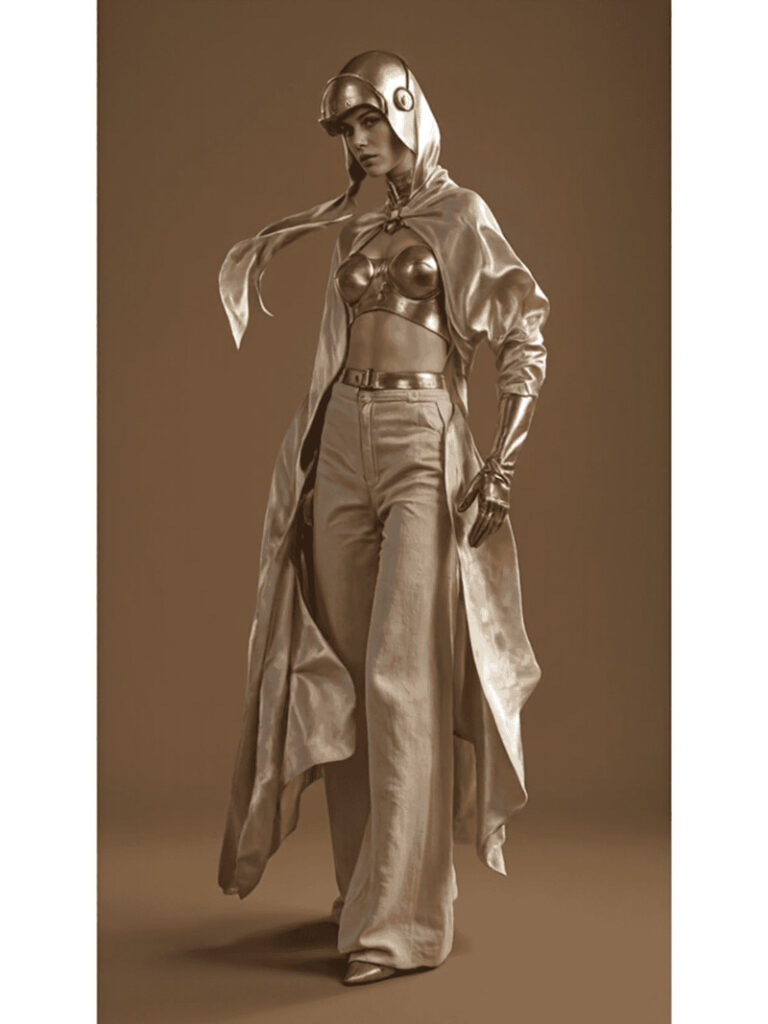
Key Features:
- Color: Monochrome gold that shimmers like shifting desert sands under twin suns
- Pieces: Oversized satin trench coat, wide-leg linen trousers, and an armor-inspired metallic top
- Accessories: Hooded helmet that adds mystery while suggesting protection against harsh alien atmospheres
Sci Fi Outfit for Men
These menswear looks lean into strength, utility, and world-building. Think futuristic warriors, cyberpunk survivors, and post-apocalyptic explorers—designed for harsh environments, whether real or imagined.
High-Fashion Futurism
This look feels like a collision between sci-fi cinema and luxury runway design—a cyber warrior made couture.
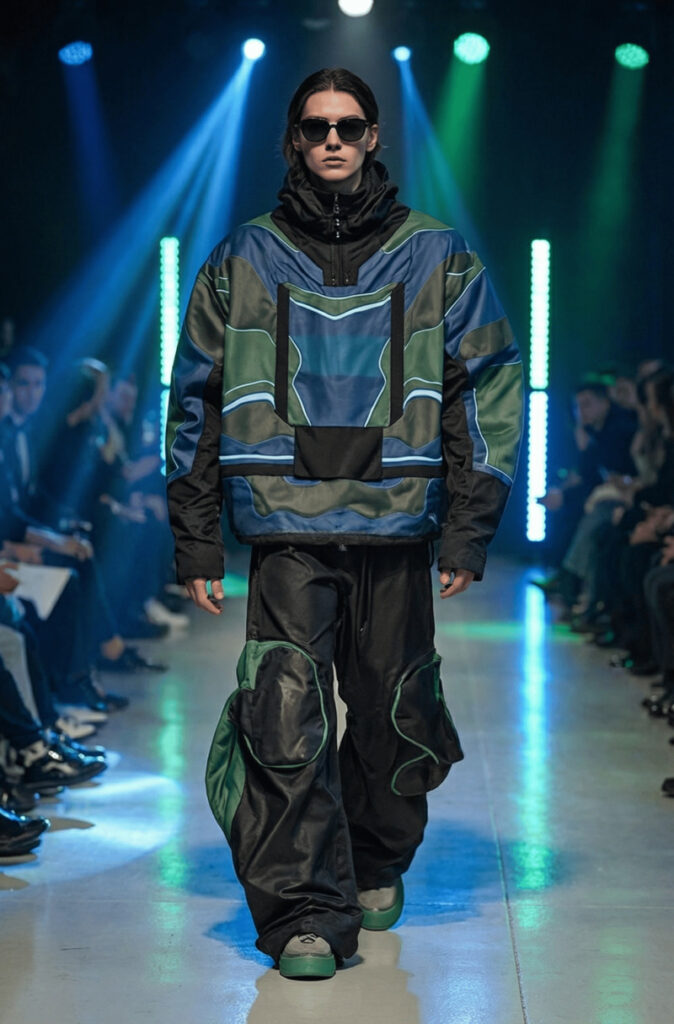
Key Features:
- Color & fabric: Muted industrial tones (navy and olive green) paired with glossy, water-resistant materials, ready for a dystopian downpour
- Silhouette: Oversized, structured jacket with geometric paneling, reminiscent of space mission armor
- Details: Subtle neon piping adds a futuristic glow without overpowering the look; relaxed utility pants balance form and function, perfect for carrying future-ready gear
Urban Dystopian Sci-Fi
If cyberpunk had a daily uniform, this would be it—gritty, functional, and unmistakably cool.
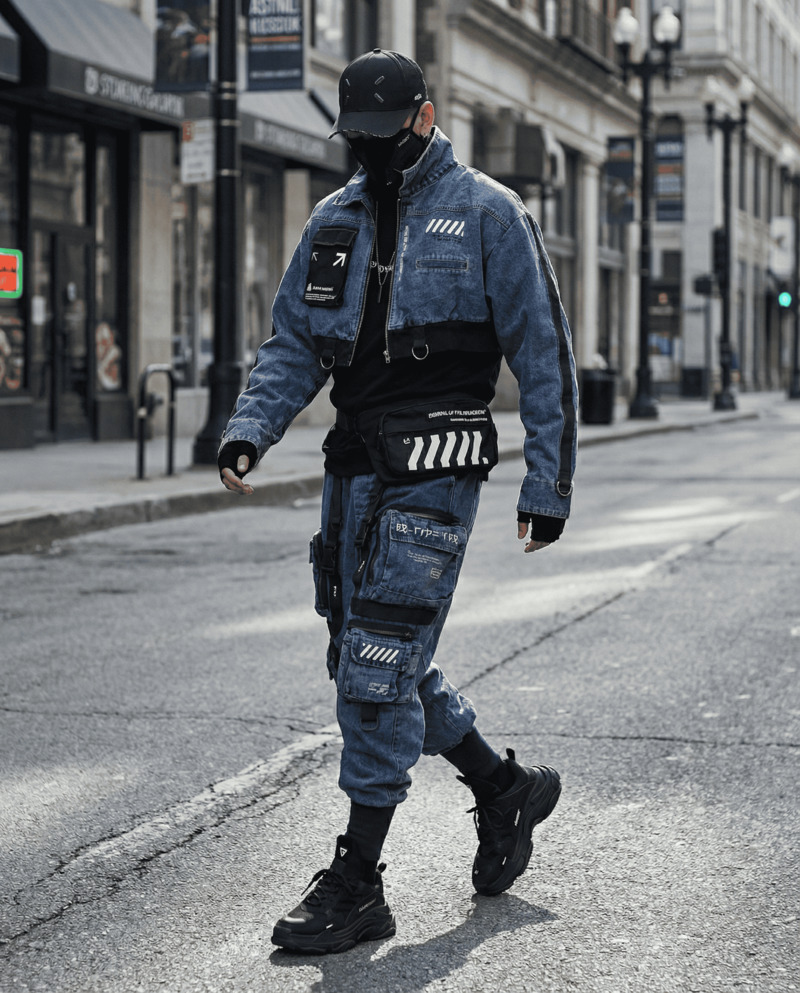
Key Features:
- Base material: Reworked denim combined with tactical straps, zippers, and multi-use pockets—because storage equals survival in the future
- Graphics: Industrial-style prints that resemble fictional corporate logos, instantly creating a cyberpunk narrative
- Layering: Cropped jacket paired with a utility waist bag, boosting both style and practical storage for essential tech
Futuristic Casual Sci-Fi
A perfect hybrid of comfort and intimidation—like a puffer jacket fused with robotic exoskeleton design.
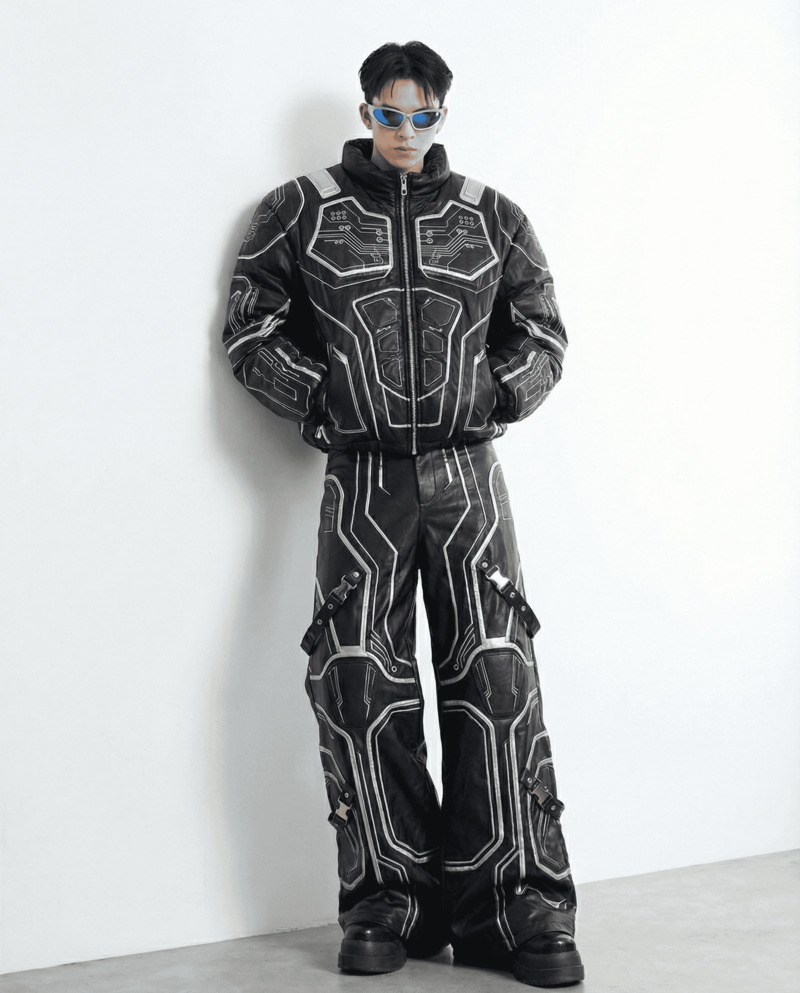
Key Features:
- Prints: Glowing circuit-board patterns that look powered by an internal energy core
- Shape: Padded, voluminous silhouette, built for frozen space outposts or hostile climates
- Bottoms: Matching wide-leg pants with buckle details, creating a tactical-yet-relaxed sci-fi vibe
Eastern Sci-Fi Fantasy
This look imagines a traditional martial hero transported into a cybernetic future city.
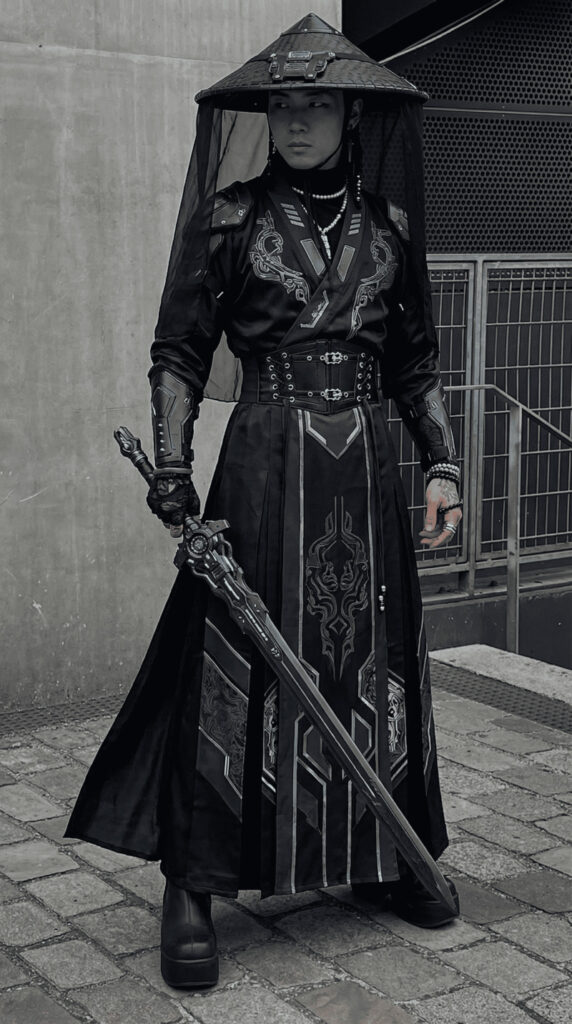
Key Features:
- Cultural base: Flowing robe silhouettes inspired by classic wuxia aesthetics
- Futuristic upgrades: LED-lit swords, armored shoulder pieces, and tech-embroidered patterns combining dragons with circuit motifs
- Accessories: High-tech conical hat with veil, balancing mystery, tradition, and sci-fi innovation
Wasteland Survivor Sci-Fi
Designed for those who look stylish even after surviving an interstellar war.
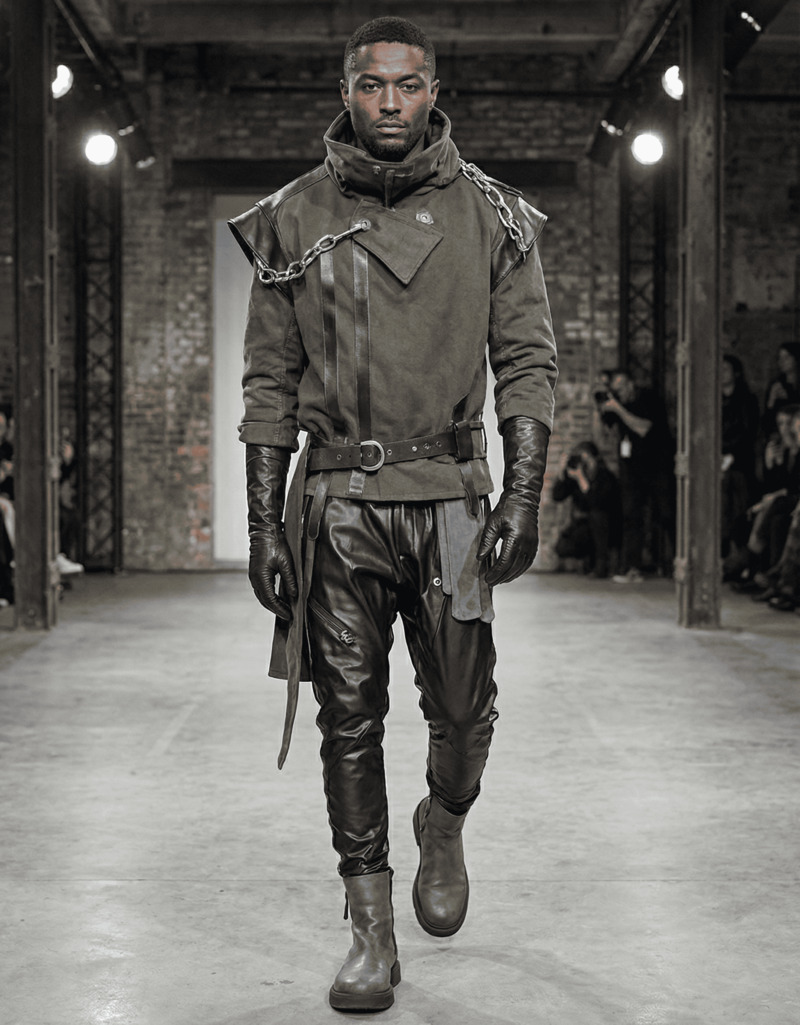
Key Features:
- Materials: Heavy-duty canvas and leather built for extreme conditions and visual impact
- Details: Chains and asymmetrical cuts, as if assembled from salvaged spaceship parts
- Silhouette: Slim leather pants paired with an oversized jacket, combining mobility with visual dominance
How does sci-fi outfit change from costume to fashion
In the past, most sci fi costumes were designed to be visually dramatic rather than wearable. They appeared in films, stage performances, or themed events, where exaggerated silhouettes and heavy materials help create a strong sci-fi atmosphere. These science fiction costumes ideas focused more on storytelling than comfort or practicality.
As sci-fi aesthetics entered mainstream fashion, designers began simplifying these elements. Oversized armor turned into structured jackets, and futuristic bodysuits evolved into sleek science fiction dresses suitable for everyday wear. This shift made sci fi ideas more accessible, allowing people to incorporate futuristic details without looking like they were in costume.
Celebrities played a key role in this transaction. Red carpet looks and fashion editorials helped redefined sci fi outfit female and sci fi outfit male styles as bold yet wearable fashion statements. Once limited to film sets, sci-fi fashion is now seen on runways, social media, and even street—proving that futuristic design can exist beyond costumes.
The Future Trend of Sci-Fi Outfits
The future of sci-fi outfits is moving far beyond costumes and themed fashion. As technology becomes more embedded in daily life, sci-fi aesthetics are starting to feel less fictional and more realistic. What once looked experimental is now influencing silhouettes, materials, and styling choices in mainstream fashion.
One major trend is the rise of digital-first fashion. Designers are creating sci fi outfit ideas that are meant to exist online before they exist physically. Virtual runways, digital avatars, and AI-generated visuals are making science fiction dresses and futuristic looks easier to explore without the limits of production or cost.
Another shift is how gender is expressed in sci-fi fashion. The line between sci fi outfit female and sci fi outfit male continues to blur, with more unisex silhouettes, modular designs, and shared visual language. Instead of focusing on gender, future sci fi costumes emphasize function, form, and concept.
Sustainability and efficiency will also shape the next wave of sci-fi fashion. AI-powered tools help designers test science fiction costumes ideas digitally, reducing waste and unnecessary sampling. In this sense, the future of sci-fi fashion isn’t just about how it looks—but how it’s designed.
Designing the Future of Sci-Fi Outfits
Sci-fi fashion is no longer just about bold visuals or futuristic costumes—it’s about ideas. From sci fi outfits inspired by film and pop culture to wearable designs shaped by technology, sci-fi style shows how fashion can move from imagination to reality. This shift from concept to visual storytelling is redefining how we design, experience, and share fashion.
With Fashion Diffusion, turning sci fi outfit ideas into clear, compelling visuals has never been more accessible. Whether you’re exploring a science fiction dress, experimenting with sci fi outfit female or sci fi outfit male concepts, or simply testing creative directions, AI opens up new possibilities. The future of sci-fi fashion isn’t coming—it’s already being designed, and now anyone can be part of it.
FAQ
Futuristic fashion is often called “techwear,” “cyber fashion,” or “sci-fi style.” Avant-garde designs, synthetic materials, and a fusion of high-tech functionality with striking visual aesthetics characterize it.
Here are some things that really stand out: Shiny stuff: Clothes made with silver, holograms, or shiny plastic materials. One-color or super bright looks: All black, all white, or colors that glow like green or blue. Cool shapes: Big shoulders, capes, or outfits that move in fun ways.