月度归档 2025年11月27日

Avatar photo 通过Sophia Mille

2026 AI Fashion Trends: Transforming How Brands Create, Sell & Engage

The fashion world is undergoing a systematic shift as we enter 2026. Economic uncertainty, changing customer priorities, and rapid tech advancements are reshaping how brands operate.

Forward-thinking labels are now integrating AI into every single part of the fashion workflow—from trend discovery to content creation and automation. 

This article dives into 8 key AI fashion trends defining 2026—and shows how designers and brands can leverage AI fashion tools to stay ahead in a fast-changing fashion market.

Why AI Is Indispensable for Fashion in 2026
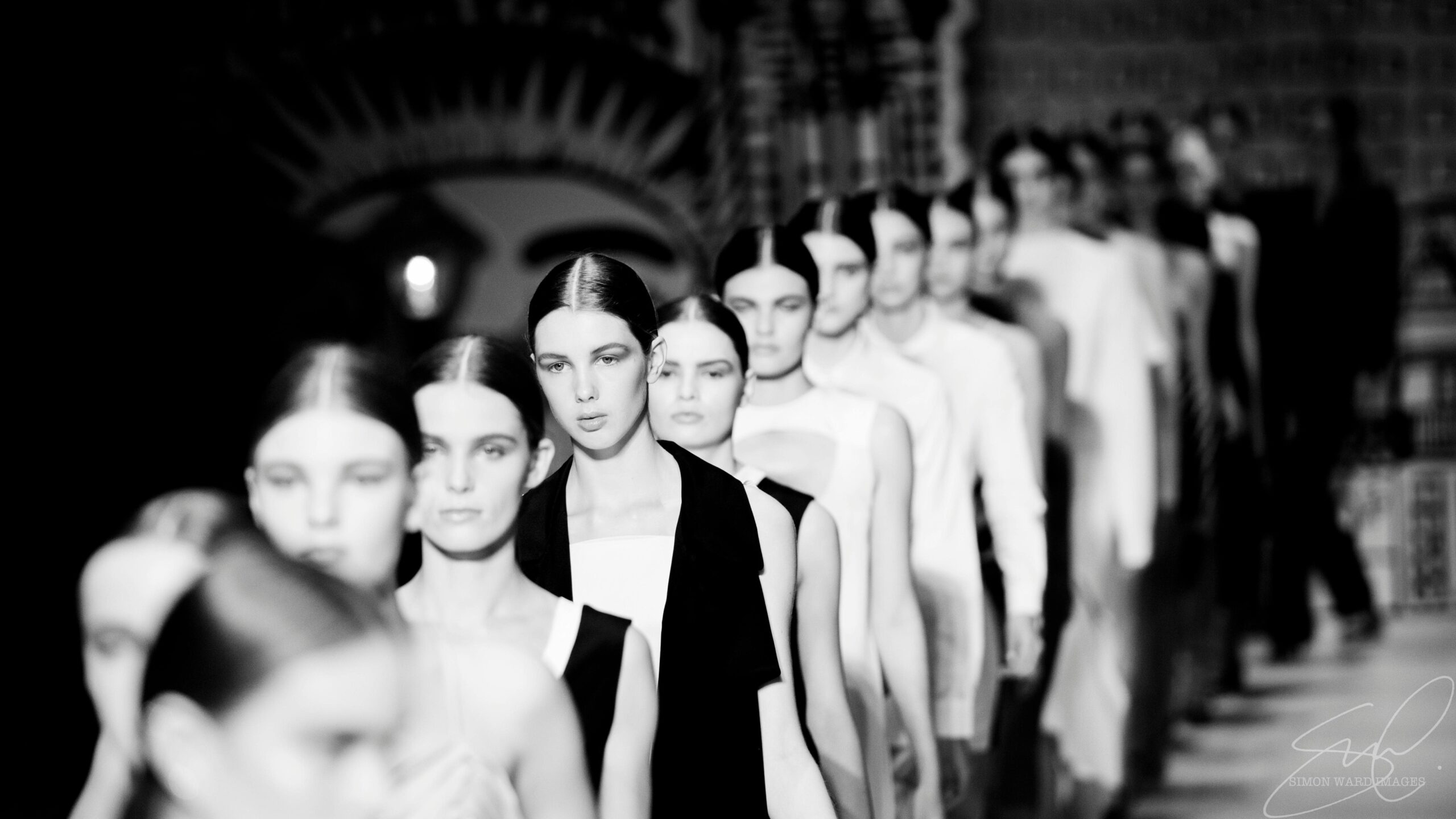
2026 AI Fashion Trends

The fashion industry has never been afraid of change—but 2026 marks a turning point. Years of digital experimentation have finally converged, and now AI is reshaping everything from design to discovery.

On the tech side, Generative visuals, 3D simulation, and multimodal agents are now strong enough to support real end-to-end automation for the first time.

At the same time, commerce platforms have raised consumer expectations. Virtual try-on, AI recommendations, and hyper-personalized content are quickly becoming standard. Brands that can’t produce large volumes of high-quality visuals simply lose visibility.

And perhaps the biggest motivation comes from within fashion brands themselves. Acquisition costs are rising, content needs are exploding, and teams are expected to deliver more with fewer resources. For small and mid-sized brands, especially, AI may be the only realistic way to reduce costs and stay competitive.

In short, AI in fashion isn’t just another short-lived trend. It’s the natural outcome of technological maturity, economic pressure, and large-scale structural changes across the global fashion sector.

8 Key AI Fashion Trends to Watch in 2026

From creative work to customer experience and operational efficiency, these trends reveal how AI is reshaping fashion—and what brands need to do to keep up.

1. AI-Powered Fashion Design Acceleration

In 2026, one of the most widely adopted uses of AI in fashion is design acceleration. Modern AI fashion design platforms, such as Fashion Diffusion, bring all visual tasks into a seamless, unified workflow. They automate the tedious manual tasks, speed up iteration cycles, and boost overall efficiency.

AI supports the design process across three practical stages:

AI Sketch

AI Sketch accelerates the design process by turning concept ideas and initial sketches into high-quality, photorealistic visuals almost instantly.

  • Text/Image to Sketch: Designers input text descriptions or upload reference images, then AI generates clear, structurally accurate preliminary sketches.
  • Sketch-to-Render: Converts designer sketches into high-fidelity 3D renders. Helps validate product concepts more quickly and reduces the need for early physical samples.

AI Restyle

AI Restyle helps speed up design modifications and iterations, allowing designers to quickly experiment with new styles, fabrics, and colors using simple text commands or reference images.

  • Style Innovation: Rapidly generates design variations or combines elements from existing collections to create new styles with text prompts.
  • Apply Fabric & Recolor: Instantly simulates complex fabrics like leather, silk, or denim, complete with realistic physics, and adjusts colors with precision—making real-time testing of materials and variants effortless.

AI Shoots

AI Shoots replaces traditional photography by generating studio-quality, marketing-ready visuals at scale.

  • Virtual Try-On (VTO): Produces hyper-realistic images of products on diverse, user-defined models. Eliminate the need for live models and real-world photoshoots.
  • Change Background: Instantly places products in any commercial or editorial setting—street, studio, or exotic locations—eliminating the need for costly location shoots.
  • Swap Face: Quickly localizes and customizes model identities for global campaigns while keeping styling and poses consistent.

By integrating AI into fashion design, brands can streamline the entire design-to-market process, turning a single concept into dozens of market-ready assets for global markets in an instant.

This approach lets AI handle repetitive, time-consuming tasks, freeing designers to focus entirely on creativity and concept development.

2. AI Fashion Trend Prediction

Fashion trend forecasting used to rely on manual research and instinctive guesses. However, AI can now predict emerging styles months in advance by processing massive visual data from global runways, street style photography, and social platforms like TikTok, Pinterest, and Instagram.

Using advanced visual algorithms, AI identifies emerging colors, silhouettes, fabrics, and style elements. By combining these insights with historical trends and real-time consumer behavior, AI can forecast which styles are most likely to gain popularity—helping brands make faster, data-driven decisions and stay ahead of the curve.

For example, Heuritech,  a French AI fashion trend analysis platform, recently reported correctly forecasting dotted prints, flat-thong sandals, and even a surge in yellow—trends that later appeared on fashion runways.  

That said, human expertise still matters in guiding concept development, validating AI insights, and making final decisions. For fashion brands, AI amplifies human judgment, reduces risk, and enables trend-driven decisions with greater speed and confidence.

3. AI Fashion Influencers

2025 has seen an increase in fashion brands collaborating with AI influencers. These virtual personalities are designed to generate content, embody brand aesthetics, and serve as reliable, risk-free brand ambassadors. 

Their rise reflects a broader shift. Audiences now openly welcome virtual influencers, and brands benefit from creators who can be anywhere, wear anything, and post content without production limits.

Human celebrities or KOLs often come with high fees and “character collapse” risks. In contrast, AI fashion Influencers offer a zero-risk, 24/7, highly controllable solution while achieving engagement levels comparable to human influencers.

There are two types of AI fashion influencers, both delivering high business value. Popular independent IPs, like Lil Miquela, require significant collaboration fees. Brand-owned AI virtual influencers, such as Prada’s Candy, a virtual muse of a Prada fragrance “candy”,  are fully custom-built around the brand’s aesthetic, with tailored image, voice, and backstory.

4. Virtual Try-On for Fashion E-Commerce

As major shopping platforms like Amazon and Google Shopping adopt virtual try-on(VTO), it’s becoming a standard part of fashion e-commerce.

Powered by advances in AI, 3D modeling, and augmented reality(AR), virtual try-on now features realistic fit previews, accurately reflecting drape, fabric behavior, and body proportions.

Virtual try-on lets customers see how a garment actually looks on them, instead of relying on a single, often unrepresentative model. This boosts confidence, reduces hesitation at checkout, and helps lower return rates.

A compelling example is the visual fitting room by European e-commerce giant Zalando. Users can generate a personalized 3D avatar by entering basic measurements—such as height, weight, and gender—to preview how different sizes fit.
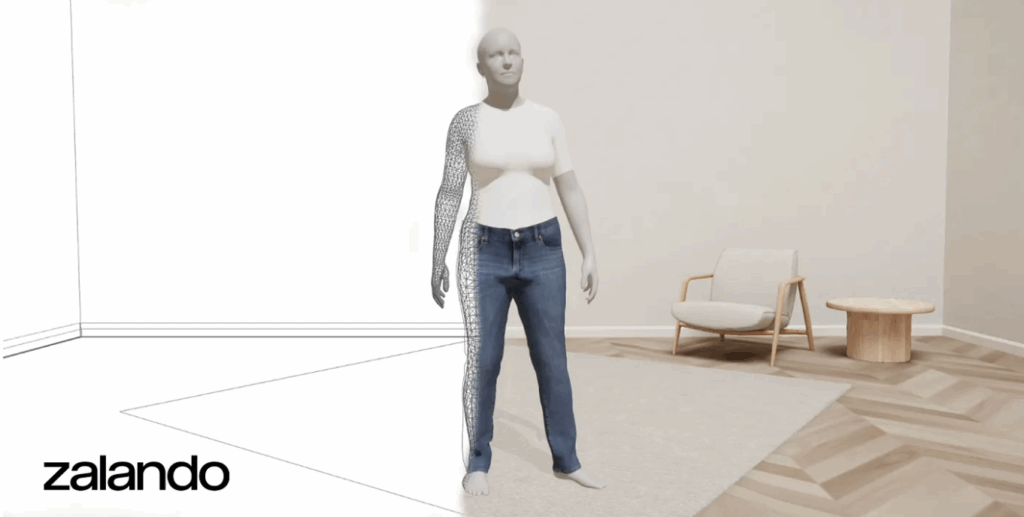
Zolando Virtual Fitting Room
source from Zalando Product Design on Medium

5. AI Personalized Fashion Shopping

AI personalized fashion shopping is transforming how shoppers discover and buy clothing online. Today’s shoppers demand much more than simple, generic recommendations.

By analyzing browsing behavior, past purchases, and style preferences, AI recommends outfits and accessories tailored to each shopper. This AI-driven fashion shopping personalization boosts engagement, increases conversion rates, and helps fashion brands connect with customers more effectively.

Stitch Fix, a leading personalized styling service, is already using AI to reinvent online style discovery. Its new beta tool,  Stitch Fix Vision, uses Generative AI to create personalized, inspirational images of shoppers wearing recommended outfits. 

By seeing themselves in different looks, customers can explore styles more intuitively and find pieces that match both their personal taste and current fashion trends.

6. AI in Fashion Marketing

As budgets tighten and customer acquisition costs rise, fashion brands are turning to AI to enhance every stage of the marketing process. By analyzing large volumes of audience and performance data, AI enables brands to make smarter, real-time decisions. 

By improving personalization, automating campaign and creative content production, and revealing richer customer insights, AI helps brands deliver more efficient and effective marketing results.

For example, Adidas has enhanced email marketing with AI personalization via Salesforce Marketing Cloud. It chooses the most relevant images and offers for millions of subscribers the moment they open the email. This allows Adidas to send highly tailored content all within a single global campaign.

7.  AI-Driven Supply Chain Optimization

AI is reshaping fashion supply chains by moving beyond task automation and into true decision support. Fashion brands can now use AI to predict issues, simulate scenarios, and optimize responses in real time. 

AI combines historical data, live inputs, and large-scale pattern recognition to make supply chains faster, smarter, and more resilient. Key applications of AI in supply chain management include:

  • Demand Forecasting: Uses real-time data and signals to produce highly accurate demand predictions, enabling businesses to plan proactively. 
  • Inventory Optimization: Calculates ideal stock levels across locations to reduce excess inventory while preventing stockouts.
  • Supply Network Optimization: Simulates routes and supply scenarios to improve delivery efficiency and strengthen resilience.
  • Decision Support: Provides a unified intelligence layer that automates workflows and recommends optimal operational actions.

H&M has improved its inventory system using data, real-time demand signals, and trend forecasts to align stock with what local shoppers actually buy. AI now guides product allocation and timing to reduce both overstock and stockouts. 

According to Daniel Erver, H&M’s CEO: “H&M’s improved operating profit margin in the fourth quarter (of 2024) was partially attributable to a better product assortment.”

8. Sustainable Fashion with AI

Sustainability is becoming a key focus in fashion, as brands face growing pressure to reduce waste and lower carbon emissions. 

By forecasting demand more accurately, AI prevents overproduction and excess inventory. In supply chains, AI identifies inefficiencies, suggests eco-friendly sourcing, and optimizes logistics to lower environmental impact. 

Together, these capabilities allow brands to make smarter, greener decisions while maintaining creativity and efficiency. 

To tackle excess inventory and waste, Levi Strauss & Co. uses AI-driven predictive forecasting and smart buying to better match production with market demand. Digital prototyping further reduces the need for physical samples, lowering material usage and environmental impact.

Risks and Ethical Boundaries

With AI fully integrated within the fashion industry, brands and businesses face a new set of risks that cannot be ignored:

Algorithmic Bias

AI models trained on image data can unintentionally reinforce damaging biases concerning body type, skin color, and cultural norms. 

If datasets are incomplete, skewed, or unauthorized, the result could be misleading trend predictions, incorrect sizing, or culturally insensitive content. Brands must proactively invest in bias detection and diversity measures.

IP ambiguity

The legal landscape is still catching up. Ownership of AI-generated content and the unauthorized use of images for training are significant and emerging challenges. 

Brands must select AI platforms that offer clear copyright policies and provide auditable generation steps to protect their assets.

Over-automation

Relying too heavily on AI for content production or decision-making risks a homogenized aesthetic. It can lead to misaligned product assortments and, critically, damage the unique identity that defines the brand.

Transparency Issue

Consumers, regulators, and creative professionals now demand transparency regarding AI use, whether it’s in product design or influencer marketing. 

In 2026, responsible AI adoption in fashion means establishing clear guardrails, actively auditing models, and ensuring AI enhances human expertise rather than silently replacing skilled teams.

Conclusion

The year 2026 marks the definitive moment when AI evolves from an optional feature to a fundamental power engine of the fashion industry.

Success belongs to those who treat AI as a core capability and embed it across fashion design, operations, and customer experience. Creativity will accelerate, processes will become more efficient, and consumer interactions will feel increasingly fluid, predictive, and personal.

For fashion brands, the next step is clear: experiment boldly, invest strategically, and begin integrating AI fashion solutions into the workflows that matter most. The future won’t wait—start building your 2026 AI advantage now.

FAQs

Can AI forecast fashion trends?

Yes. AI analyzes runway data, social media signals, sales history, and consumer behavior to predict upcoming styles and inform design, merchandising, and inventory decisions.

What’s the best AI fashion design generator?

The best generator depends on your workflow, but top platforms like Fashion Diffusion combine high-quality outputs, customization, and integration into existing design pipelines.

What are the fashion trends for 2026?

Minimalism, bold colors, and upcycled or recycled materials dominate, alongside tech-enhanced fashion like AR-ready garments and AI-assisted styling.
Avatar photo 通过Ethan Davis

Virtual Model AI for Fashion E-Commerce: Everything You Need to Know

When Louis Vuitton featured the virtual model Lightning in a campaign, it wasn’t a stunt. It was a clear signal that fashion is rapidly moving toward AI-powered modeling and visual production.

Today, virtual models are revolutionizing fashion e-commerce—enabling brands to generate on-model product images instantly, digitally fit clothing, and scale content creation without studios, logistics, or costly reshoots.

This article provides a complete guide to AI virtual models, covering what they are, how they work, their key benefits, and practical steps to create them.

What Is an AI Virtual Model?

Virtual Models AI for Fashion E-Commerce

AI Virtual Models form the digital foundation of visual content in fashion e-commerce. They are hyper-realistic, human-form digital assets created entirely by AI, designed specifically for the professional display of clothing and accessories.

Key Concept

An AI Virtual Model is a photorealistic, three-dimensional (3D) human likeness created using Generative Artificial Intelligence to replace live photoshoots.

Unlike traditional models, AI virtual models are fully digitized assets—from skin texture to every strand of hair. They’re not retouched photographs; they are infinitely customizable digital humans whose appearance, body type, pose, and expression can be adjusted on demand. 

Three Main Types of AI Virtual Models

Although all are digital human representations, virtual models generally fall into three key categories based on how they’re used in fashion:

1. Product Display Models

​​These virtual models are built to serve Product Detail Pages (PDPs) and large-scale e-commerce workflows. Their purpose is to showcase clothing accurately—capturing fit, drape, texture, and proportions across different body types and sizes.

They prioritize realism, consistency, and repeatability, without the need for personalities, stories, or social media presence.

2. Virtual Try-On for Customers

Virtual try-on (VTO)  allows shoppers to visualize how a garment looks and fits on their own body shape or a personalized digital double, often using Augmented Reality (AR) or AI body mapping.

The key value is 1:1 personalization and maximizing fit accuracy. This is a direct tool to boost purchasing confidence and reduce return rates. For instance, major platforms like Google Shopping have integrated VTO capabilities, allowing users to virtually ‘try on’ clothes directly within the search environment.

3. Virtual Fashion Influencers

These models act as digital brand ambassadors, designed for campaigns, storytelling, and social engagement. They are given distinct personalities, aesthetics, and narratives. The goal is to build audience affinity and community, giving brands a fully controlled representative who can appear in campaigns, videos, and influencer-style content.

One of the most globally recognized examples is Lil Miquela, a fictional, computer-generated influencer created by the robotics and AI firm Brud in 2016. With millions of followers on Instagram, she has successfully partnered with luxury brands such as Prada and Calvin Klein.

How AI Virtual Models Work

Understanding the mechanics behind AI virtual models is crucial for brands selecting the right content production strategy. Currently, two primary technological streams are used to create these digital assets: CGI and Generative AI, both offering different trade-offs in control, speed, and cost.

However, the efficiency, scalability, and lower technical barriers have made AI virtual modeling the dominant choice for high-volume fashion e-commerce today.

CGI Virtual Models

This method relies on Computer-Generated Imagery (CGI) and 3D graphics software. Professional 3D artists manually sculpt and texture the virtual model, creating a detailed digital skeleton (rig) and skin. The garment is either designed digitally or recreated from a physical scan, then digitally “dressed” onto the rig.

It offers the highest level of precision and control over every detail, ensuring perfect anatomical accuracy and lighting. However, the drawbacks are significant. The process is highly labor-intensive, requires specialized artistic and technical skills, and results in high upfront costs and slow production cycles.

AI Virtual Models

This is the cutting-edge method that makes virtual modeling accessible and scalable. It leverages advanced Diffusion Models to merge existing product images with generated human forms.

Unlike CGI’s reliance on manual 3D modeling, Generative AI uses Image-to-Image synthesis techniques to create the final visual. The central concept is the decoupling of the garment from the model. 

AI is extensively trained on vast datasets to understand textile behavior and how those textiles interact with the human form. When a user provides a flat-lay image and a text prompt, the AI performs two critical tasks:

  • Model Generation: Generates a high-quality digital human figure matching the user’s prompt (pose, light, and features).
  • Garment Fitting: It intelligently extracts the texture and pattern from the flat-lay image. Then it projects it onto the generated digital figure, adjusting for perspective and simulating realistic wrinkles and folds based on the model’s pose.
AI Virtual Model

Generative AI may occasionally require minor post-production cleanup and offers less absolute control than bespoke CGI. However, its advantages in speed, scalability, and cost-efficiency cement its status as the superior choice for high-volume fashion e-commerce today.

Benefits for Fashion Brands & E-commerce

AI Virtual Models aren’t just a new way to produce visuals—they solve long-standing challenges in fashion e-commerce, from production bottlenecks to consistency issues across SKUs. 

For brands managing large assortments or frequent drops, AI virtual models create a faster, more controllable, and more cost-effective workflow.

Operational Efficiency

The immediate gains from using virtual models are seen in the streamlining of the content production pipeline, directly addressing the pain points of physical photography.

Lower Production Costs

Virtual models remove many of the major expenses tied to traditional photoshoots—model fees, studio rentals, travel, and constant reshoots. Once the core digital model is created, producing new images becomes a predictable, low-cost process, especially for large catalogs.

Quick Turnaround Time

By eliminating the need for casting, scheduling, travel, makeup, and physical studio time, brands can generate thousands of modeled images in hours, not weeks. This speed allows for quicker reactions to market trends, inventory changes, and immediate product launches.

Full SKU Coverage

With a reusable virtual model, brands can generate on-model imagery for every item in the collection—including colorways, replenishments, and products still awaiting final samples. This solves the common problem of mismatched or incomplete PDP visuals during new drops.

Brand Visuals

Virtual models empower brands to deliver a more effective and ethical visual experience to their customers, directly impacting conversion and loyalty.

Visual Consistency

Virtual assets guarantee uniformity in every image. Lighting, angle, pose, and background can be perfectly replicated across hundreds of product pages. This gives e-commerce sites a cleaner, more professional look and builds greater trust for first-time buyers.

Inclusive Representation

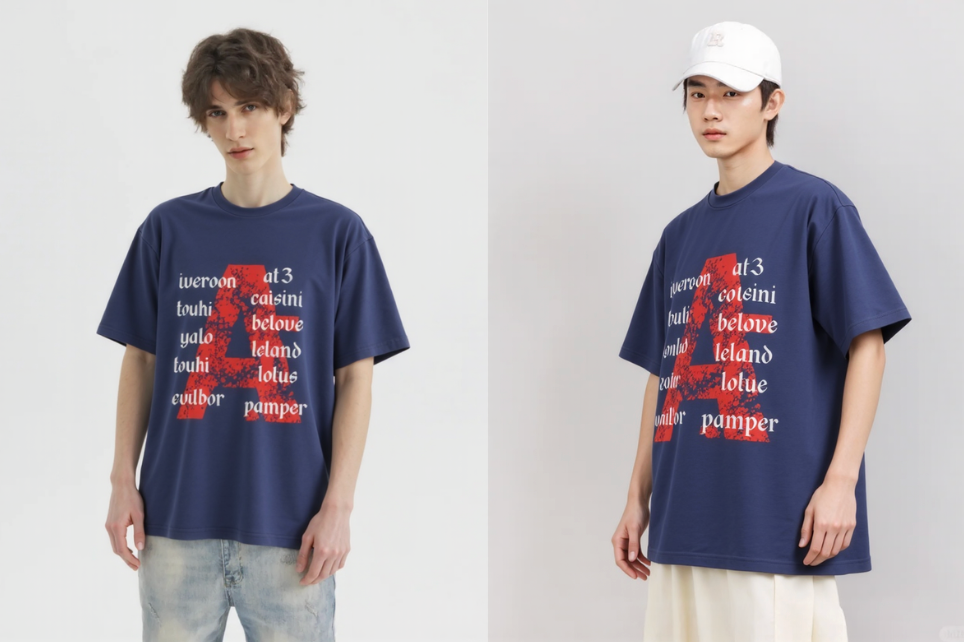
Fashion Diffusion AI-Generated

Brands can easily adjust a virtual model’s body type, skin tone, and features to reflect different customer segments. This allows shoppers to better visualize fit and styling, which often leads to higher engagement and fewer returns.

Strategic Growth

Beyond operational gains, virtual models offer critical long-term benefits related to brand strategy and corporate responsibility.

Marketing Control and Safety

Brands maintain absolute control over the virtual model’s persona, eliminating the risk of reputational damage, social media scandals, or contractual issues associated with human influencers and public figures.

Sustainable Development

By reducing the need for travel, shipping samples, and physical resources, virtual content creation significantly lowers the brand’s carbon footprint, aligning with growing consumer demand for sustainable practices.

Creative Expression

Virtual environments are unconstrained by physics. Brands can achieve highly creative, hyper-realistic, or abstract visual effects, poses, and settings that would be either impossible or prohibitively expensive to capture in a physical studio.

How to Create Virtual Models Using FashionDiffusion.ai

Creating professional, photorealistic virtual models has never been easier. With Fashion Diffusion, fashion e-commerce brands can transform sketches, flat-lays, or product photos into on-model visuals in just a few steps.

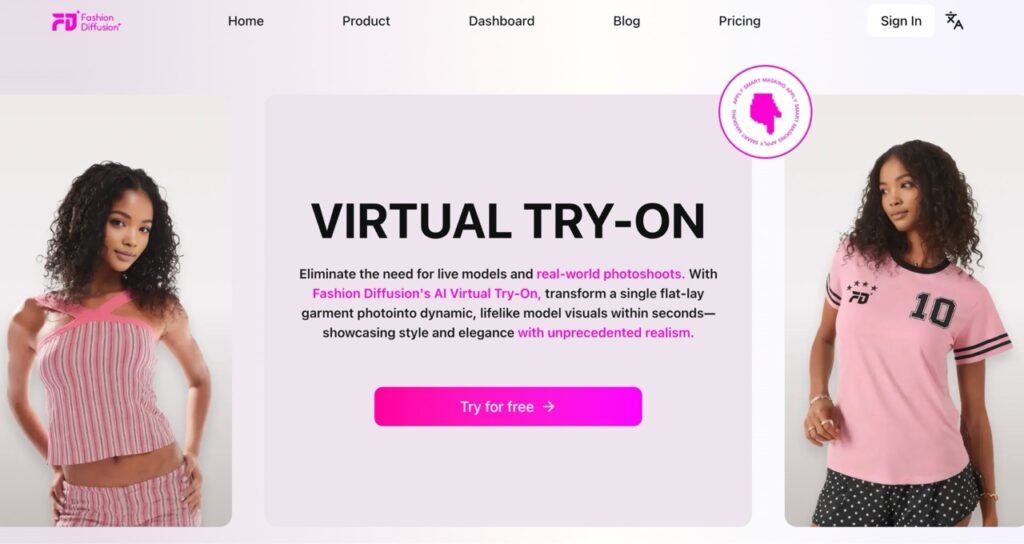
Fashion Diffusion: Virtual Try-On

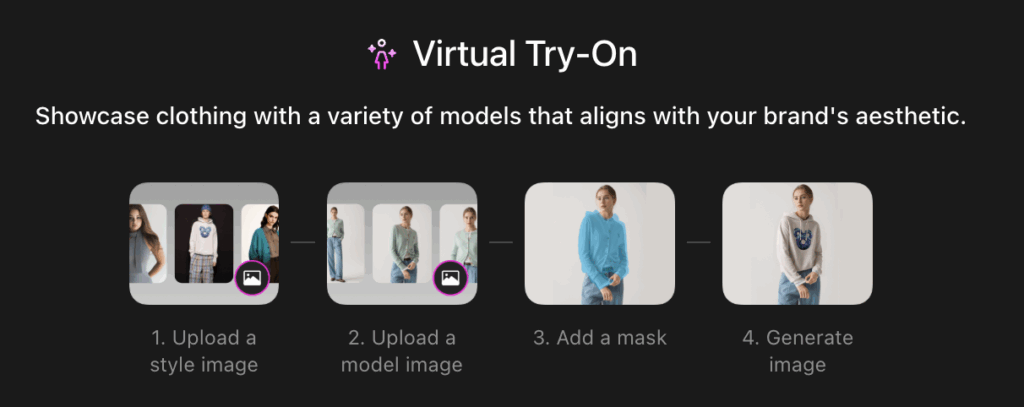
4 Steps to Create a Virtual Model

The process of bringing your apparel to life with AI is fluid and simple, designed to maximize both speed and creative control without learning curves:

4 Steps to Create a Virtual Model in Fashion Diffusion

1. Upload Source Image

Start by uploading your garment’s source image—whether it’s a standard flat-lay photograph or an existing model photo. The AI instantly scans and identifies the crucial clothing contours and fabric details.

With Fashion Diffusion’s image/text to sketch tools, even hand-drawn designs or just text descriptions can become professional assets—laying the groundwork for virtual try-on.

2. Select Your AI Model

Next, find the perfect model for your garment. Browse the platform’s diverse virtual model library, featuring various body types, skin tones, genders, and poses. Whether you’re showcasing casual wear or high-fashion collections, there’s a model to match every style.

For brand consistency, the Face Swap feature allows you to apply brand-specific facial aesthetics. You can also customize body shape, skin tone, and hairstyle, ensuring your virtual models reflect your target audience and diversity goals. All models are saved in your personal gallery for reuse in future collections, keeping visuals consistent across campaigns.

3. Apply Smart Masking

To achieve lifelike results, guide the AI using masking tools to lock the garment areas. The system then automatically optimizes alignment, ensuring natural folds, realistic draping, and zero awkward distortions.

This step guarantees that every on-model image looks authentic, giving your customers a clear view of fit and style, just like a professional photoshoot.

4. Generate AI Fashion Photos

Finally, hit “Generate” and watch the AI work its magic. The platform seamlessly combines your model’s pose, the clothing dynamics, and lighting settings to produce HD, photorealistic renders in seconds.

These images are ready to deploy across product pages, social media, or marketing campaigns. With FashionDiffusion, brands can quickly scale content production, showcase every SKU, and experiment with creative visuals without the costs or delays of traditional photography.

The Future of AI Virtual Models

AI virtual models are no longer experimental visuals—they are rapidly becoming the new standard for fashion e-commerce. Adopting AI virtual modeling today is not merely about cutting costs. It’s about future-proofing visual strategy and investing in the immersive, personalized shopping experiences that customers will soon demand. 

Looking ahead, the evolution of AI modeling will accelerate beyond static images. We anticipate a shift toward high-quality AI-generated video, personalized Virtual Try-On (VTO) experiences, and seamless integration into AR and the Metaverse. 

For fashion brands and e-commerce teams, now is the moment to build the foundation. Try Fashion Diffusion.ai to adopt virtual models without technical barriers—reducing production costs, accelerating launches, and expanding creative possibilities from day one.

FAQs

What is an AI virtual model?

An AI virtual model is a photorealistic digital human used to display clothing online, allowing brands to produce scalable, consistent on-model images without physical photoshoots.

What is an AI-generated influencer?

An AI-generated influencer is a computer-created personality that produces photos, videos, and social content, allowing brands to run campaigns without relying on real creators.

Are there any free AI fashion virtual model generators?

Yes. You can find AI tools that offer a free trial to generate virtual models for product displays, letting brands test outfits, build lookbooks, and create marketing visuals at no cost.

How are virtual models used for clothes and jewelry?

Virtual models display clothing and jewelry in realistic poses, helping brands showcase fit, styling, and details without physical shoots—ideal for e-commerce, lookbooks, and social campaigns.

How to make an AI virtual model?

You can create an AI virtual model by uploading reference images, choosing a base model, and customizing body type, face, and style using virtual try-on tools like FashionDiffusion.ai.