月度归档 2025年10月30日

Avatar photo 通过Sophia Mille

AI Fashion Design Tools: How AI is Transforming Fashion Creation in 2025

The integration of Artificial Intelligence (AI) is fundamentally reshaping the fashion design landscape. Moving beyond hype, 2025 sees sophisticated AI fashion design tools empowering designers and brands to achieve unprecedented levels of efficiency, creativity, and cost-effectiveness. If you’re exploring how AI can revolutionize your workflow, understanding the current tool ecosystem is crucial.

What Is AI in Fashion Design?​

AI in fashion design (or AI for fashion design) refers to software powered by artificial intelligence that helps designers create, refine, and visualize fashion concepts. These tools use machine learning and generative AI to turn ideas into tangible designs. Common uses include generating initial design concepts from text descriptions, converting rough sketches into polished visuals, simulating fabric textures, and even creating 3D models for prototyping.

For example, a designer with a vague idea like “lavender sleeveless gown with unique details” can use an AI fashion design generator to turn that text into multiple design options in minutes. This speeds up the early stages of creation, letting designers focus on refining ideas instead of starting from scratch.

How AI is Revolutionizing Fashion Design

AI fashion design tools address core industry challenges:

  • Accelerated Concept Generation: Transform text prompts or mood boards into diverse design sketches and variations in seconds.
  • Enhanced Visualization & Prototyping: Convert simple sketches into realistic product images or photorealistic on-model visuals, eliminating the need for early-stage physical samples.
  • Streamlined Production: Generate technical flats, pattern suggestions, and material visualizations, significantly speeding up the transition from design to production.
  • Personalization & Trend Forecasting: Analyze vast datasets (social media, sales, runway) to predict trends and enable hyper-personalized design recommendations.
  • Cost Reduction: Drastically cut expenses associated with traditional photoshoots (models, locations, photographers) and physical sampling.

Top 12 AI Fashion Design Tools

The market for AI fashion tools has grown rapidly, with tools tailored to different needs, from idea generation to 3D modeling. Here are 12 leading options:

ToolBest ForCategorySkill LevelKey Benefit
Fashion DiffusionDesigners, D2CCreative generationLowFast concept + visuals
The New BlackEmerging luxuryCreative brandingLowArtistic identity
ResleeveD2C, boutiquesAI lookbooksLowFashion shoots
CLO 3DTechnical teamsDigital samplingHighPattern accuracy
BrowzwearEnterprise3D productionHighSupply-chain integration
BotikaE-comm sellersAI modelsLowProduct imagery
YesPlzRetail platformsAI shopping UXMediumConversion lift
DesignovelR&D, strategyTrend insightMediumData-driven design
MakethedotBrand opsTech packs & collaborationMediumFaster specs & workflows
AbloSmall teamsCreative boardsLowFast ideation
HeuritechMerch & forecastingTrend AIMediumDemand planning
Yoona.aiDesigners & brandsAI fashion design + planningLow-MediumTrend-aligned AI design + faster concept-to-market

1. Fashion Diffusion​

🎯 Best For: Brands and designers needing an all-in-one solution for fast design iteration, virtual sampling, and high-quality marketing visuals without photoshoots.
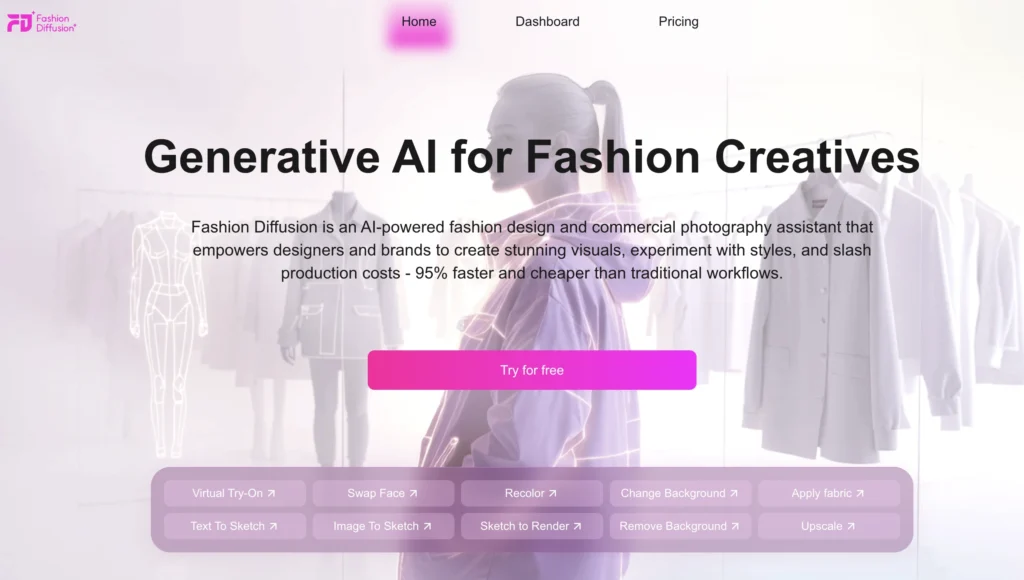
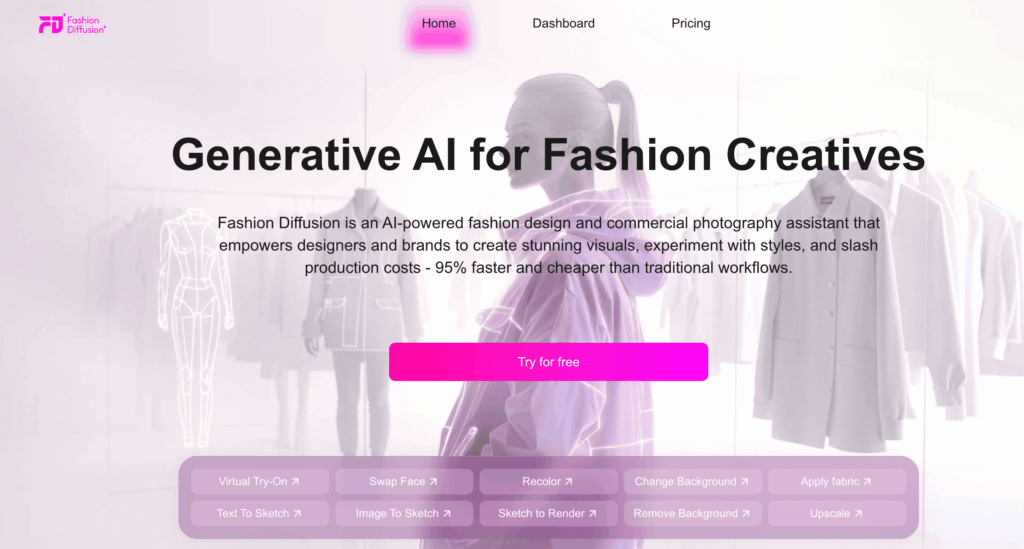
Fashion Diffusion is an AI fashion design tool

Fashion Diffusion is built specifically for fashion workflows — not generic image generation. It understands silhouettes, draping, textiles, garment structures, and seasonal aesthetics, making it ideal for fast concept iteration and realistic visual output.

Key features include:​

  • Sketch Enhancement: Turn hand-drawn or digital sketches (Image To Sketch, Sketch to Render) into polished, production-ready visuals instantly.
  • Photorealistic Visualization: Generate studio-quality images (Virtual Try-On, Recolor, Change Background, Apply Fabric) without costly photoshoots.
  • Creative Exploration: Rapidly iterate on styles, fabrics, and colors directly from initial concepts (Text To Sketch).
  • Efficiency: Offers tools like Remove Background and Upscale for quick image editing. Ideal for designers and brands seeking a comprehensive, design-focused platform to cut costs and accelerate time-to-market.​

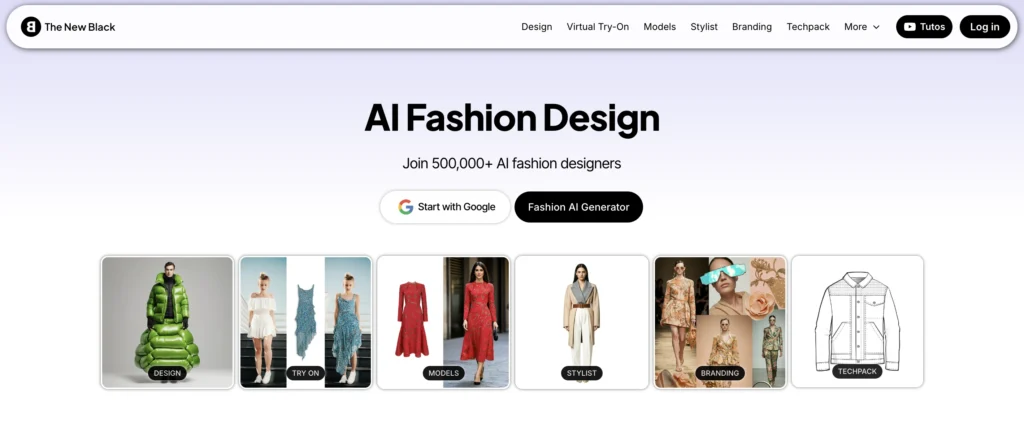
2. The New Black

The New Black is an AI fashion design tool

🎯 Best For: Designers seeking rapid concept generation and unique, brand-defining pieces.

The New Black focuses on creative identity and unique visual language. It helps build signature aesthetics and campaign-ready artistic concepts — a strong tool for fashion houses prioritizing storytelling.

Standout strengths:

  • Highly stylized creative outputs
  • Strong for moodboards and brand identity exploration
  • Great for emerging fashion aesthetics & luxury visual direction

3. Resleeve
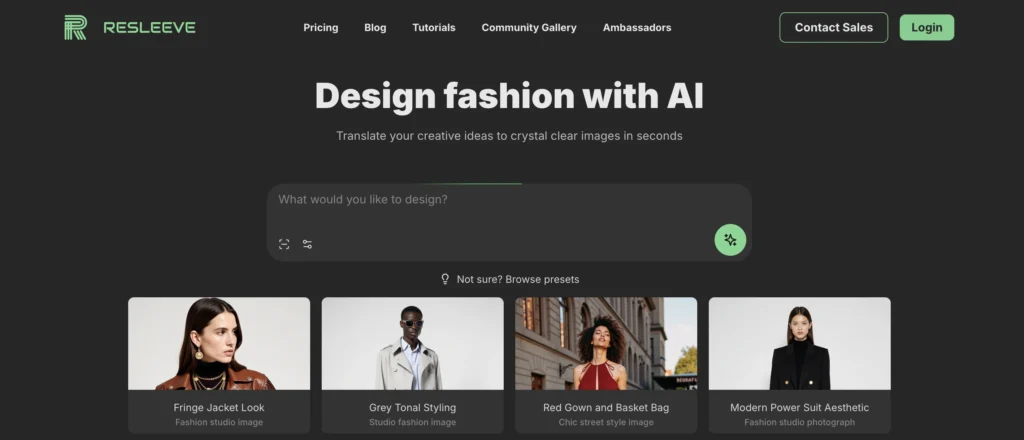
Resleeve is an AI fashion design tool

🎯 Best For: Indie designers and brands prioritizing photorealistic quality for marketing, sales, and reducing physical sampling.

Resleeve generates high-fashion editorial visuals aligned to brand style. It accelerates lookbook creation and marketing concepts without requiring full production planning.

Strengths:

  • Technical precision: realistic garment simulation, drape, fit, fabric physics.
  • Helps reduce physical sampling, improves fit validation early, supports production workflows.

4. CLO 3D
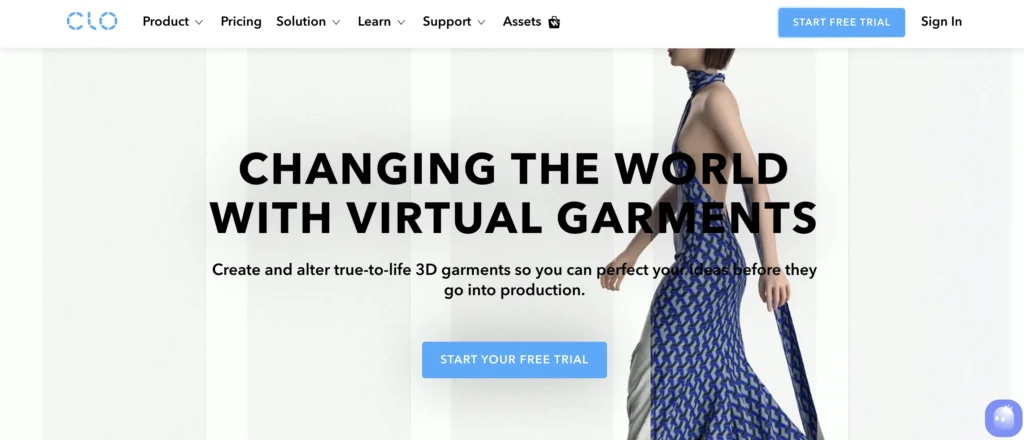
CLO 3D is an AI fashion design tool

🎯 Best For: Technical designers, pattern makers, and brands focused on perfecting fit, construction, and reducing physical sampling dependency.

CLO is a leading technical 3D fashion tool used by global brands to minimize physical sampling cycles. It supports pattern-accurate garment construction and realistic physics simulation.

Standout strengths:

  • True-to-pattern 3D garment development
  • Fabric drape simulation, fit evaluation
  • Integration with manufacturing pipelines

5. Browzwear
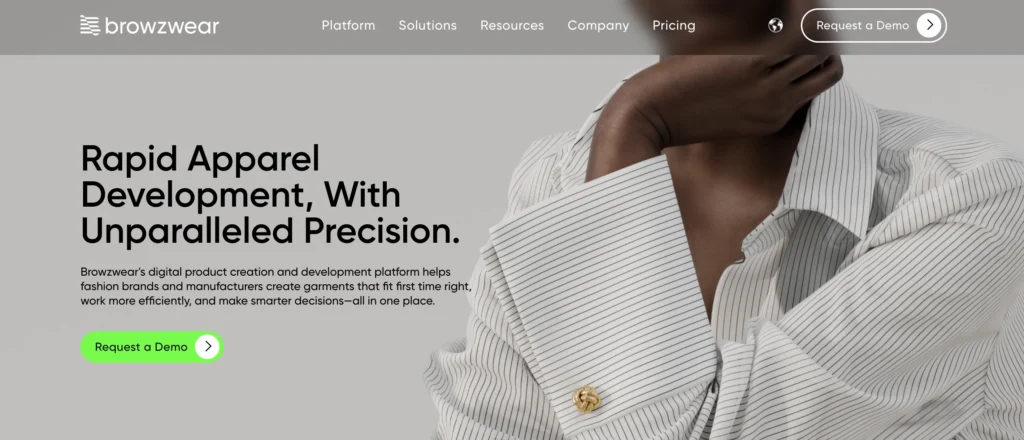
Browzwear is an AI fashion design tool

🎯 Best For: Brands requiring a comprehensive 3D solution from design through production and sales.

Browzwear is another powerhouse for 3D fashion design, development, and merchandising. Focuses on accurate fabric behavior, fit, and seamless integration into production workflows.

Strengths:

  • End-to-end capability, strong for supply chain, manufacturing integration.
  • Helps reduce errors, improve collaboration across global teams, bring digital sampling into production.

6. Botika
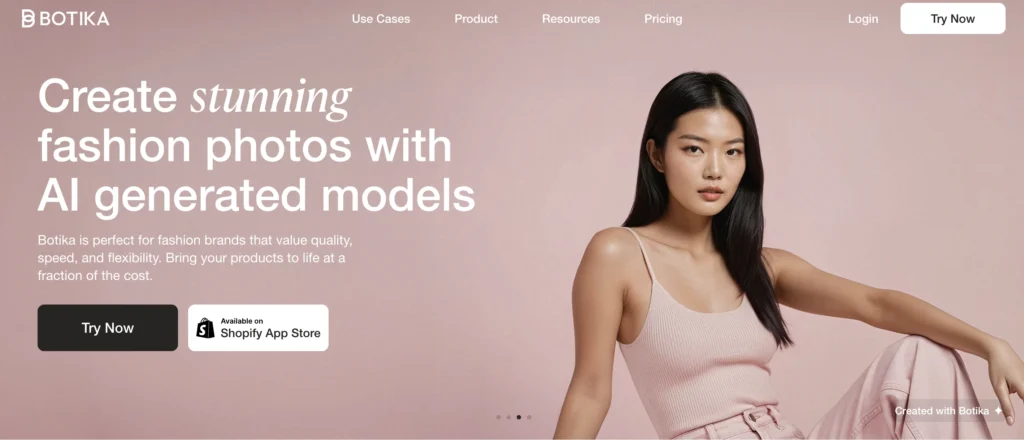
Botika is an AI fashion design tool

🎯 Best For: Brands with many SKUs, e-commerce-first, need high throughput of product images across sizes/models/poses.

Botika is an AI platform aimed at generating large volumes of on-model or styled apparel visuals at scale—automating imagery which traditionally required photo shoots, model hires, etc.

Strengths:

  • Enables large SKU catalogs to have diverse model visuals, variations, backgrounds, etc with less cost/time.
  • Useful for e-commerce brands, marketplace sellers.

7. YesPlz

🎯 Best For: Online retailers aiming to boost engagement, reduce returns, and offer superior customer experiences.
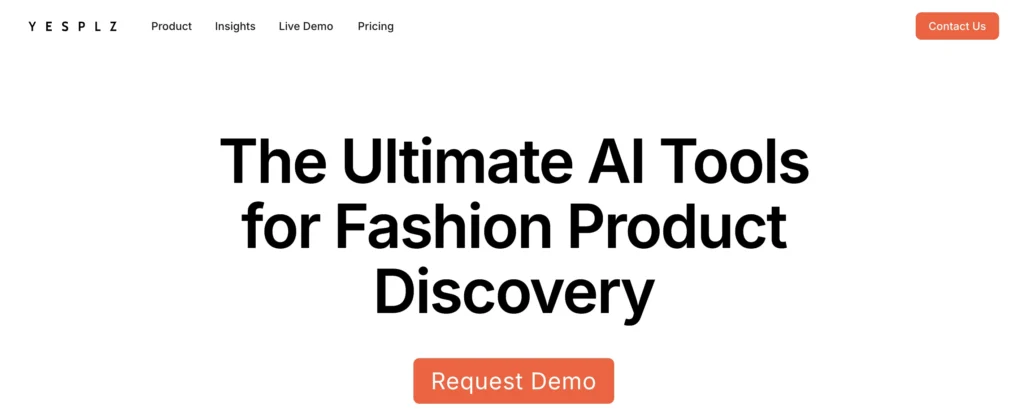
YesPlz is an AI fashion design tool

YesPlz is a fashion-focused AI platform designed to help e-commerce brands improve product discovery and shopping experiences. It combines visual understanding, text-based search, and automated fashion tagging to deliver smarter filters, virtual styling, and personalized recommendations.

Strengths:

  • Improves user shopping experience, product discovery, may reduce returns, enhance engagement.
  • Useful for retail platforms/multi-SKU stores rather than purely design workflows.

8. Designovel
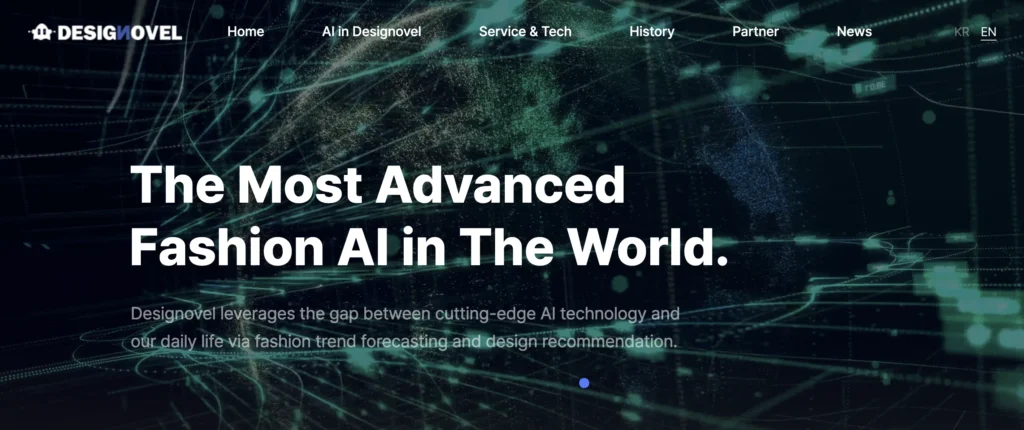
AI fashion design tool-Designovel

🎯 Best For: Designers and brands seeking data-backed validation for design decisions and staying ahead of trends.

Designovel is an AI solution for design teams focusing on trend analytics, market‐driven design recommendation, combining data collection (on/offline) and AI to guide design decisions.

Strengths:

  • Helps designers understand market direction, aligns design strategy to trends/data rather than intuition.
  • Suitable for brands that want to use data to reduce risk of mis-aligned design decisions.

9. Makethedot
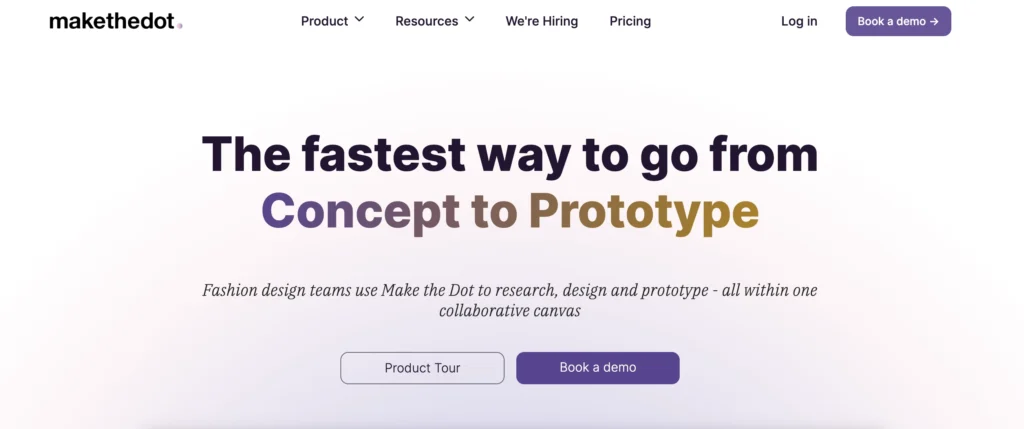
AI fashion design tool-Makethedot

🎯 Best For: Technical designers and production teams looking to increase efficiency and accuracy in pattern making.

Makethedot is an AI-powered design platform for fashion product development teams — assisting from concept/inspiration through digital sample/tech pack handoff and collaboration.

Strengths:

  • Enables collaborative workflow: concept boards, inspiration gathering, digital samples, real-time feedback across merchandising/design/development/sales.
  • Speeds time-to-market: some case studies show reduced sample cycles and faster design-to-production handoff.

10. Ablo.ai
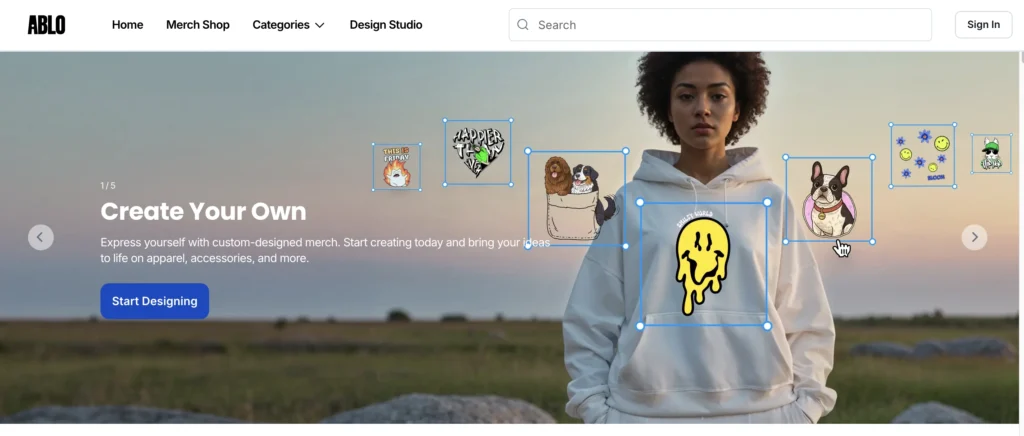
AI fashion design tool-Ablo

🎯 Best For: Independent designers, startups, and teams focused on collaborative design processes.

Ablo.ai is a collaborative AI fashion design/brand creation tool (less widely cited, but positioned for early-stage brands, design teams).

Strengths:

  • Lightweight AI fashion design assistant for creatives
  • Fast brainstorming & visual ideation tool
  • Supports collaborative brand creation & boards

11. Yoona.ai
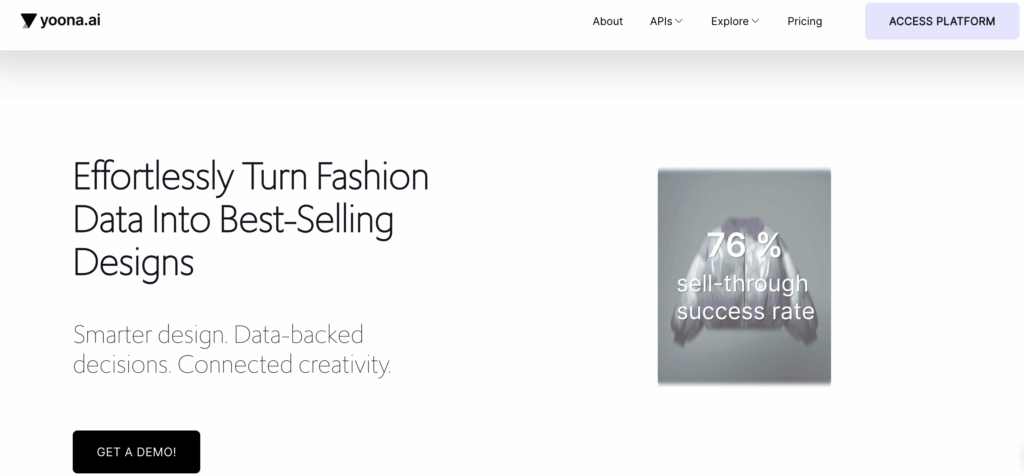
AI fashion design tool-Yoona

🎯 Best For: Fashion brands and designers who want fast, data-driven AI design generation and trend-aligned product development.

Yoona.ai is an all-in-one AI fashion design platform tailored for designers and brands. It merges generative AI with real-time trend & market data to help fashion teams generate designs, plan collections, and reduce waste.

Strengths:

  • Empowers designers by transforming text, sketches or data into fashion-ready designs in minutes.
  • Leverages market-trend insights and data-analysis to increase the chances of product success.
  • Supports sustainability by reducing wasted samples and speeding up the design-to-market process.

12. Heuritech
Heuritech

🎯 Best For: Trend departments, designers, and retailers needing deep consumer insights and predictive accuracy.

Heuritech is an AI trend-forecasting and consumer-insight tool for fashion brands: uses image recognition, social-media analysis, extracts signals for trends (colors, prints, silhouettes) ahead of market.

Strengths:

  • Computer-vision-based fashion trend forecasting
  • Analyzes consumer signals & emerging style patterns
  • Helps brands align designs to real market demand

How to Choose the Best AI Tool for Your Needs

Select strategically by evaluating:

  • Primary Objective: Precisely define your core need (Concept Generation, 3D Prototyping, Tech Packs, Trend Data, Marketing Imagery, e-Commerce Personalization).
  • User Experience: Assess the learning curve. Tools like Fashion Diffusion, Resleeve.ai, and Botika prioritize intuitive interfaces. CLO 3D and Browzwear offer immense power but require deeper investment in learning.
  • Integration Capabilities: Check compatibility with your existing ecosystem (Adobe Suite, CAD software, PLM systems like Centric, e-commerce platforms like Shopify or Magento). Seamless data flow is crucial.
  • Scalability & Budget: Match tool pricing models (subscriptions, pay-per-use credits, enterprise licensing) to your expected usage volume and financial constraints. Explore free trials/tiers.

The Future of AI in Fashion Design

AI in fashion design is only growing more powerful. As tools like Fashion Diffusion improve, we’ll see more personalized designs, faster production cycles, and a shift toward more sustainable practices. For designers, the key is to embrace these tools as collaborators, using their speed and data to free up time for creative thinking.

Whether you’re an indie designer launching your first collection or a brand looking to stay competitive, the right AI fashion design tool can transform how you work. Start with clear goals, test tools like Fashion Diffusion with your ideas, and see how AI can turn your vision into reality.

Ready to try? Explore Fashion Diffusion today and experience the next step in digital fashion design.

FAQs

What is AI fashion design?

AI fashion design uses machine learning models to generate, visualize, and analyze apparel concepts, fabrics, trends, and product images.

Which AI tool is best for converting sketches to designs?

Fashion Diffusion’s Sketch to Render tool is specifically designed for this, transforming hand-drawn or digital sketches into polished, production-ready visuals instantly.

Which AI tool is best for generating virtual model photos?

Resleeve.ai, Botika, and Fashion Diffusion (via Virtual Try-On/Background tools) are leaders, offering high-quality, diverse, and customizable on-model imagery without photoshoots.

Are there free AI fashion design tools?

Yes, options exist. Tools like Fashion Diffusion and Resleeve.ai typically offer free trials or limited free credits to test core functionalities. Many provide affordable entry-level plans.

How do fashion designers use AI practically?

Key applications include: Rapid concept exploration & mood boarding, generating sketches & variations, creating technical flats, simulating fabrics & draping in 3D, virtual prototyping & fit testing, predicting trends, developing marketing visuals (lookbooks, e-commerce images), personalizing customer styling recommendations, and optimizing patterns for sustainability.

Is AI replacing human fashion designers?

No. AI is a transformative augmentation tool. It automates repetitive tasks (sketching variations, grading, basic imagery) and provides data insights, freeing designers to focus on high-level creativity, strategic decision-making, emotional storytelling, and the nuanced cultural understanding that defines true style – areas where human ingenuity remains irreplaceable.
Avatar photo 通过Sophia Mille

Futuristic Elegance: Innovation Meets Sophistication in Fashion

Futuristic Elegance represents a powerful convergence of forward-thinking innovation and refined aesthetics within fashion and design. It moves beyond mere sci-fi tropes, weaving technological possibilities with timeless sophistication to create garments and styles that are both visually striking and inherently modern. This trend is rapidly gaining momentum, projected to fuel significant growth in the fashion industry.

What is Futuristic Elegance?

AFuturistic Elegance is a sophisticated fashion aesthetic that represents a synergy of cutting-edge innovation and timeless luxury. It is the vision of the future that is clean, refined, and highly functional, avoiding the chaotic or overtly theatrical elements often associated with traditional science fiction or cyberpunk.

💡 Futuristic Elegance = Sophistication + Technology + Minimalism

This style is characterized by a harmonious balance between bold, forward-thinking materials and impeccable, classic tailoring, making the final garment both aspirational and wearable.

How is it Different from General “Futuristic” Fashion?

Futuristic Elegance is about dressing for the sophisticated world of tomorrow—where innovation is seamlessly integrated into a lifestyle of luxury.

FeatureFuturistic EleganceTraditional Sci-Fi/Cyberpunk Fashion
WearabilityHigh; designed to be sophisticated and wearable in a luxury setting.Low; often theatrical, avant-garde, or costume-like.
AestheticClean, sleek, minimalist, polished, and tailored.Gritty, dystopian, maximalist, raw, or overtly experimental.
TechnologySubtly integrated to enhance function (e.g., climate control, perfect fit).Overt and visible (e.g., exposed wires, LED strips, bulky tech components).

Key Elements of Futuristic Elegance Fashion

Futuristic elegance is not about excess—it’s about precision. The look is composed of carefully balanced contrasts: metallic shine against soft fabrics, structured silhouettes meeting organic flow.

1. Clean Lines and Architectural Minimalism

The emphasis is on precise cuts, sharp edges, and structured silhouettes. Designers move away from excessive draping and ornamentation, focusing on the pure form of the garment.

2. Smart and Dynamic Materials

This is where the “Future” part comes in. The style relies on advanced materials that often have a dynamic quality.

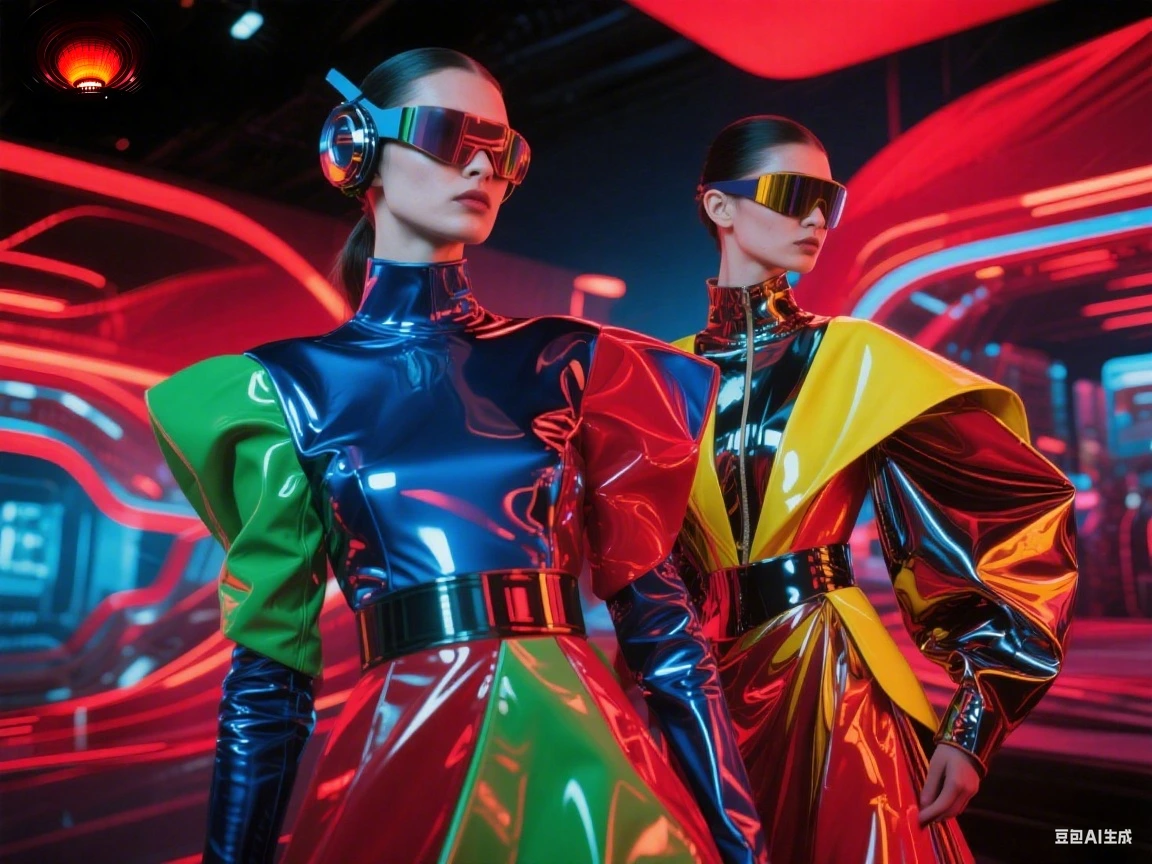
  • Metallics: Chrome, liquid silver, and iridescent or holographic fabrics that subtly shift color and shine as the wearer moves.
  • Smart Fabrics: Materials that regulate temperature, are self-cleaning, or incorporate tiny, hidden tech elements (like luminous threads or subtle digital displays).
  • Sustainable Tech: Use of lab-grown silks, biodegradable polymers, or recycled ocean plastics re-engineered for a luxurious finish.

3. Subtle Tech Integration

Technology is integrated thoughtfully and discreetly to enhance functionality without looking gimmicky. For example, hidden magnetic clasps instead of buttons, invisible pockets for wireless charging, or garments designed using AI-generated patterns for a unique, complex texture.

4. A Refined Color Palette

The base colors are typically The New Neutrals (deep blacks that absorb light, glowing whites, and refined grays). Bold impact comes from the use of vibrant, high-sheen metallics or digitally-inspired colors as accents.

2025 Futuristic Elegance: AI-Inspired Outfit Ideas​​

1. Smart Tech-Integrated Wearables

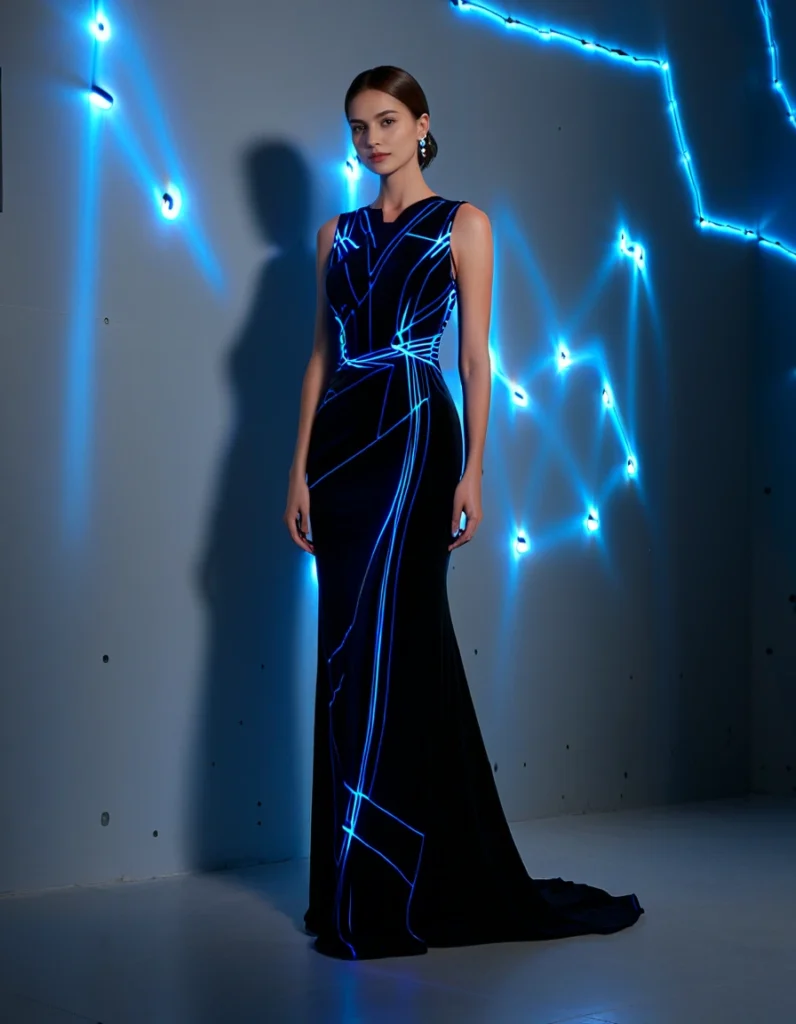
Garments featuring subtle, functional technology like climate control, biometric monitoring, or adaptive lighting (e.g., neon patterns) integrated elegantly into the design, suitable for both activewear and sophisticated evening looks.

Smart Tech-Integrated Wearables
Fashion Diffusion AI-generated

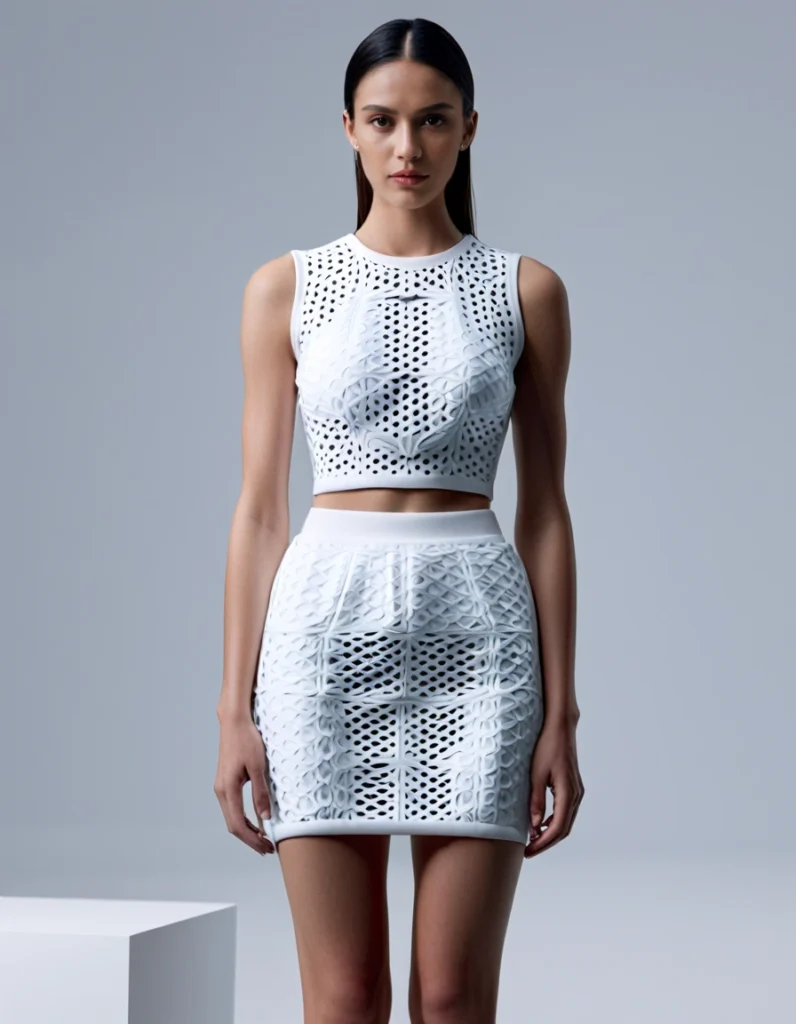
2. 3D-Printed & Structured Apparel

Utilizing 3D printing for intricate detailing, custom fits, zero-waste production, and creating unique textures or architectural forms that maintain a clean, sophisticated line.

3D-Printed Architectural Apparel
Fashion Diffusion AI-generated

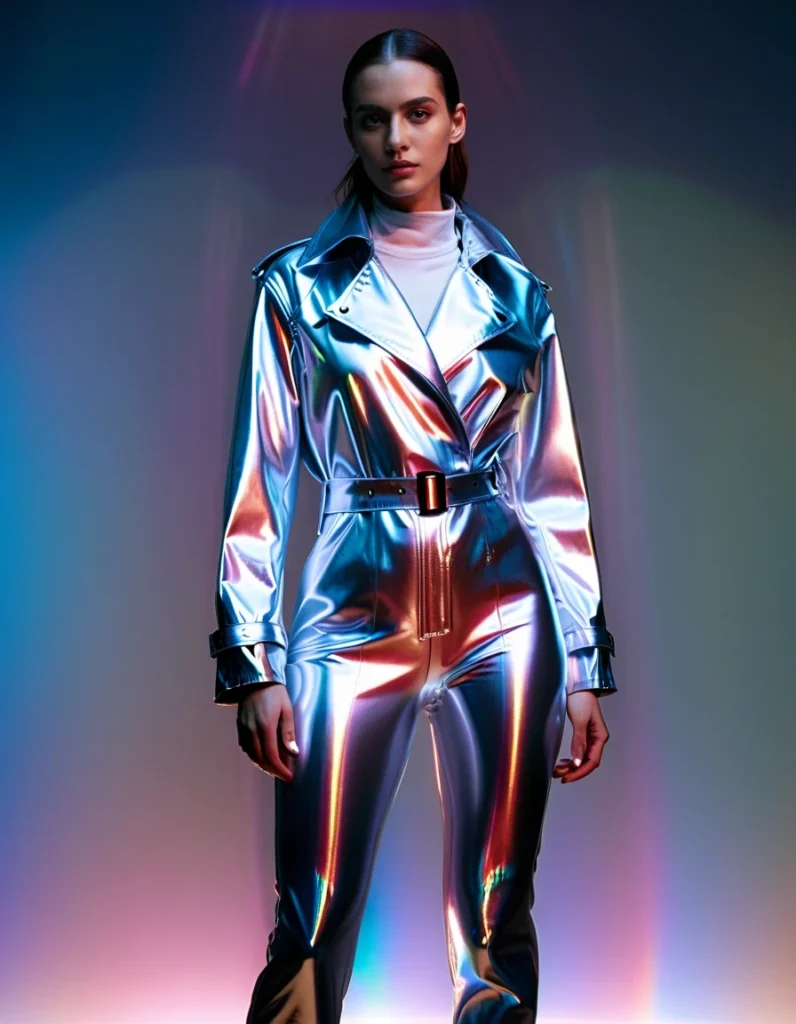
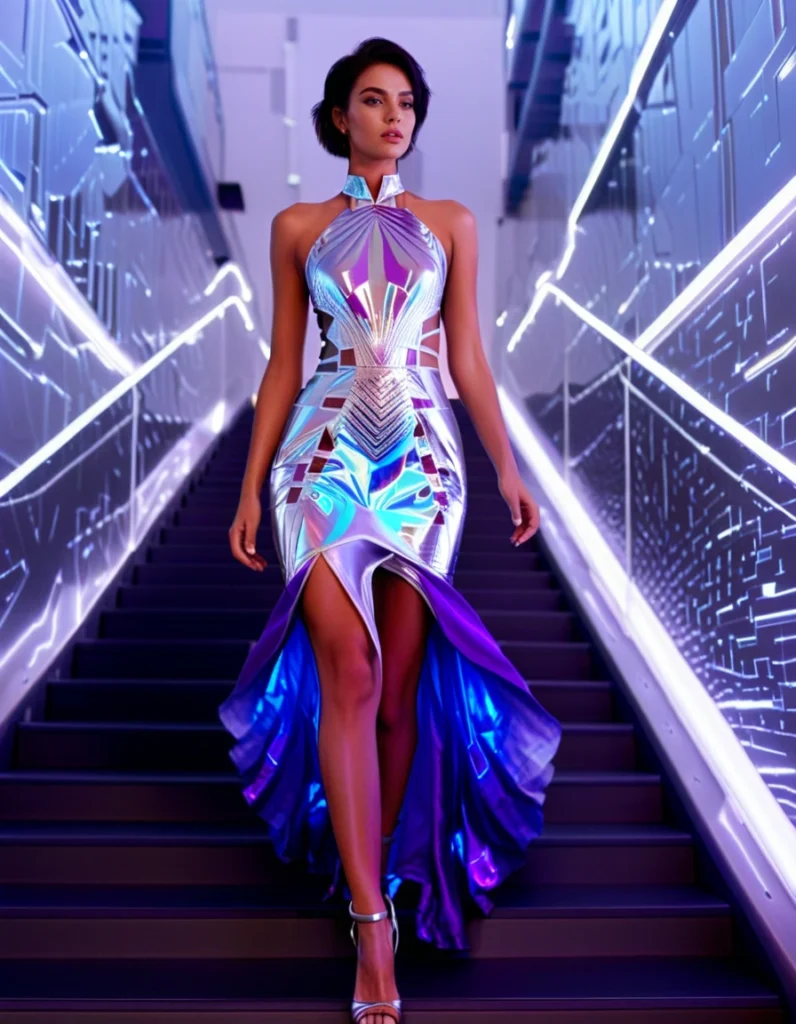
3. Minimalist Metallic & Iridescent Ensembles

Dominated by sleek cuts in shimmering silver, chrome, liquid metals, or iridescent fabrics that capture light dynamically, embodying a space-age yet luxurious feel.

Minimalist Metallic Ensembles
Fashion Diffusion AI-generated

4. Eco-Conscious Smart Fashion

Combining sustainability with innovation-biodegradable fabrics, lab-grown materials, or recycled polymers (like ocean plastics reimagined) enhanced with tech features or possessing inherently futuristic properties (self-cleaning, color-shifting).

Eco-Conscious Smart Fashion
Fashion Diffusion AI-generated

5. Digital & Holographic Pattern Play

Leveraging AI and digital design to create complex, dynamic prints and holographic effects that change with movement or light, turning garments into evolving works of art.

Digital Holographic Patterns
Fashion Diffusion AI-generated

The Crucial Role of AI in Futuristic Elegance Creation

Designing within the realm of Futuristic Elegance demands experimentation with advanced materials, complex patterns, and innovative silhouettes. This is where AI-powered design tools become indispensable, drastically reducing the traditional barriers of cost, time, and resource intensity.

Platforms like Fashion Diffusion are revolutionizing this process, acting as a generative AI stylist for effortless fashion design:

Rapid Prototyping & Visualization

Transform sketches (Sketch to Render) or text descriptions (Text to Sketch) into high-quality visualizations of futuristic designs in seconds, allowing designers to experiment with clean lines, metallics, holographic effects, and unique textures​​ instantly. See how different sustainable smart fabrics or tech integrations would look before physical sampling.

Virtual Photoshoots & Model Diversity

Generate high-quality, photorealistic images (Virtual Try-On, AI Model Replacement) of futuristic elegance outfits on diverse virtual models in any setting (Change Background), eliminating the need for costly physical photoshoots. Ensure consistent lighting and true-to-life color representation (Recolor potential).

Material & Pattern Experimentation

Easily test how different innovative materials (Apply fabric), vibrant colors, or complex AI-generated patterns (Image to Sketch inspiration) work on a design.

Unmatched Efficiency

Slash design iteration time (saving 5-7 hours per design) and reduce production costs associated with sampling and photography by up to 95%.

Embrace Futuristic Elegance​ with Fashion Diffusion

Futuristic Elegance is more than a fleeting trend; it’s a fundamental shift toward a fashion future where sophistication meets innovation and responsibility. It captures the zeitgeist, reflecting technological advancement and a growing eco-consciousness, while offering a vision of style that is both aspirational and wearable.

The integration of AI fashion design tools like Fashion Diffusion is pivotal. They remove friction from the creative process, allowing designers to focus purely on innovation and refine the ​​sleek aesthetic that defines Futuristic Elegance. By enabling rapid visualization of complex ideas involving smart fabrics, holographic, metallics, and sustainable materials, AI accelerates the journey from visionary concepts to market-ready reality.

Start your journey into AI-powered design.

👉 Create your own futuristic elegance fashion with Fashion Diffusion where technology meets timeless style.

Futuristic Elegance FAQs

How does Futuristic Elegance differ from cyberpunk or sci-fi fashion?​

While inspired by futurism, Futuristic Elegance prioritizes sophistication and wearability over dystopian aesthetics. It blends innovation with timeless silhouettes—think minimalist metallic tailoring rather than tactical gear, or holographic elegance instead of gritty neon.

Are Futuristic Elegance outfits sustainable?

Yes—prioritizes eco-friendly materials (biodegradable fabrics, recycled polymers) and sustainable production as core elements.

Can I create Futuristic Elegance looks with AI?

Yes! Tools like Fashion Diffusion turn sketches/text into visuals, enable virtual try-ons and experiment with holographic/tech elements.

Is AI really designing clothes now?

Yes. AI assists in concept generation, pattern making, and even color harmony testing. Designers still lead creatively, but AI speeds up and expands their possibilities.

Avatar photo 通过Ethan Davis

AI Fashion Design: The Future of Creative Clothing Design (2025 Guide)

The fashion industry has always been synonymous with creativity, but as we step into 2025, a powerful new collaborator is reshaping the design landscape: Artificial Intelligence (AI). AI Fashion Design is no longer a futuristic concept; it’s a present-day reality that is fundamentally altering how clothing is conceived, designed, and produced.

This comprehensive guide explores the current state of AI Fashion Design, the essential tools available, key trends, and how designers can integrate AI into their creative workflow.

What Is AI Fashion Design?

AI fashion design is the use of artificial intelligence technologies—like machine learning, computer vision, and generative design—to assist or automate parts of the fashion creation process. Instead of starting from a blank sketchpad, designers can now collaborate with AI systems that generate new silhouettes, predict trends, or even simulate materials in 3D.

Common AI applications in fashion design include:

  • Generative AI tools that create design concepts and color palettes.
  • AI pattern-making systems that optimize fabric usage.
  • Trend prediction algorithms that analyze global data to forecast what’s next.
  • Virtual design studios that visualize outfits in real time.

AI doesn’t replace human creativity—it amplifies it. Designers gain more time for storytelling and innovation while AI handles repetitive or data-heavy tasks.

How AI Is Transforming Fashion Design in 2025

The year 2025 marks a critical inflection point where Artificial Intelligence (AI) ceases to be a novelty and becomes foundational to the creative and commercial success of the fashion industry. The transformation is defined by five synergistic shifts:

1. Data-Driven Creativity and Trend Mastery

AI acts as a tireless trend forecasting engine, analyzing massive, siloed datasets—from global runway archives and social media sentiment to minute-by-minute sales and search queries. This capability allows designers to move beyond mere intuition; they gain predictive mastery.

AI identifies emerging aesthetics and consumer desires with precision, ensuring that creative collections resonate powerfully with the market upon launch, minimizing commercial risk.

2. Radical Acceleration of Design Cycles

Design cycles that once took months can now happen in days. AI tools can instantly create dozens of mood board variations, sketch silhouettes, and even simulate how fabrics behave in motion.

This doesn’t just save time; it allows brands to react quickly to cultural shifts. Whether it’s a viral TikTok aesthetic or a new seasonal trend, designers can turn concepts into visuals in hours using AI outfit generators like Fashion Diffusion.

For independent creators or small labels, this speed levels the playing field—enabling them to compete with larger brands that once dominated production timelines.

3. Hyper-Personalization at Scale

AI fashion design is making mass personalization a reality. Instead of designing for general demographics, brands can design for individuals.

By analyzing a user’s preferences, purchase history, or body measurements, AI can generate personalized outfit recommendations or even custom clothing designs. This bridges the gap between creative vision and consumer demand—delivering pieces that feel uniquely “you.”

It also strengthens brand loyalty. When customers feel that a design understands their style, they’re far more likely to engage, purchase, and advocate for the brand.

4. Mandating Sustainable Innovation

AI serves as the industry’s most powerful ally in addressing the global sustainability crisis. It drives efficiency by optimizing fabric cutting patterns to achieve zero-waste layouts and streamlines supply chains to minimize carbon emissions. Furthermore, sophisticated generative models can simulate new, eco-friendly materials and rigorously test their durability and performance digitally, moving the industry toward a truly circular design process.

5. The Rise of Phygital Fashion and Virtual Commerce

Through AI outfit generators and increasingly accurate Virtual Try-On (VTO) experiences, customers can preview designs on personalized 3D avatars before making a physical purchase. This innovation significantly lowers return rates and aligns with the massive growth of digital fashion as a viable product category within gaming, Augmented Reality (AR), and metaverse ecosystems, blurring the lines between physical and virtual apparel.

Top AI Fashion Design Tools in 2025

The ecosystem of AI fashion tools is growing rapidly. Below are some of the most promising platforms in 2025 that empower designers and brands to innovate faster and smarter:

ToolCore Feature / StrengthBest For / Use Case
Fashion DiffusionText/sketch to photorealistic design visuals, virtual try-on, recolor, background changeAll-in-one AI design & marketing tool
The New BlackRapid concept generation and customizationDesigners creating original, brand-specific styles
Resleeve.aiPhotorealistic fashion visuals, brand-style trainingIndie designers & marketing visuals
CLO 3DTrue-to-life 3D garment simulation and fittingTechnical designers, pattern makers
BrowzwearEnd-to-end 3D workflow with accurate fabric physicsBrands focusing on production-ready 3D
BotikaAI on-model generation for e-commerce photosFashion retailers needing scalable visuals
YesPlzChatGPT-powered AI stylist & visual discoveryOnline stores optimizing user experience
DesignovelAI trend forecasting & design analyticsBrands using data to guide creative decisions
MakethedotAI-assisted pattern generation & gradingTechnical design and production teams
AbloCollaborative AI design platformStartups & co-creation teams
Vue.aiAI personalization, styling & virtual try-onE-commerce fashion platforms
HeuritechPredictive trend analytics from social dataTrend and merchandising departments
Lalaland.aiAI-generated diverse virtual modelsInclusive fashion e-commerce and campaigns
Reface AIFace-swap & digital modeling for campaign creationCreative marketing and virtual shoots
ArtbreederGenerative AI for creative concept explorationFashion concept artists & mood board ideation

Why Fashion Diffusion Leads the New Wave of AI Fashion Design

AI Fashion Design Tool | Fashion Diffusion

At the center of the next-generation AI design landscape, Fashion Diffusion stands out as a complete creative ecosystem built specifically for fashion designers, brands, and visual creators. It’s not just another AI generator—it’s a platform designed to accelerate every stage of the creative process, from concept to campaign.

Beyond visual generation, Fashion Diffusion also offers:

  • Text-to-Sketch & Sketch-to-Render: Turn text prompts or sketches into multiple design variations and photorealistic visuals within seconds.
  • AI Image Editing: Built-in tools for recoloring, background removal, model swap, and upscaling—ideal for e-commerce and social visuals.
  • Fabric Simulation: Upload fabric patterns or textures and preview realistic materials directly on your AI designs.
  • Virtual Try-On: Generate lifelike model shots, switch backgrounds, or test garments on different body types instantly.
  • Style Innovation & Fusion: Modify design strength or combine two styles to explore new creative directions effortlessly.

Fashion Diffusion helps creators design faster, visualize better, and reduce production costs—enabling a more efficient and sustainable fashion workflow.

How to Integrate AI into Your Fashion Design Workflow

Embracing AI doesn’t mean abandoning traditional design skills. It’s about blending creativity with technology. Here’s a practical roadmap to help you get started:

Step 1: Define Your Goals

Decide what role AI will play in your process. Are you using it for creative exploration, production efficiency, or marketing visuals? The clearer your goal, the easier it is to choose the right tools.

Step 2: Experiment and Iterate

Start small. Use tools like Fashion Diffusion to generate outfit ideas or test visual directions. Treat AI as a digital sketchbook—a space to brainstorm, not to finalize.

Step 3: Combine AI with Human Creativity

AI can generate ideas, but it’s your artistic vision that gives them meaning. Refine what AI creates. Adjust proportions, play with materials, and infuse emotion into the concept.

Step 4: Train AI on Your Brand Data

Advanced tools allow brands to “teach” AI their visual identity—from color palettes to signature silhouettes. Over time, the system becomes an extension of your creative DNA.

Step 5: Stay Ethical and Transparent

As AI becomes part of fashion storytelling, transparency matters. Disclose when AI is used in imagery or campaigns, and ensure that data sources respect copyright and diversity.

Now Is the Time to Embrace AI in Fashion

The global fashion market is more competitive than ever. Consumers expect innovation, personalization, and sustainability—all at once. Brands that integrate AI early will have a clear advantage: faster creativity, smarter insights, and deeper audience connections.

Whether you’re an established label or an emerging designer, AI fashion design tools like Fashion Diffusion can help you unlock creative freedom. With just a few words or images, you can visualize fresh ideas, explore new aesthetics, and bring your imagination to life.

FAQ

Can AI really design clothes from text prompts?

Yes. Modern AI outfit generators like Fashion Diffusion can transform short text prompts into detailed digital outfits within seconds. Designers can use these visuals for ideation, concept testing, or marketing campaigns without needing manual sketches.

What is the difference between generative AI fashion design and 3D simulation tools?

Generative AI tools (like Fashion Diffusion) create new design ideas, color palettes, and visual concepts from text or images.
3D simulation tools (like CLO 3D or Browzwear) focus on technical garment construction and virtual fitting.
Many brands combine both to move seamlessly from creative ideation to production.

Are AI fashion tools suitable for small brands or independent designers?

Absolutely. Many AI fashion design tools are cloud-based and affordable, making them accessible for small teams and solo creators. Tools like Fashion Diffusion and Resleeve.ai let emerging designers produce professional-grade visuals without expensive software or equipment.

Can AI replace human fashion designers?

No—AI can assist, but not replace, human creativity. It can analyze data and generate visuals, but true fashion design still relies on human intuition, cultural understanding, and artistic storytelling. AI is best viewed as a co-creator, not a competitor.

Where can I try AI fashion design tools for free?

You can experiment with Fashion Diffusion—an easy-to-use AI fashion design platform that lets you generate and refine digital outfits instantly. It’s ideal for testing ideas, creating campaign visuals, or speeding up your design workflow.