
When Louis Vuitton featured the virtual model Lightning in a campaign, it wasn’t a stunt. It was a clear signal that fashion is rapidly moving toward AI-powered modeling and visual production.
Today, virtual models are revolutionizing fashion e-commerce—enabling brands to generate on-model product images instantly, digitally fit clothing, and scale content creation without studios, logistics, or costly reshoots.
This article provides a complete guide to AI virtual models, covering what they are, how they work, their key benefits, and practical steps to create them.
What Is an AI Virtual Model?
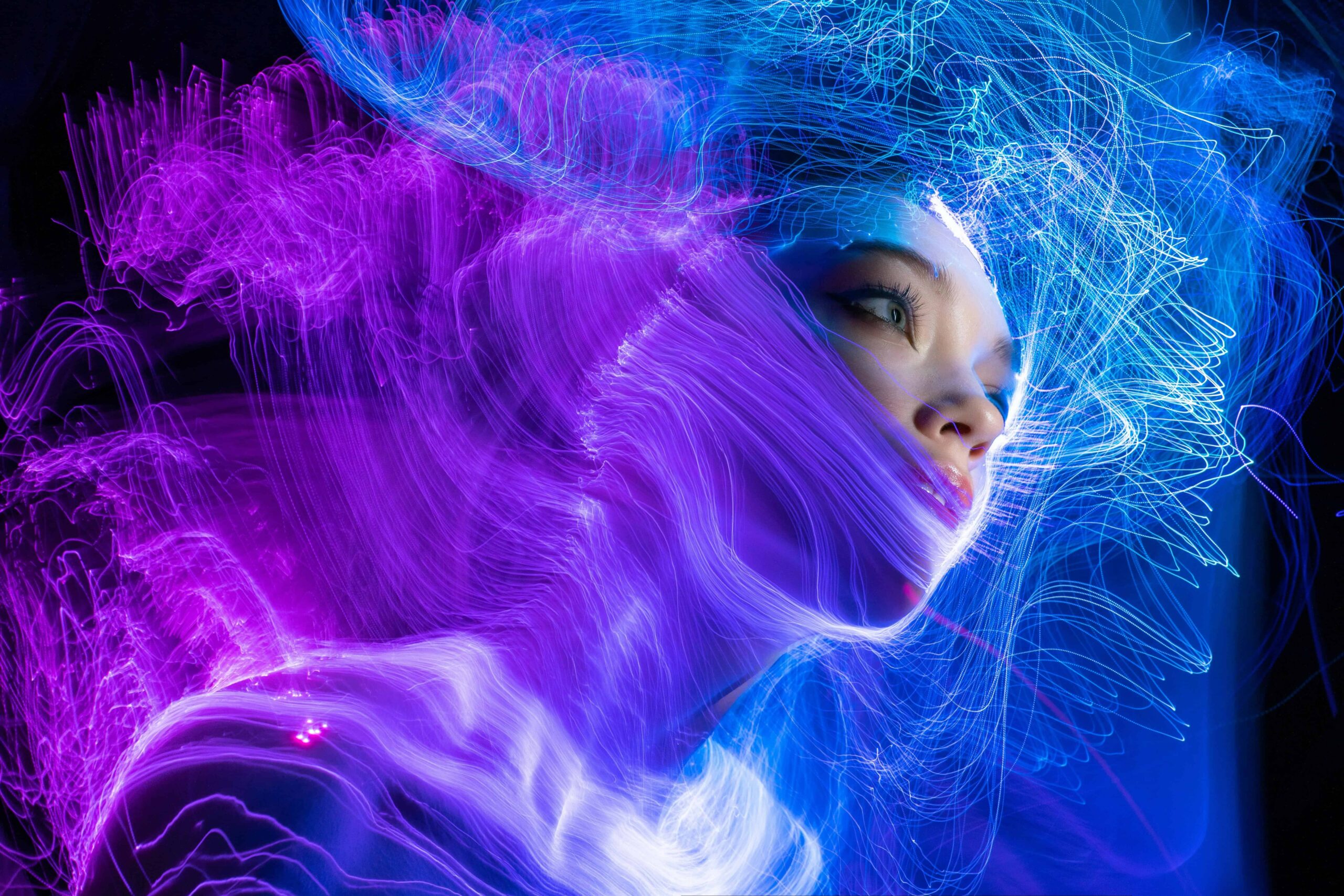
AI Virtual Models form the digital foundation of visual content in fashion e-commerce. They are hyper-realistic, human-form digital assets created entirely by AI, designed specifically for the professional display of clothing and accessories.
Key Concept
An AI Virtual Model is a photorealistic, three-dimensional (3D) human likeness created using Generative Artificial Intelligence to replace live photoshoots.
Unlike traditional models, AI virtual models are fully digitized assets—from skin texture to every strand of hair. They’re not retouched photographs; they are infinitely customizable digital humans whose appearance, body type, pose, and expression can be adjusted on demand.
Three Main Types of AI Virtual Models
Although all are digital human representations, virtual models generally fall into three key categories based on how they’re used in fashion:
1. Product Display Models
These virtual models are built to serve Product Detail Pages (PDPs) and large-scale e-commerce workflows. Their purpose is to showcase clothing accurately—capturing fit, drape, texture, and proportions across different body types and sizes.
They prioritize realism, consistency, and repeatability, without the need for personalities, stories, or social media presence.
2. Virtual Try-On for Customers
Virtual try-on (VTO) allows shoppers to visualize how a garment looks and fits on their own body shape or a personalized digital double, often using Augmented Reality (AR) or AI body mapping.
The key value is 1:1 personalization and maximizing fit accuracy. This is a direct tool to boost purchasing confidence and reduce return rates. For instance, major platforms like Google Shopping have integrated VTO capabilities, allowing users to virtually ‘try on’ clothes directly within the search environment.
3. Virtual Fashion Influencers
These models act as digital brand ambassadors, designed for campaigns, storytelling, and social engagement. They are given distinct personalities, aesthetics, and narratives. The goal is to build audience affinity and community, giving brands a fully controlled representative who can appear in campaigns, videos, and influencer-style content.
One of the most globally recognized examples is Lil Miquela, a fictional, computer-generated influencer created by the robotics and AI firm Brud in 2016. With millions of followers on Instagram, she has successfully partnered with luxury brands such as Prada and Calvin Klein.
How AI Virtual Models Work
Understanding the mechanics behind AI virtual models is crucial for brands selecting the right content production strategy. Currently, two primary technological streams are used to create these digital assets: CGI and Generative AI, both offering different trade-offs in control, speed, and cost.
However, the efficiency, scalability, and lower technical barriers have made AI virtual modeling the dominant choice for high-volume fashion e-commerce today.
CGI Virtual Models
This method relies on Computer-Generated Imagery (CGI) and 3D graphics software. Professional 3D artists manually sculpt and texture the virtual model, creating a detailed digital skeleton (rig) and skin. The garment is either designed digitally or recreated from a physical scan, then digitally “dressed” onto the rig.
It offers the highest level of precision and control over every detail, ensuring perfect anatomical accuracy and lighting. However, the drawbacks are significant. The process is highly labor-intensive, requires specialized artistic and technical skills, and results in high upfront costs and slow production cycles.
AI Virtual Models
This is the cutting-edge method that makes virtual modeling accessible and scalable. It leverages advanced Diffusion Models to merge existing product images with generated human forms.
Unlike CGI’s reliance on manual 3D modeling, Generative AI uses Image-to-Image synthesis techniques to create the final visual. The central concept is the decoupling of the garment from the model.
AI is extensively trained on vast datasets to understand textile behavior and how those textiles interact with the human form. When a user provides a flat-lay image and a text prompt, the AI performs two critical tasks:
- Model Generation: Generates a high-quality digital human figure matching the user’s prompt (pose, light, and features).
- Garment Fitting: It intelligently extracts the texture and pattern from the flat-lay image. Then it projects it onto the generated digital figure, adjusting for perspective and simulating realistic wrinkles and folds based on the model’s pose.
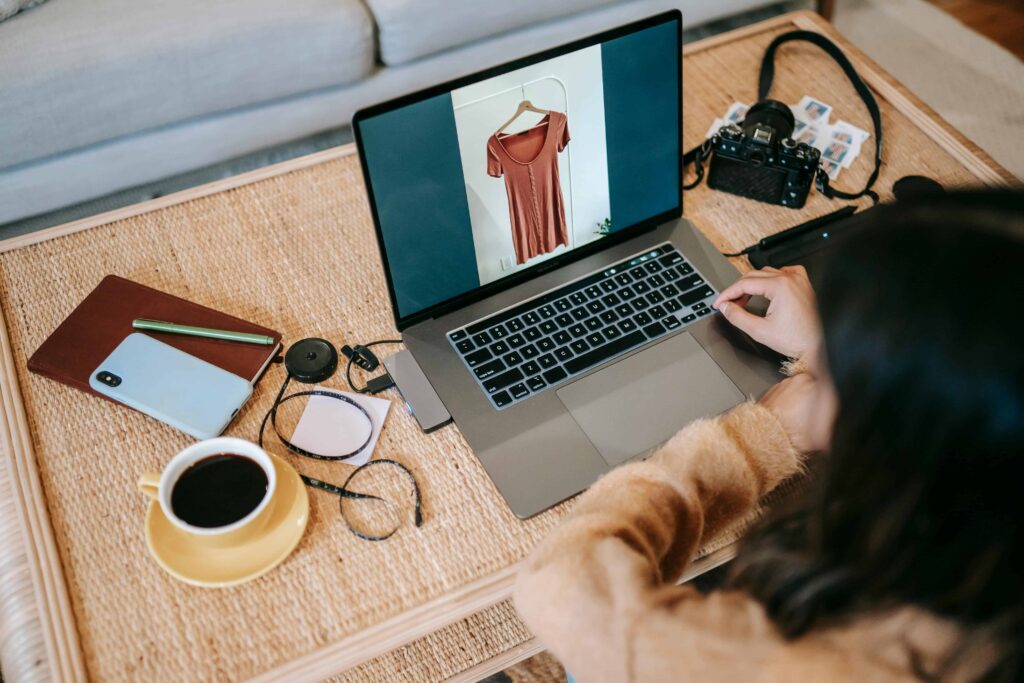
Generative AI may occasionally require minor post-production cleanup and offers less absolute control than bespoke CGI. However, its advantages in speed, scalability, and cost-efficiency cement its status as the superior choice for high-volume fashion e-commerce today.
Benefits for Fashion Brands & E-commerce
AI Virtual Models aren’t just a new way to produce visuals—they solve long-standing challenges in fashion e-commerce, from production bottlenecks to consistency issues across SKUs.
For brands managing large assortments or frequent drops, AI virtual models create a faster, more controllable, and more cost-effective workflow.
Operational Efficiency
The immediate gains from using virtual models are seen in the streamlining of the content production pipeline, directly addressing the pain points of physical photography.
Lower Production Costs
Virtual models remove many of the major expenses tied to traditional photoshoots—model fees, studio rentals, travel, and constant reshoots. Once the core digital model is created, producing new images becomes a predictable, low-cost process, especially for large catalogs.
Quick Turnaround Time
By eliminating the need for casting, scheduling, travel, makeup, and physical studio time, brands can generate thousands of modeled images in hours, not weeks. This speed allows for quicker reactions to market trends, inventory changes, and immediate product launches.
Full SKU Coverage
With a reusable virtual model, brands can generate on-model imagery for every item in the collection—including colorways, replenishments, and products still awaiting final samples. This solves the common problem of mismatched or incomplete PDP visuals during new drops.
Brand Visuals
Virtual models empower brands to deliver a more effective and ethical visual experience to their customers, directly impacting conversion and loyalty.
Visual Consistency
Virtual assets guarantee uniformity in every image. Lighting, angle, pose, and background can be perfectly replicated across hundreds of product pages. This gives e-commerce sites a cleaner, more professional look and builds greater trust for first-time buyers.
Inclusive Representation
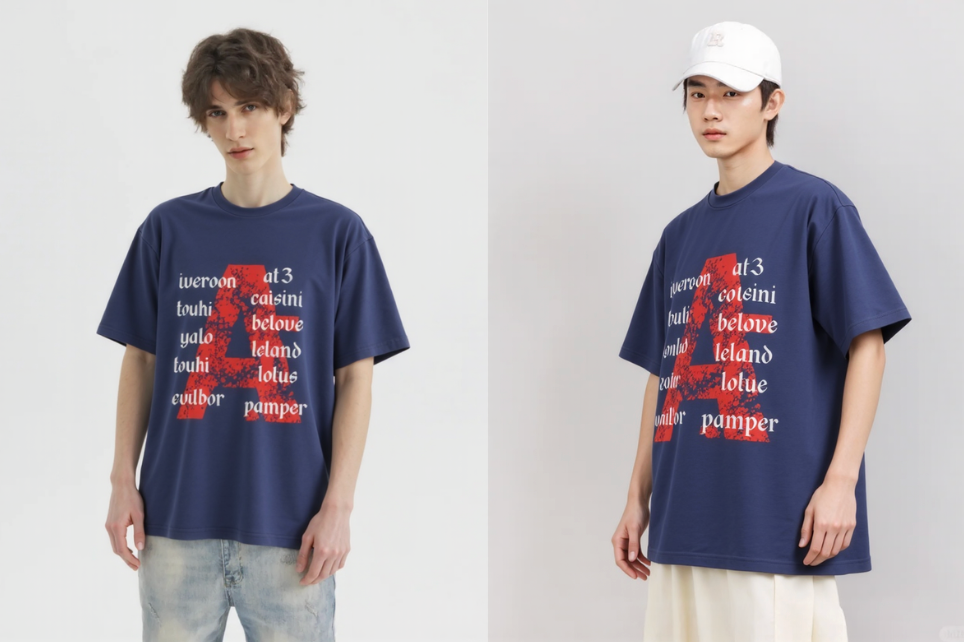
Brands can easily adjust a virtual model’s body type, skin tone, and features to reflect different customer segments. This allows shoppers to better visualize fit and styling, which often leads to higher engagement and fewer returns.
Strategic Growth
Beyond operational gains, virtual models offer critical long-term benefits related to brand strategy and corporate responsibility.
Marketing Control and Safety
Brands maintain absolute control over the virtual model’s persona, eliminating the risk of reputational damage, social media scandals, or contractual issues associated with human influencers and public figures.
Sustainable Development
By reducing the need for travel, shipping samples, and physical resources, virtual content creation significantly lowers the brand’s carbon footprint, aligning with growing consumer demand for sustainable practices.
Creative Expression
Virtual environments are unconstrained by physics. Brands can achieve highly creative, hyper-realistic, or abstract visual effects, poses, and settings that would be either impossible or prohibitively expensive to capture in a physical studio.
How to Create Virtual Models Using FashionDiffusion.ai
Creating professional, photorealistic virtual models has never been easier. With Fashion Diffusion, fashion e-commerce brands can transform sketches, flat-lays, or product photos into on-model visuals in just a few steps.
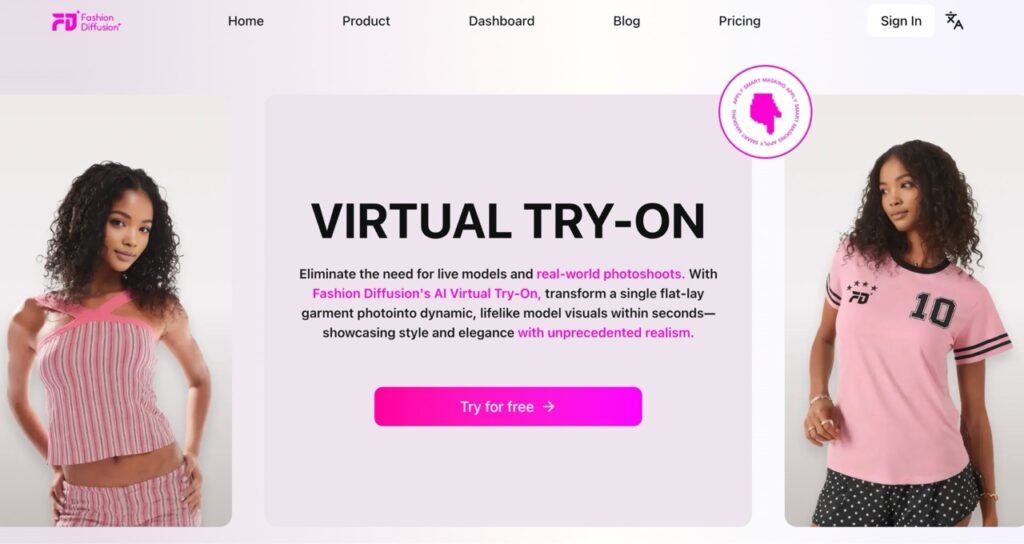
4 Steps to Create a Virtual Model
The process of bringing your apparel to life with AI is fluid and simple, designed to maximize both speed and creative control without learning curves:
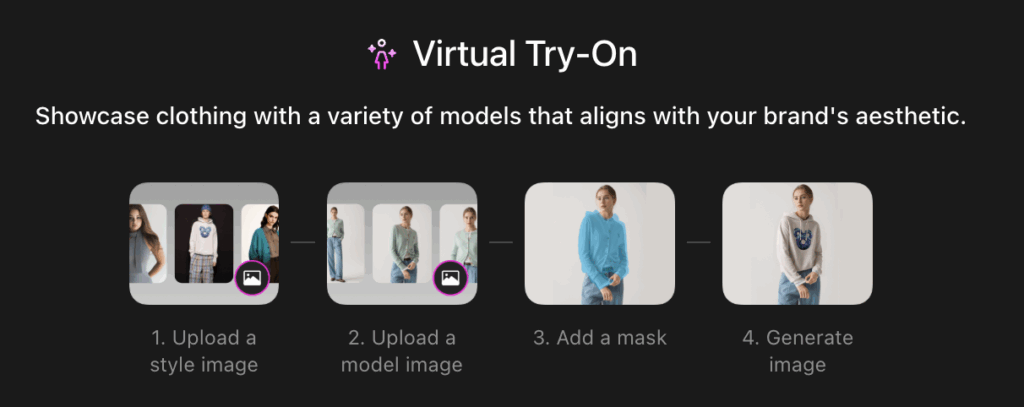
1. Upload Source Image
Start by uploading your garment’s source image—whether it’s a standard flat-lay photograph or an existing model photo. The AI instantly scans and identifies the crucial clothing contours and fabric details.
With Fashion Diffusion’s image/text to sketch tools, even hand-drawn designs or just text descriptions can become professional assets—laying the groundwork for virtual try-on.
2. Select Your AI Model
Next, find the perfect model for your garment. Browse the platform’s diverse virtual model library, featuring various body types, skin tones, genders, and poses. Whether you’re showcasing casual wear or high-fashion collections, there’s a model to match every style.
For brand consistency, the Face Swap feature allows you to apply brand-specific facial aesthetics. You can also customize body shape, skin tone, and hairstyle, ensuring your virtual models reflect your target audience and diversity goals. All models are saved in your personal gallery for reuse in future collections, keeping visuals consistent across campaigns.
3. Apply Smart Masking
To achieve lifelike results, guide the AI using masking tools to lock the garment areas. The system then automatically optimizes alignment, ensuring natural folds, realistic draping, and zero awkward distortions.
This step guarantees that every on-model image looks authentic, giving your customers a clear view of fit and style, just like a professional photoshoot.
4. Generate AI Fashion Photos
Finally, hit “Generate” and watch the AI work its magic. The platform seamlessly combines your model’s pose, the clothing dynamics, and lighting settings to produce HD, photorealistic renders in seconds.
These images are ready to deploy across product pages, social media, or marketing campaigns. With FashionDiffusion, brands can quickly scale content production, showcase every SKU, and experiment with creative visuals without the costs or delays of traditional photography.
The Future of AI Virtual Models
AI virtual models are no longer experimental visuals—they are rapidly becoming the new standard for fashion e-commerce. Adopting AI virtual modeling today is not merely about cutting costs. It’s about future-proofing visual strategy and investing in the immersive, personalized shopping experiences that customers will soon demand.
Looking ahead, the evolution of AI modeling will accelerate beyond static images. We anticipate a shift toward high-quality AI-generated video, personalized Virtual Try-On (VTO) experiences, and seamless integration into AR and the Metaverse.
For fashion brands and e-commerce teams, now is the moment to build the foundation. Try Fashion Diffusion.ai to adopt virtual models without technical barriers—reducing production costs, accelerating launches, and expanding creative possibilities from day one.
FAQs
An AI virtual model is a photorealistic digital human used to display clothing online, allowing brands to produce scalable, consistent on-model images without physical photoshoots.
An AI-generated influencer is a computer-created personality that produces photos, videos, and social content, allowing brands to run campaigns without relying on real creators.
Yes. You can find AI tools that offer a free trial to generate virtual models for product displays, letting brands test outfits, build lookbooks, and create marketing visuals at no cost.
Virtual models display clothing and jewelry in realistic poses, helping brands showcase fit, styling, and details without physical shoots—ideal for e-commerce, lookbooks, and social campaigns.
You can create an AI virtual model by uploading reference images, choosing a base model, and customizing body type, face, and style using virtual try-on tools like FashionDiffusion.ai.


关于作者