
Virtual try-on has come a long way in recent years, transforming what used to be a guess-and-check shopping experience into a visual and interactive one. From spending on product photography to letting customers “try before they buy” from their phones, these tools are changing the way we shop for clothes. In 2026, with so many tools available, knowing which one fits your needs can be tricky. Let’s break it down and explore the best virtual try on tools this year.
What is Virtual Try-on
Virtual try-on is a technology that lets you see how clothing, accessories, or even makeup would look on a person—or on yourself—without physically trying them on. It combines computer vision, AI, and sometimes augmented reality to simulate fit, style, and appearance in real time.
For brands, this means creating model images or lookbooks without expensive photoshoots. For consumers, it allows trying clothes from the comfort of home, reducing the uncertainty of online shopping.
As its core, virtual try-on bridges the gap between imagination and reality, giving a realistic preview that was impossible just a few years ago.
2 Types of Virtual Try-on
Not all virtual try-on tools are built the same. Depending on who is using them and what the goal is, these tools fall into two main categories. Understanding the difference can help brands create content more efficiently and help shoppers find the best try-on experience.
Brand-Side Model Generation
This type of virtual try-on is designed primarily for brands and content creators. Instead of photographing real models, brands can generate images of clothing on virtual models with different body types, poses, and styles. It saves time, reduces cost and allows for rapid experimentation with new designs.
Typical use cases include product lookbooks, marketing images for social media, and online store galleries. The focus is on creating visually appealing, realistic content that showcases the product effectively.
Customer-Facing Virtual Try-On
Customer-facing virtual try-on is made for shoppers themselves. Users can see how clothes or accessories would look on their own bodies using a phone, webcam, or uploaded photo. This helps shoppers make more confident purchase decisions and reduces the likelihood of returns
These tools are usually integrated directly into e-commerce platforms or apps, providing an interactive experience. The focus here is on realism and personalization, letting each customer visualize the product on themselves.
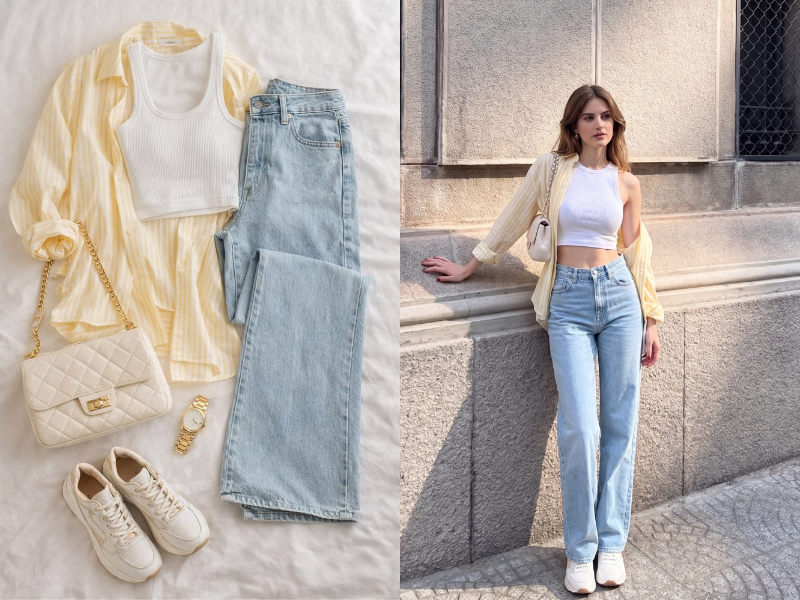
Best Virtual Try-On tools for Brand-Side Model Generation
For brands, virtual try-on isn’t just about “trying clothes on”, it’s about generating scalable, consistent visuals that replace or reduce traditional photoshoots. The tools below all approach this from a slightly different angle, but they share one goal: helping you visualize garments on models quickly and realistically.
Fashion Diffusion
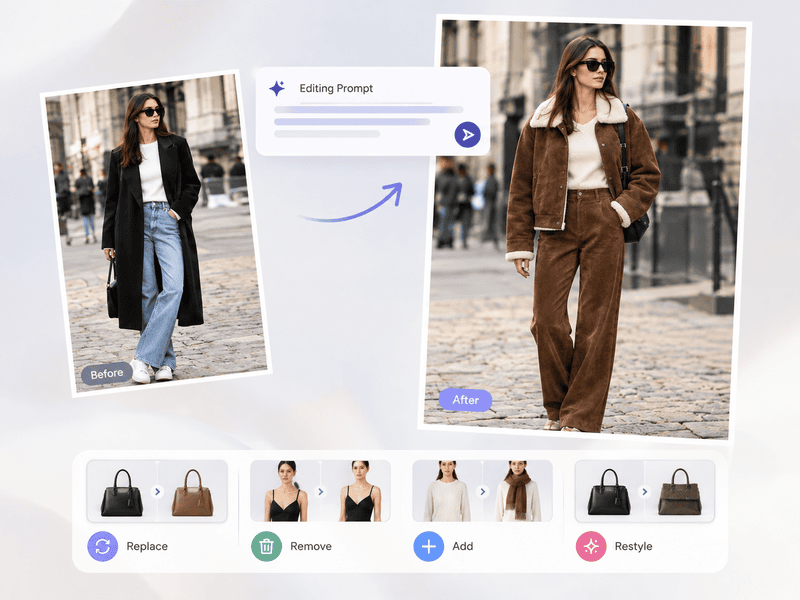
Fashion Diffusion‘s virtual try-on stands out for how it blends generation and styling. Instead of simply placing a garment on a model, it allows you to experiment with full outfit variations while maintaining a realistic try-on effect.
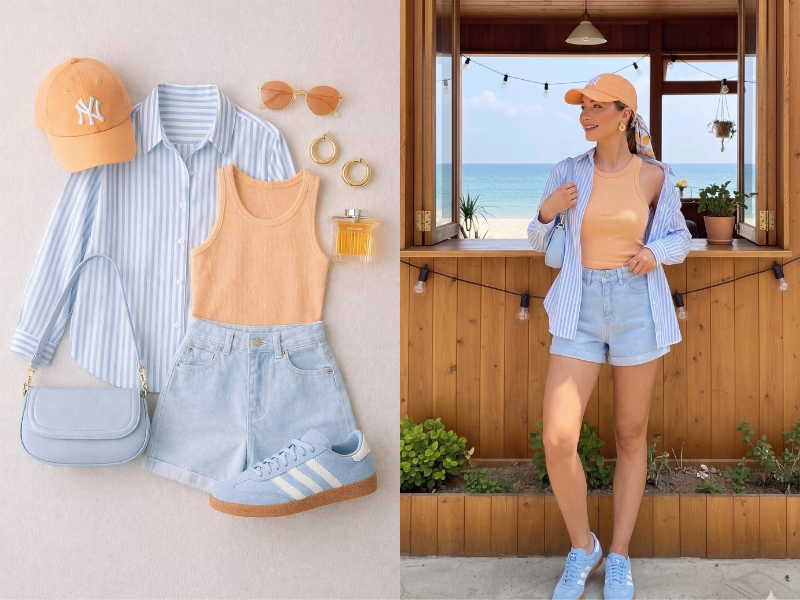
- Garment-to-model try-on with style variation control
- Ability to generate multiple outfit versions from one piece
- Strong consistency across poses and looks
- Works well for both concept and final visuals
Claid.ai
Claid.ai approaches virtual try-on from an optimization angle. It’s try-on functionality is designed to take existing product images and convert them into clean, model-based outputs suitable for e-commerce.
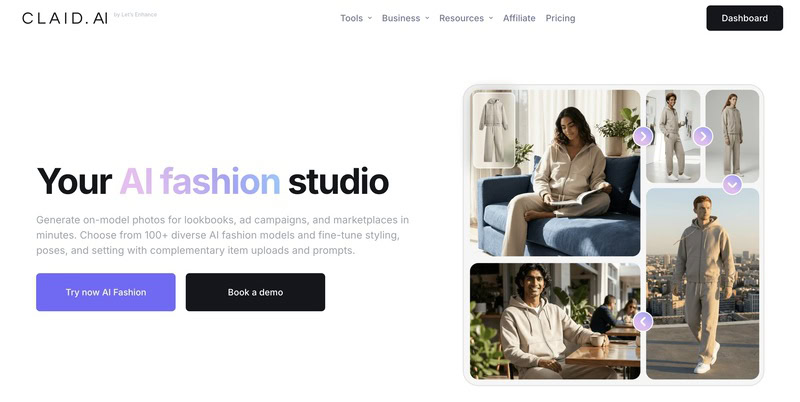
- Converts flat-lay or product images into model try-on visuals
- Clean, commercial-ready outputs
- Maintains product accuracy (color, shape)
- Optimized for catalog consistency
FASHN.ai
FASHN.ai focuses on scalable virtual try-on for apparel catalogs. Its strength lies in producing consistent model imagery across large volumes of products.
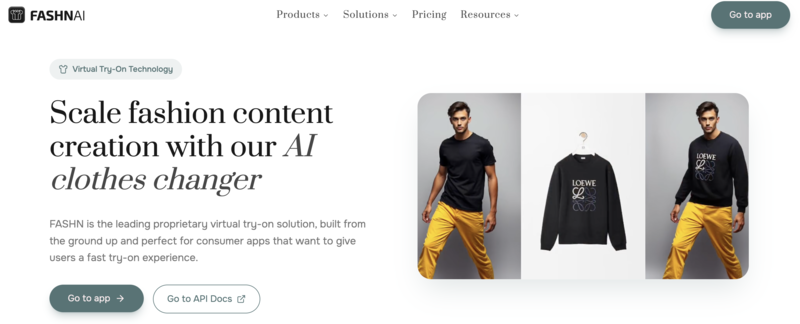
- Batch virtual try-on generation
- Consistent model styling across collections
- Reliable garment placement on different poses
- Built for high-volume product visualization
Botika
Botika’s virtual try-on is built around realism. It produces outputs that closely resemble traditional fashion photography, making it suitable for brands that prioritize a premium look.
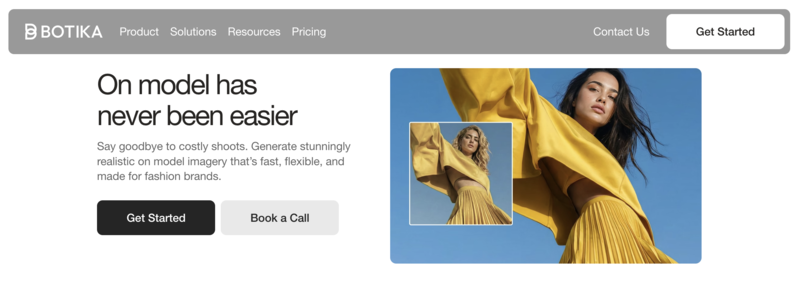
- Highly realistic garment fitting on AI models
- Natural draping and body alignment
- Multiple model types for the same product
- Studio-like visual results
The New Black
The New Black takes a more creative approach to virtual try-on. Instead of strict realism, it allows for more experimental styling and visual interpretation of garments.
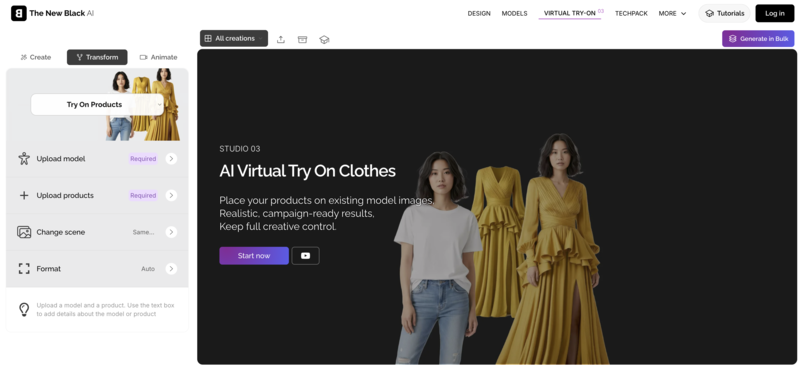
- Concept-driven try-on visuals
- Flexible styling beyond standard product display
- Useful for moodboards and campaigns
- Less constrained by strict realism
DesignKit
DesignKit combines design tools with virtual try-on, making it useful for quick prototyping. Its try-on is less about final polish and more about rapid visualization.
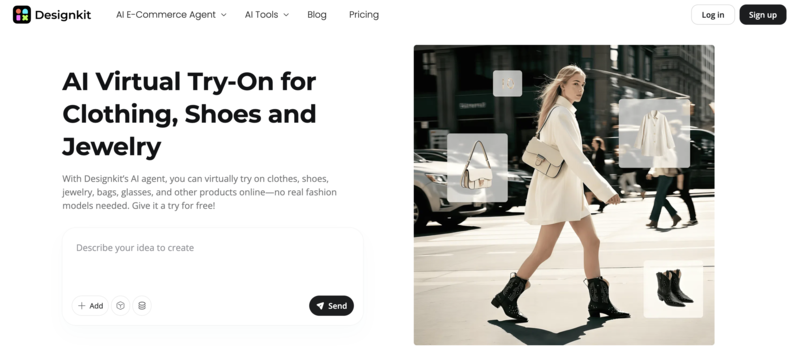
- Fast garment-to-model visualization
- Integrated with design workflow
- Useful for early-stage concept testing
- Flexible but less realism-focused
While all these tools offer virtual try-on capabilities, the difference come down to how they balance realism, scalability, and creative control.
| Tool | Try-On Focus | Strength | Scalability | Output Style |
| Fashion Diffusion | Styling + generation | Flexibility | Medium | Creative + realistic |
| Claid.ai | Product accuracy | Clean outputs | High | Commercial |
| FASHN.ai | Catalog consistency | Batch processing | High | Realistic |
| Botika | Photorealism | Visual quality | Medium | Studio-quality |
| The New Black | Creative exploration | Styling freedom | Low | Artistic |
| DesignKit | Prototyping | Speed | Medium | Conceptual |
Best Customer-Facing Virtual Try-On Tools
Customer-facing virtual try-on tools are designed around one thing: helping users make better decisions. Whether it’s seeing how a piece looks on their body or understanding fit and size, the experience is meant to reduce uncertainly and make online shopping feel more intuitive.
Veesual
Veesual’s try-on experience focuses on combining garments onto real people with a high level of visual realism. It’s especially strong when users want to see how multiple pieces work together in a full outfit.
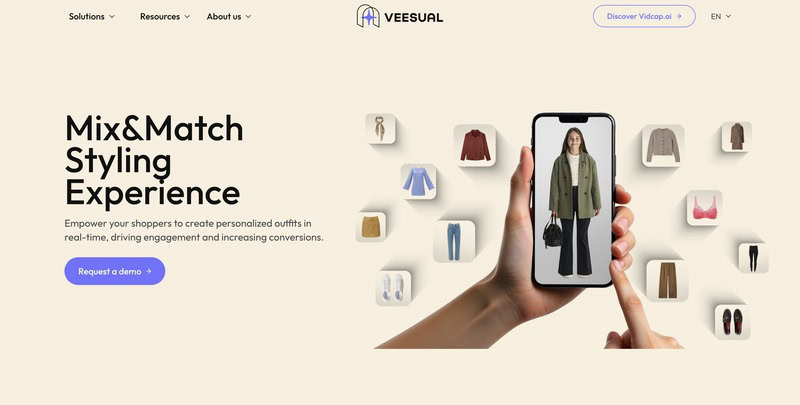
- Mix-and-match try-on across multiple garments
- Realistic layering of clothing on the body
- Maintains proportions and alignment
- Strong visual consistency across outfits
Genlook
Genlook leans into personalization by generating avatars that reflect different body types and identities. Its try-on experience feels more tailored compared to generic model-based previews.
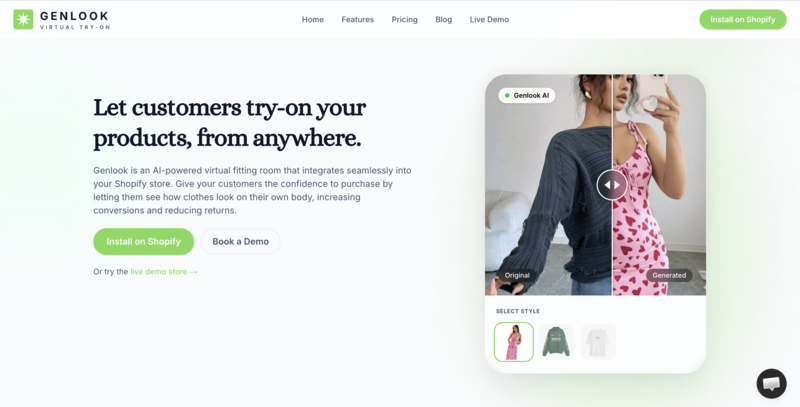
- Avatar-based try-on tailored to user profiles
- Representation across body types and styles
- Personalized visualization instead of generic models
- Focus on lifestyle and relatability
Banuba
Banuba brings virtual try-on into a more interactive, real-time experience using AI. It allows users to see products directly through their camera, making the experience feel immediate and engaging.
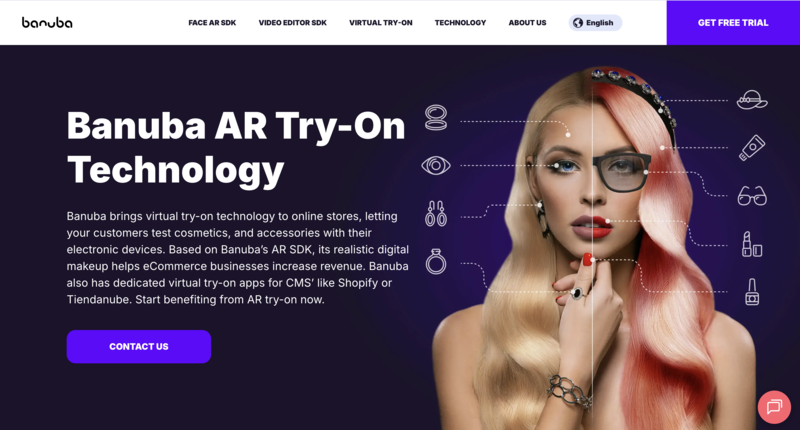
- Real-time AI try-on via mobile camera
- Instant interaction and movement-based feedback
- Lightweight integration for apps and web
- Strong focus on user engagement
Google Shopping Try-On
Google’s try-on feature is built for accessibility. Instead of a full personalized experience, it allows users to quickly preview clothing on a range of models directly within search results.
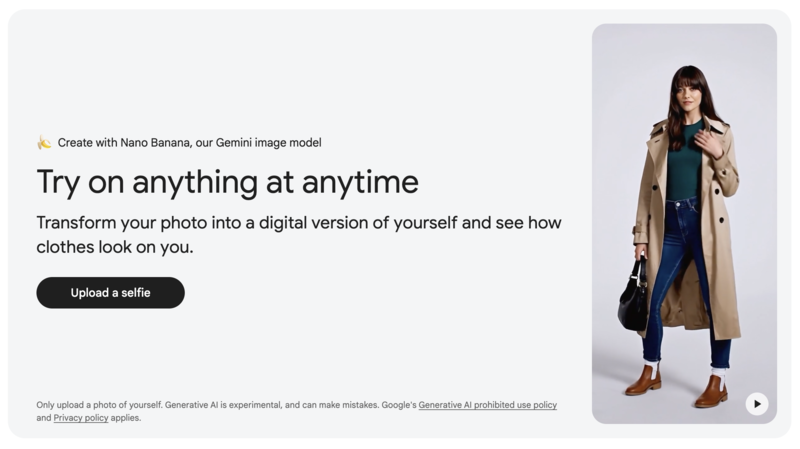
- Integrated directly into search and shopping flow
- Model-based try-on across different body types
- Fast and frictionless experience
- No setup required for users
Virtusize
Virtusize approaches try-on differently by focusing on fit rather than visuals. Instead of showing how clothes look, it helps users understand how they will fit compared to items they already own.
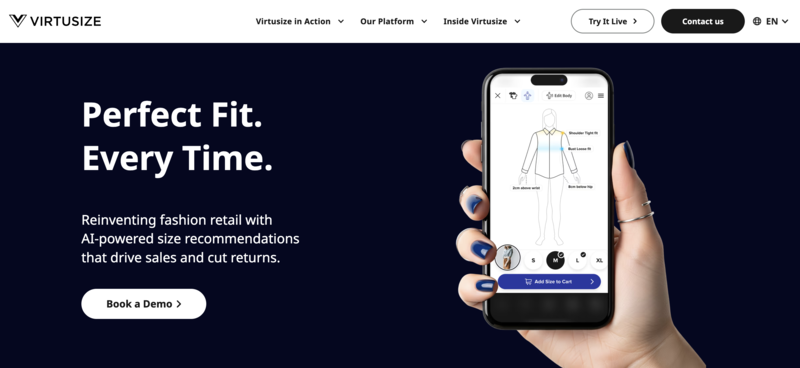
- Size and comparison instead of visual try-on
- Uses user’s existing garment data
- Reduces sizing uncertainly
- More data-driven than visual-based
These tools differ mainly how they balance realism, personalization, and usability. Some prioritize visual experience, while other focus on fit accuracy or ease of access.
| Tool | Try-On Type | Strength | Personalization | Experience Style |
| Veesual | Visual try-on | Outfit realism | Medium | Image-based |
| Genlook | Avatar try-on | Personalization | High | Generated avatars |
| Banuba | AR try-on | Real-time interaction | Medium | Camera-based |
| Google Try-On | Model-based | Accessibility | Low | Lightweight |
| Virtusize | Fit-based | Size accuracy | High | Data-driven |
Which Type Should you Choose
By this point, the difference between the two types is probably clear, but choosing the right one really comes down to what you’re trying to achieve. Not every tool is built for the same goal, and picking the wrong type can lead to wasted time or underwhelming results.
If you’re a fashion brand, designer, or marketer focused on creating visuals, launching products, or scaling content, brand-side tools will give you far more flexibility. They’re built for speed, creativity, and volume, especially when traditional photoshoots aren’t practical.
On the other hand, if your goals is to improve the shopping experience, reduce returns, or help customers make better decisions, customer-facing try-on tools are the better fit. They focus less on aesthetics and more on personalization and accuracy.
In short, one helps you show the product, while the other helps users see themselves in it.
Key Trends in Virtual Try-On
Virtual try-on isn’t standing still. Over the past year, the technology has been evolving quickly—not just in how realistic it looks, but in how it’s being used across the entire fashion workflow. Here are a few trends that are shaping where things are going next.
More Realistic Fabric Simulation
Clothing is no longer just “placed” onto a body—tools are getting better at simulating how fabrics actually behave. Think wrinkles, stretch, and how materials fall depending on movement or pose. This makes try-on results feel much closer to real life, especially for more complex garments.
From Static Images to Video Try-On
We’re starting to see a shift from still images to short-form video outputs. Instead of a single pose, users can view garments in motion, which gives a better sense of fit and flow. This is especially relevant for social content and product demos.
Integration with Generative AI
Virtual try-on is increasingly being combined with generative tools. Instead of just trying on existing clothes, users and brands can generate entirely new outfits and instantly visualize them. This opens up new possibilities for both design and personalization.
Hyper-Personalization
Generic models are becoming less relevant. Tools are moving toward body-specific and preference-based outputs, where users can see clothing on avatars, or versions of themselves—that actually reflect their shape and style.
Blending AR and AI Experiences
Augmented reality is being layered with AI to create more interactive experiences. This includes real-time try-on through mobile cameras, where users can move and see garments adjust instantly. It’s a step closer to bridging online and in-store shopping.
End-to-End Fashion Workflow
Virtual try-on is no longer just a “feature”, it’s a becoming part of a larger system. From design to marketing to sales, brands are starting to use AI tools across the entire pipeline, reducing the gap between concept and customer.
The Future of Virtual Try-On Starts Now
Virtual try-on is no longer just a “nice-to-have” feature, it’s quickly becoming a core part of how fashion is created, presented, and sold. Whether you’re a brand looking to scale content or a platform aiming to improve customer experience, the right tool can make a noticeable difference.
What stands out in 2026 isn’t just the number of tools available, but how differently they approach the problem. Some focus on helping brands move faster, while others are built to make shopping more intuitive and personal. Understanding the difference is what really helps you choose wisely.
If you’re leaning toward the content and design side, Fashion Diffusion are pushing things further by combining outfit generation, virtual try-on, and creative control in one place. It’s a good example of how these tools are evolving beyond simple try-on into something much more flexible.
At the end of the day, virtual try-on isn’t about replacing reality, it’s about making decisions easier before you ever get there.
FAQ
The main goal of virtual try-on is to help people visualize how a product will look before making a decision. For brands, it’s about creating content more efficiently. For consumer, it’s about reducing uncertainty when shopping online.
It depends on the tool. Some focus more on visual realism, while others prioritize fit and sizing. While it’s not a perfect replacement for trying clothes in person, the accuracy has improved a lot, especially with newer AI models and better body mapping.
Brand-side tools are used to generate images of clothing on models for marketing and product display. Customer-facing tools, on the other hand, let users see how those same clothes would look on themselves. One is about content creation, the other is about decision-making.
Yes, and that’s actually where a lot of value comes in. Many tools today are designed to be accessible without large budgets or production teams. This makes it easier for smaller brands to create professional-looking visuals without traditional photoshoots.
Not completely, at least for now. But it’s becoming a strong alternative, especially for fast-moving brands and digital-first campaigns. Many teams are already using it alongside traditional shoots to save time and cost.




关于作者