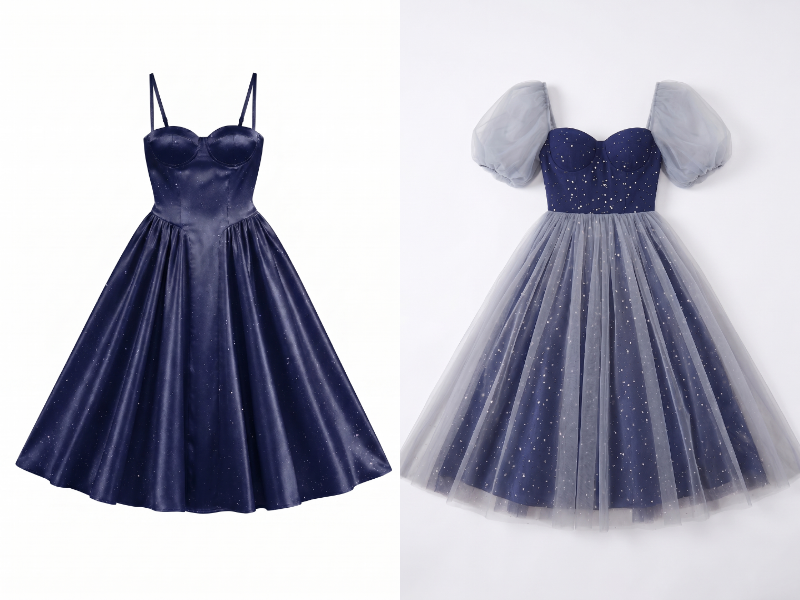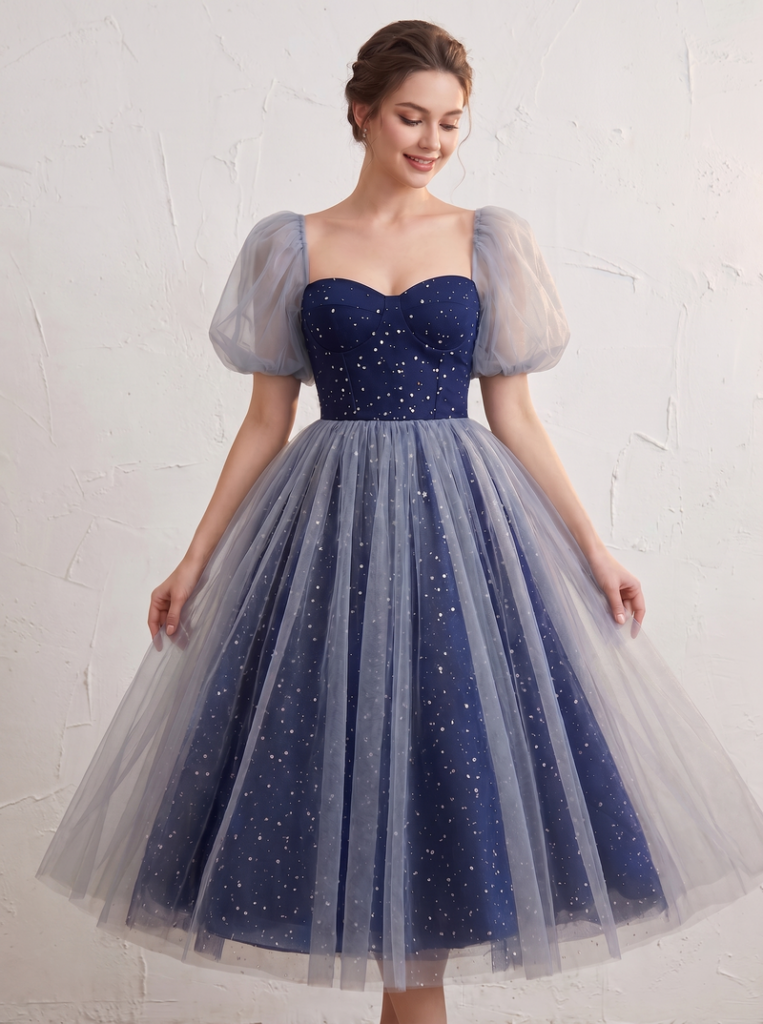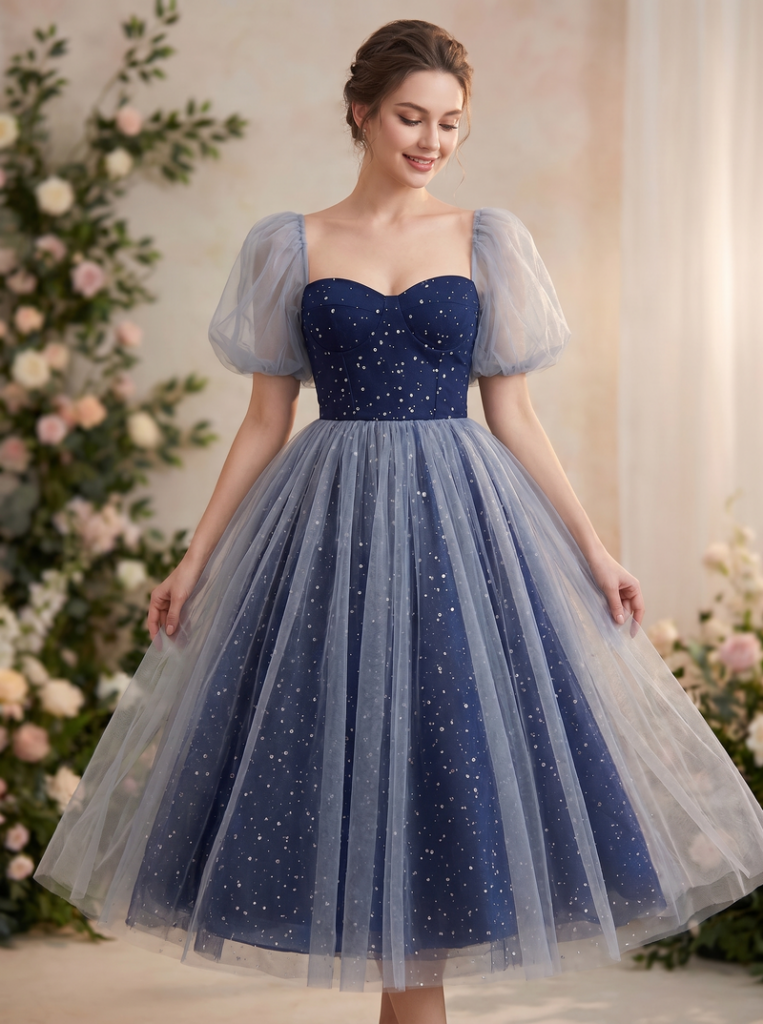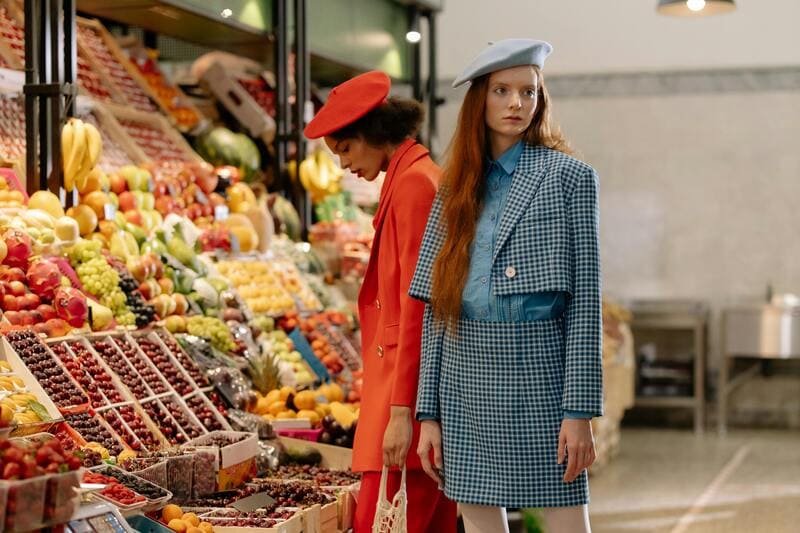
分类归档 未分类

Avatar photo 通过Sophia Mille

Virtual Try-On: Changing How We Shop for Clothes Online

Online shopping has transformed how we buy clothes, but one challenge has long remained: how to know if a piece will look good on you without trying it on in person.

  • 70 % of fashion returns happen because size or style is wrong.
  • Returns cost stores around $550 billion each year.

Virtual Try-On solves this by letting shoppers see how clothes look on their body before they pay. In this guide, we’ll break down what virtual try-on is, how it works, real-world examples, and how tools like Fashion Diffusion are taking it to the next level.

What Is Virtual Try-On?

Virtual Try-On

Virtual try-on (VTO) is a digital tool that uses technology to let users see how clothing, accessories, or beauty products would look on them (or a virtual model) without physically wearing them.

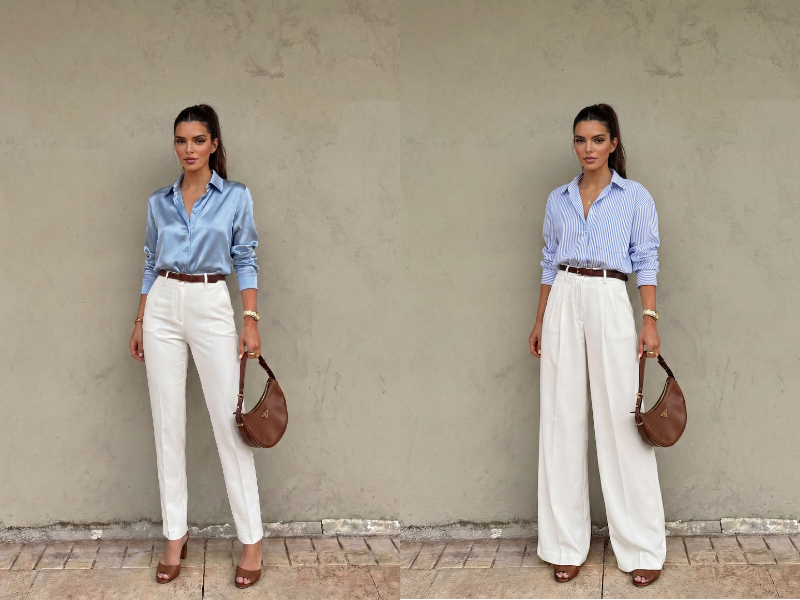
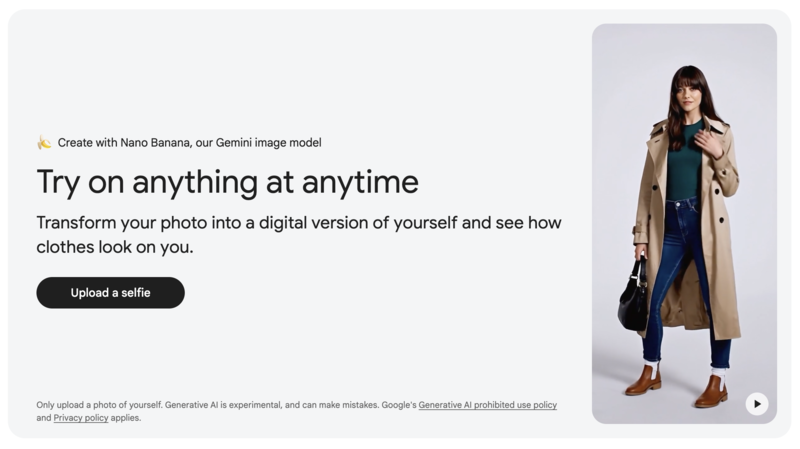
For fashion, it means you can upload a photo of yourself, use your device’s camera in real time, or select a virtual model, and see how a shirt, dress, or outfit fits and looks from different angles.
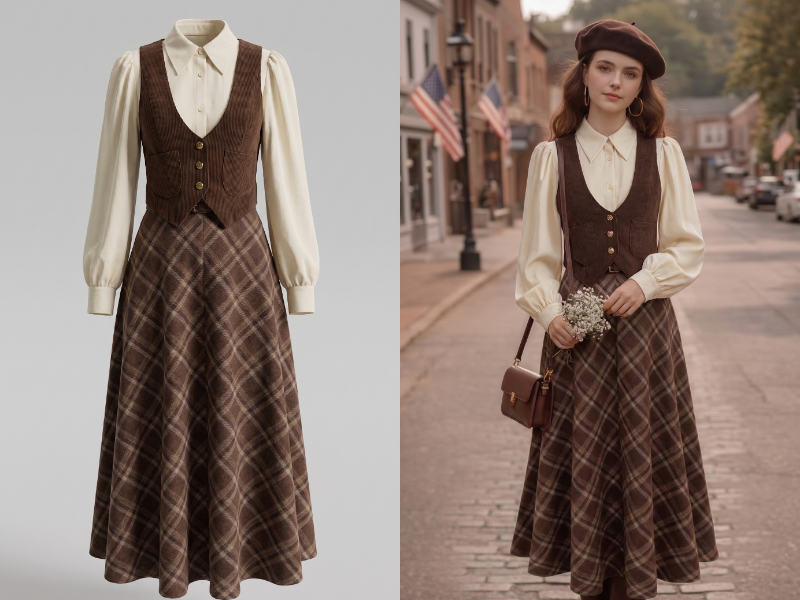
Unlike static product images, virtual try-on creates an interactive, personalized experience that mimics the in-store fitting room—all from your phone, tablet, or computer.
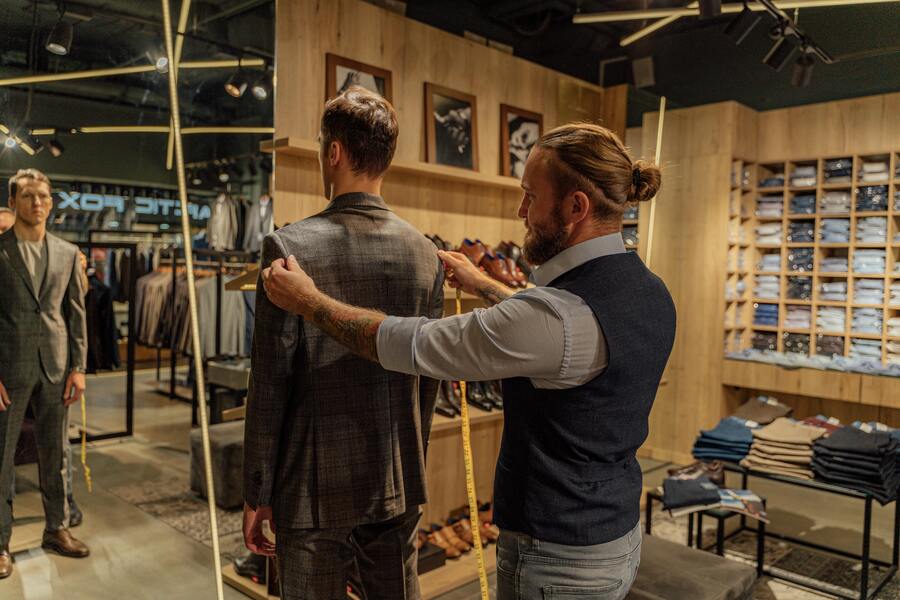
How Does Virtual Try-On Technology Work?

Virtual try-on relies on a mix of technologies working together to create realistic, real-time experiences. Here’s a simple breakdown:

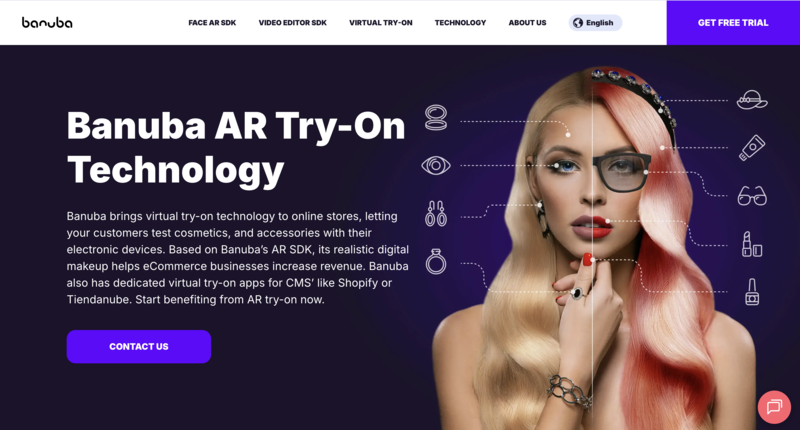
  • AR (Augmented Reality): Many tools use AR to overlay virtual clothing onto a live camera feed of the user. This lets you move around and see how the clothes drape or move with your body.
  • AI and Computer Vision: AI analyzes body shapes, sizes, and poses to ensure the virtual clothes fit naturally. It can adjust for different heights, weights, or body types.
  • 3D Modeling: Clothes are often created as 3D models, which are then “worn” by a virtual avatar or the user’s digital image. This helps show details like fabric texture, seams, and how the garment falls.
  • User Input: Some tools let you upload your own photos, choose body types, or input measurements to get a more accurate try-on experience.

Leading Virtual Try-On Examples Across Industries

Below are proven, real-world uses of Virtual Try-On (VTO) technology. Each example shows how brands let shoppers try clothes online for free or preview other products before purchase.

1. Fashion & Apparel

  • Zara: Mobile app projects clothing onto the user’s live camera feed so shoppers see fit, drape, and length without visiting a store.
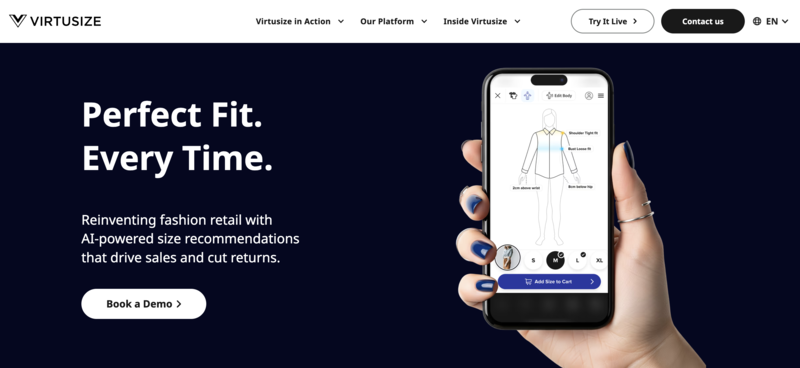
  • ASOS: AI-powered avatars give size advice and show how items look on different body types.

2. Footwear

  • Nike Fit: Scans feet with a phone camera and recommends the exact shoe size, cutting size-related returns.
  • Gucci Sneaker Garage: AR lens on Snapchat lets users place sneakers on their feet in real time.

3. Eyewear & Accessories

  • Warby Parker: AR overlay on faces shows frame fit, nose-bridge placement, and ear alignment.
  • Rolex: Customers try watch models on their wrist to check dial size and strap color.

4. Makeup & Beauty

  • L’Oréal Modiface: Used by Sephora and Ulta; shoppers test lipstick, foundation, and eyeshadow matched to skin tone.
  • Garnier: Live camera preview of hair colors before dye purchase.

5. Jewelry

Virtual ring try-on: 3D bands scale to finger width for engagement or casual rings.

6. Furniture & Home

IKEA Place: Users drop full-scale sofas, tables, or lamps into their room to check fit and color.

7. Emerging Uses

  • Tattoos: Upload a body photo, place a design, resize, and rotate before booking ink.
  • Dental: Preview teeth-whitening or aligner results with a quick face scan.

Virtual Try-On with Fashion Diffusion: Try Your Own Designs on Any Body

For designers, small brands, or anyone creating fashion, Fashion Diffusion.ai offers a unique virtual try-on solution. Unlike many tools that only let you try on existing clothes, Fashion Diffusion lets you upload your own designs and see them on any body type, pose, or setting.

How does it work:

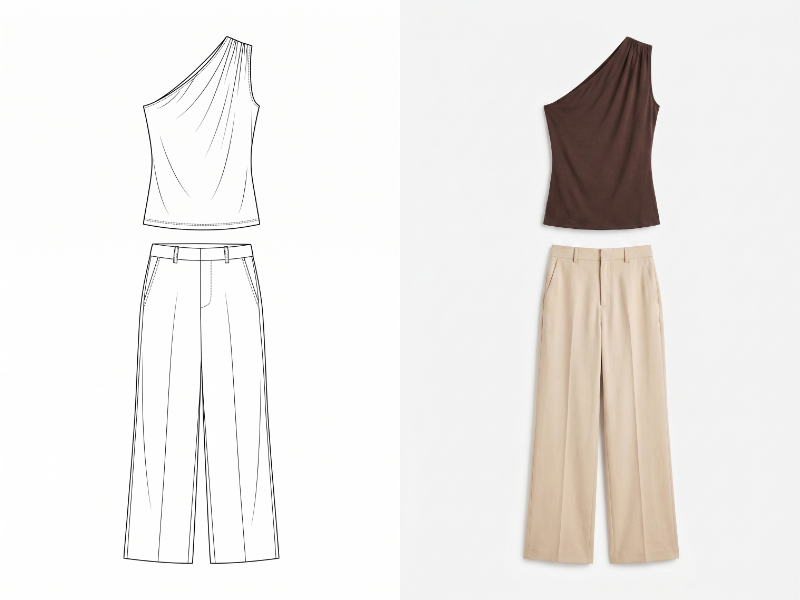
  • Upload a sketch, photo, or digital design of your clothing.
  • Choose from a range of virtual models with different body shapes, sizes, and poses.
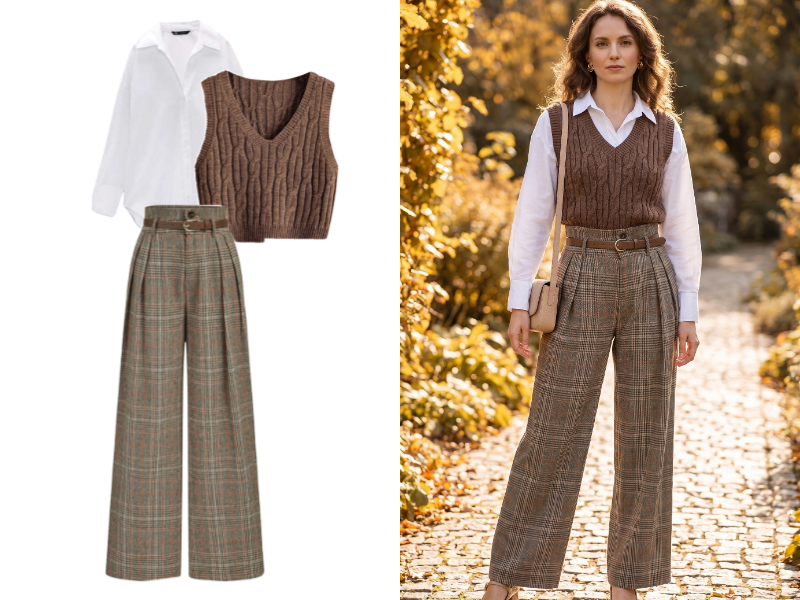
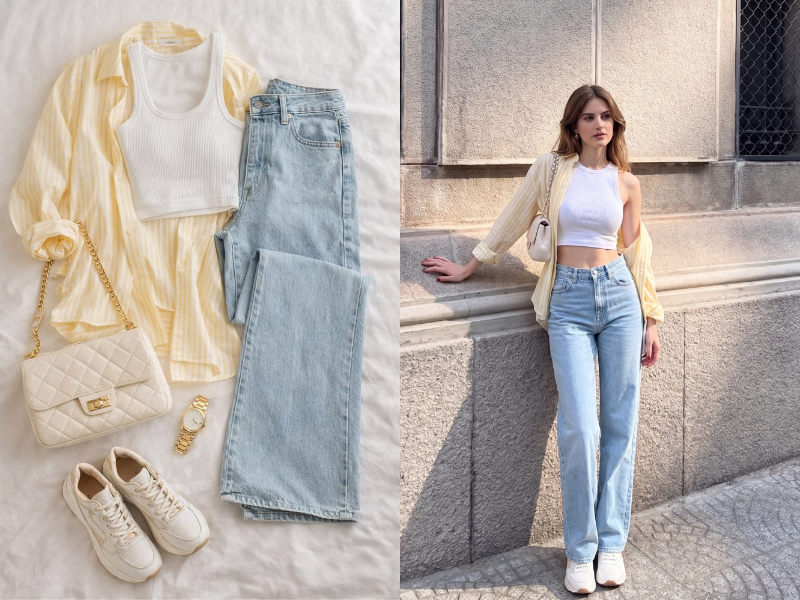
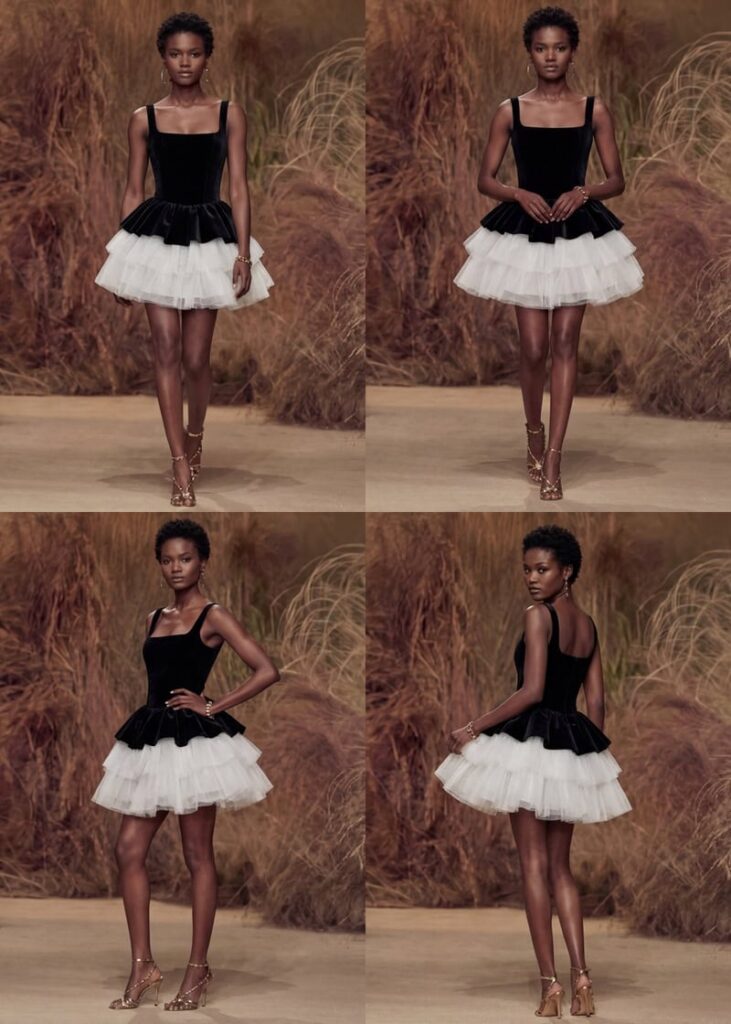
  • The AI-powered tool will apply your design to the model, showing how it fits, moves, and looks in detail—from fabric texture to how the garment sits on the body.

This is a game-changer for creators. Instead of spending time and money on physical samples, you can test designs instantly. You can adjust colors, patterns, or styles and see the results right away. It’s also great for sharing designs with clients, team members, or customers before production.

The Future of Virtual Try-On in Fashion

As technology improves, virtual try-on in fashion will become even more advanced. Here are some trends to watch:

  • More Personalization: Tools will get better at matching individual body types, using data from user photos or measurements to create hyper-accurate fits.
  • Better Fabric Realism: Future tools may simulate how fabrics react to movement, light, or weather—like how a wool coat looks in cold weather vs. a linen shirt in heat.
  • Social Integration: Imagine sharing your virtual try-on looks on social media and getting feedback from friends before buying, or even letting others “try on” your designs.
  • Metaverse and Virtual Worlds: Virtual try-on could expand into metaverse platforms, where you can design and try on clothes for your digital avatar, blurring the line between physical and virtual fashion.

Final Thoughts

Virtual try-on technology is no longer just a trend—it’s becoming an essential tool in fashion retail. By allowing customers to visualize outfits in real time, brands reduce return rates, build consumer confidence, and create more engaging shopping experiences. As AR and AI continue to evolve, virtual try-ons will shape the way people shop, merging digital convenience with personalized fashion.

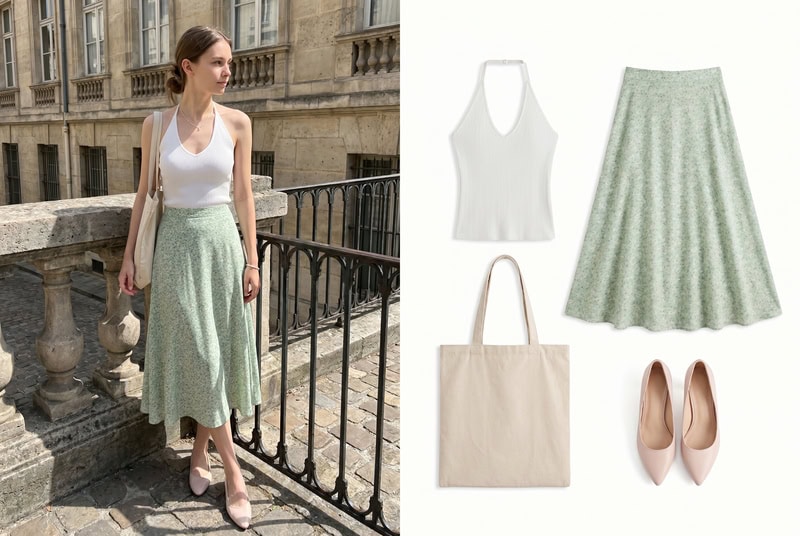
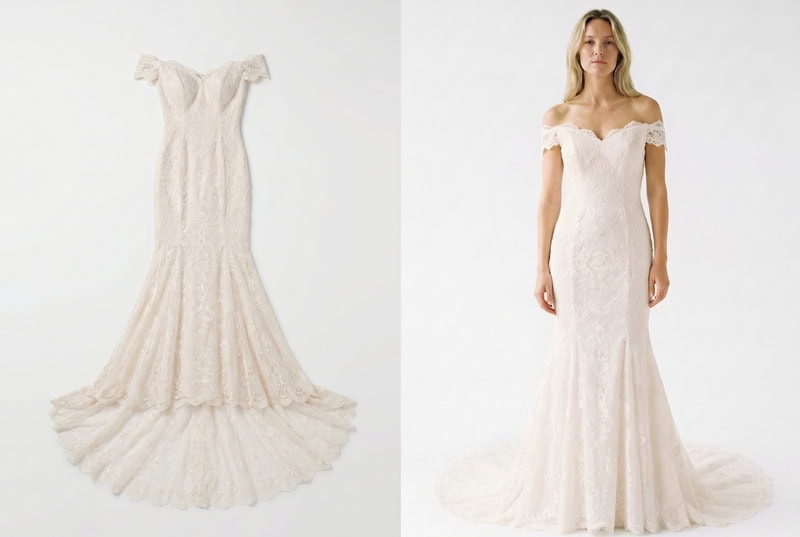
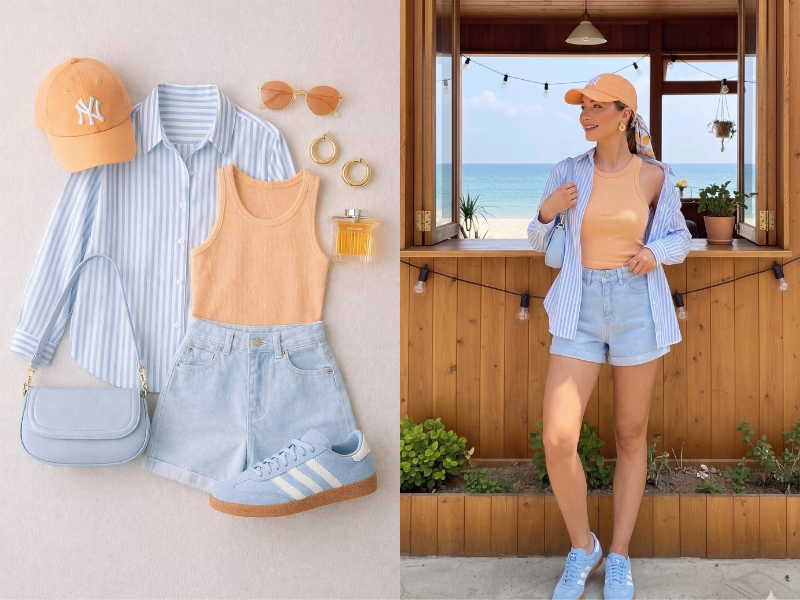
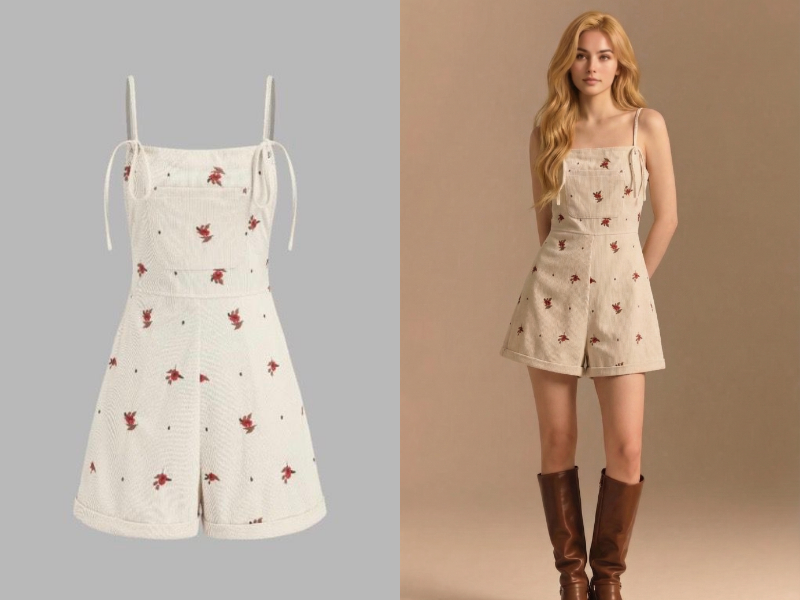
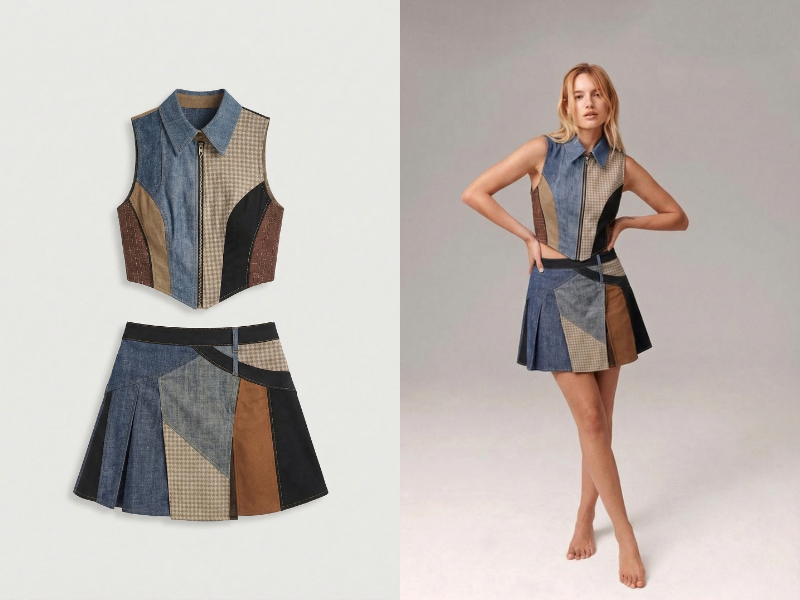
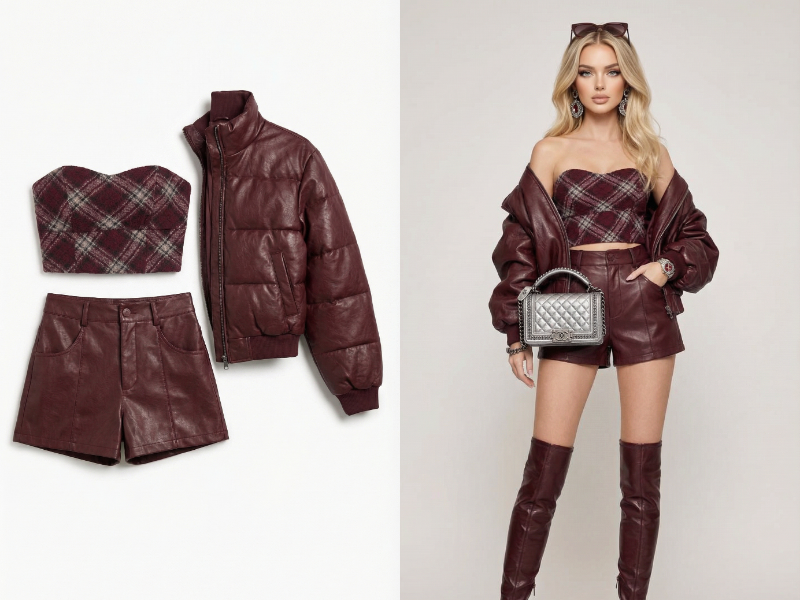
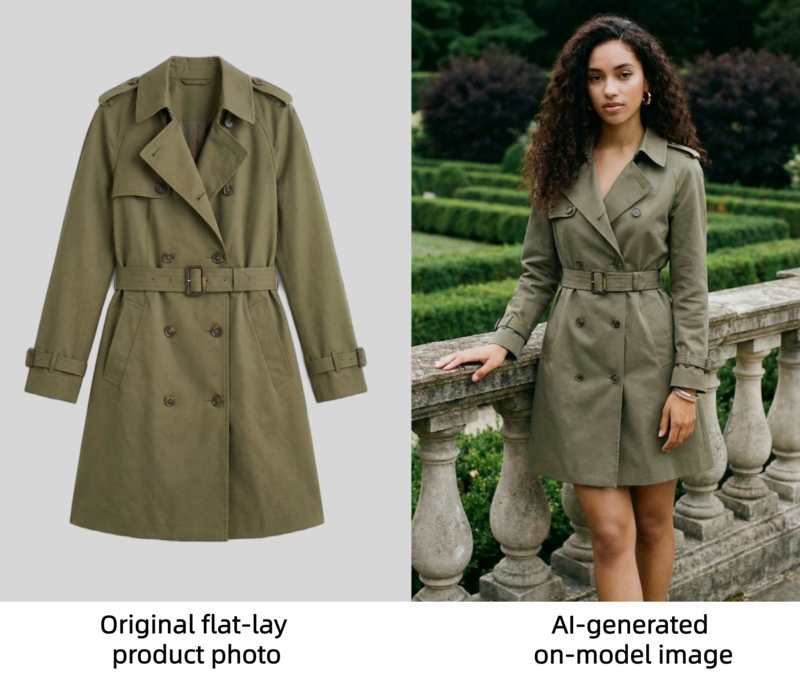
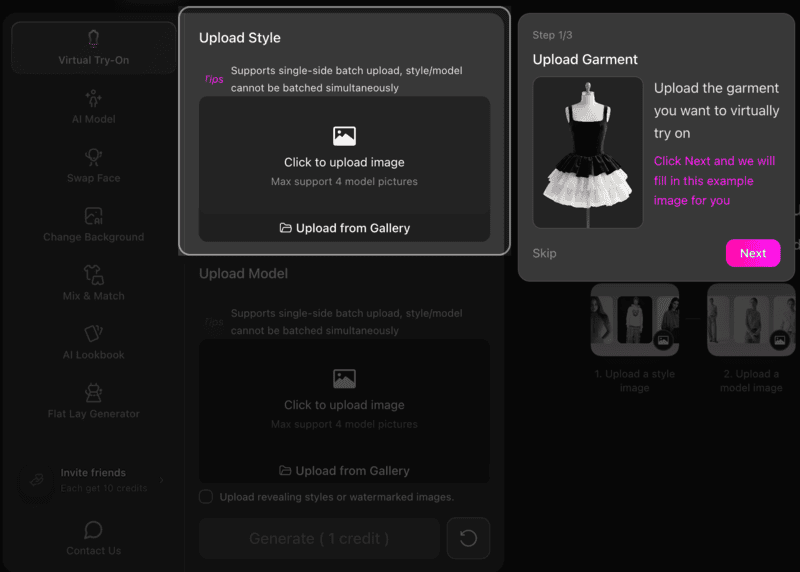
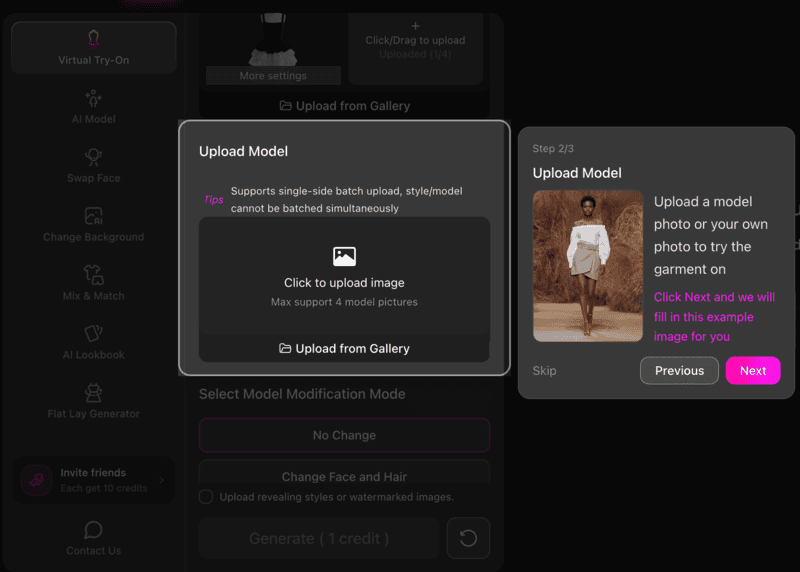
With Fashion Diffusion’s Virtual Try-On, you can transform flat-lay fashion photos into lifelike AI model visuals in seconds. Just 4 simple steps, zero learning curve—boost your workflow and bring your collections to life effortlessly.

FAQs

What is virtual try-on technology in fashion?

Virtual try-on technology uses AI and AR to let customers see how clothes would look on them without physically trying them. It transforms flat-lay product photos into lifelike model visuals or overlays garments on live images for an interactive shopping experience.

Do I need special equipment to use virtual try-on tools?

Most tools work on smartphones, tablets, or computers with a camera and internet connection. No special equipment is needed for basic use.

How does virtual try-on help reduce returns?

By letting shoppers see how clothes look on their body (or a similar body type) before buying, they can make more informed choices, reducing returns due to poor fit or unexpected appearance.

Can I try on my own designs with virtual try-on tools?

Yes—tools like Fashion Diffusion let you upload your own designs and try them on virtual models. This is perfect for designers or brands creating custom clothing.

How do I get started with Fashion Diffusion’s virtual try-on?

Fashion Diffusion makes it simple—upload your flat-lay fashion photos, follow four quick steps, and generate lifelike AI model visuals instantly. No learning curve required.

Avatar photo 通过Ethan Davis

The Fusion of AI and Virtual Reality in Fashion Design: Digital Fashion Trends 2025

The fashion industry is rapidly transforming with the integration of Artificial Intelligence (AI) and Virtual Reality (VR). From streamlining design workflows to immersive consumer experiences, these technologies are reshaping how brands create, showcase, and sell fashion. Platforms like Fashion Diffusion are at the forefront, enabling designers to innovate faster, reduce costs, and enhance sustainability.

This article explores the fusion of AI and VR in fashion design, highlighting trends, industry examples, and how Fashion Diffusion is leading the digital fashion revolution.

What is Virtual Reality (VR)?

Virtual Reality in Fashion Design

Virtual Reality (VR) is a technology that creates a simulated, immersive environment in which users can interact with 3D digital spaces as if they were real. In the context of fashion:

  • VR allows designers to visualize and modify garments in a virtual 3D space before producing physical samples.
  • VR makes it possible to experience fashion interactively and immersively, removing geographical constraints and providing a new form of consumer engagement.

Simply put, VR transforms fashion from something you only see or touch physically into an interactive digital experience.

What is Artificial Intelligence (AI)?

Artificial Intelligence (AI) refers to computer systems capable of performing tasks that usually require human intelligence, such as learning, pattern recognition, and decision-making. In fashion, AI applications include:

  • Trend prediction: AI can analyze social media, runway shows, and historical collections to forecast popular colors, fabrics, and styles.
  • AI Design generation: AI can create multiple versions of a garment design, allowing designers to explore creative options faster.
  • Personalized recommendations: AI can suggest garments to consumers based on their preferences, size, and past behavior.
  • Digital fabric simulation: AI can render realistic textures, folds, and drapes, helping designers visualize designs without producing physical samples.

AI acts as a creative and analytical assistant, accelerating the design process while providing insights and precision.

AI-Powered Fashion Design: From Inspiration to Garment

AI is revolutionizing fashion design by helping designers work smarter, faster, and more creatively:

Trend Prediction & Idea Generation

AI can identify emerging colors, materials, and patterns by analyzing global fashion data. Data from Heuritech shows that in 2025, consumer interest in sustainable materials and retro-inspired designs increased by 28%, a trend AI helps designers quickly respond to.

Intelligent Iteration

Designers can generate multiple design variations with AI and fine-tune details digitally, reducing the time and cost traditionally required for multiple prototypes.

Digital Fabric Simulation

AI renders realistic material textures, light reflections, and fabric movement, allowing designers to assess garments digitally without producing physical samples.

By integrating AI into the design workflow, designers can explore bold creative ideas while keeping production costs and timelines in check.

Virtual Reality in Fashion: Enhancing Experience and Market Reach

VR and AR are revolutionizing both consumer experiences and brand presentations:
Virtual Try-On
Customers can try garments in a virtual environment, visualizing different colors, patterns, and fits without visiting a store. Luxury brands like Dior and Chanel have already implemented virtual-try-on tools in both online and offline stores.
Digital Fashion Shows
VR enables brands to showcase collections to global audiences without geographic limitations, reducing traditional fashion show costs.
Immersive Brand Experiences
In virtual environments, users can interact with brands, customize garments, or attend virtual events, increasing engagement and loyalty.

AI and VR Combined: Personalization Meets Efficiency

The integration of AI and VR takes digital fashion to the next level:

  • Personalized Virtual Fitting Assistants: AI analyzes a user’s body measurements, preferences, and shopping behavior to recommend suitable designs, while VR provides realistic fitting experiences.
  • Virtual Collaborative Design: Designers across the globe can collaborate in VR, adjusting AI-generated designs in real time, accelerating product development and market responsiveness.
  • Sustainable Practices: Virtual samples and try-ons reduce the need for physical production, cutting down material waste and carbon emissions while maintaining creative freedom.

This combination improves consumer experience, operational efficiency, and sustainability.

AI Fashion Design Tools: Revolutionizing Creativity and Efficiency

AI-powered fashion design tools, such as Fashion Diffusion, are transforming how designers conceptualize, create, and bring garments to market. These tools combine advanced algorithms, machine learning, and 3D visualization to enhance every stage of the design process.

Key Roles of AI Fashion Design Tools

  • Trend Analysis and Inspiration: AI scans social media, runway shows, and historical collections to identify emerging trends and consumer preferences, helping designers stay ahead of the market.
  • AI Design Generation: Tools like Fashion Diffusion can produce hundreds of garment variations in minutes, including different fabrics, patterns, and colors, allowing designers to experiment freely.
  • Digital Prototyping: AI simulates fabric texture, drape, and movement in 3D, reducing the need for physical samples and accelerating the development cycle.
  • Personalization and Consumer Insights: By analyzing user data, AI can suggest customized designs tailored to individual body shapes, style preferences, and shopping behavior.
  • Sustainability Support: Digital iteration minimizes material waste, energy consumption, and carbon footprint, aligning creativity with eco-friendly practices.

Industry Examples and Insights: AI & VR in Fashion

Burberry’s Augmented Reality (AR) Shopping Experience

Burberry has launched an immersive AR shopping tool that allows customers to virtually try on products using their smartphones. This technology enables users to see how items like scarves and handbags would look in their environment or on themselves before making a purchase. By leveraging AR, Burberry enhances the online shopping experience, making it more interactive and personalized.

Heuritech’s AI-Driven Fashion Trend Forecasting

Heuritech employs artificial intelligence to analyze vast amounts of social media images and data to predict upcoming fashion trends. Their AI algorithms can identify patterns and shifts in consumer preferences, providing fashion brands with actionable insights for their collections.

Virtual Fashion Shows and Digital Runways

The fashion industry is increasingly adopting virtual fashion shows to reach a global audience. These digital events utilize VR and AR technologies to create immersive experiences where viewers can interact with the collections from the comfort of their homes.

For example, Balenciaga showcased its Fall collection through a fully virtual reality runway, where audiences experienced the show in a gaming-style 3D environment instead of a traditional catwalk.

Conclusion: The Future of AI and VR in Fashion Design

AI and VR are revolutionizing fashion design, making it creative, efficient, personalized, and sustainable. Designers and brands can now create, showcase, and sell fashion in digital-first, immersive experiences.

Platforms like Fashion Diffusion enable the entire process, turning inspiration into digital garments and engaging experiences, defining the future of fashion in 2025 and beyond.

Frequently Asked Questions

What is Virtual Reality (VR) in fashion design?

Virtual Reality (VR) in fashion design allows consumers and designers to interact with 3D garments in a digital space. Examples include virtual try-on mirrors in Zara stores and fully immersive digital fashion shows created by Bureau Betak.

How is Artificial Intelligence (AI) used in fashion design?

Artificial Intelligence in fashion is transforming the way designers create and visualize collections. A leading example is Fashion Diffusion, an AI fashion design tool that helps designers generate realistic clothing renders, speed up the creative process, and reduce reliance on costly physical samples.

How do AI fashion design tools support sustainability?

AI tools minimize fabric waste by replacing multiple physical samples with digital prototypes. This reduces environmental impact and supports sustainable fashion practices.

Avatar photo 通过Sophia Mille

How to Turn a Fashion Sketch into a Stunning Render in 2025

Creating professional fashion renders from simple sketches used to require advanced drawing skills or expensive 3D software. Today, artificial intelligence rendering is changing the game. With modern sketch to render AI tools, designers can convert a hand-drawn sketch to photo-realistic render in minutes.

This technology helps fashion designers, students, and even brands bring their ideas to life in realistic detail—without needing deep technical expertise.

What is an AI Sketch-to-Render Tool?

An AI sketch to render tool uses machine learning to understand the lines and shapes in your drawing. It then generates a high-quality, realistic image from that input.

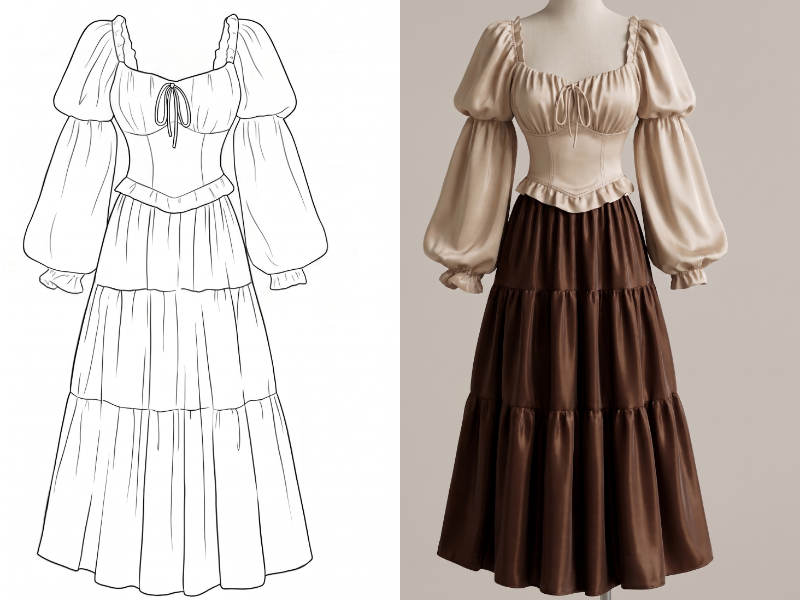
For fashion, this means you can upload a simple garment sketch, and the AI from sketch to render engine will produce a photorealistic render with textures, shadows, and lighting.

These platforms are not only for professionals. Many now offer sketch to render AI free versions so that anyone can experiment. The workflow is simple: upload a sketch, add details such as fabric type or color, and let AI rendering do the rest.

5 AI Fashion Tools to Turn a Sketch into Render

There’s a vibrant ecosystem of tools tailored specifically for sketch-to-render workflows:

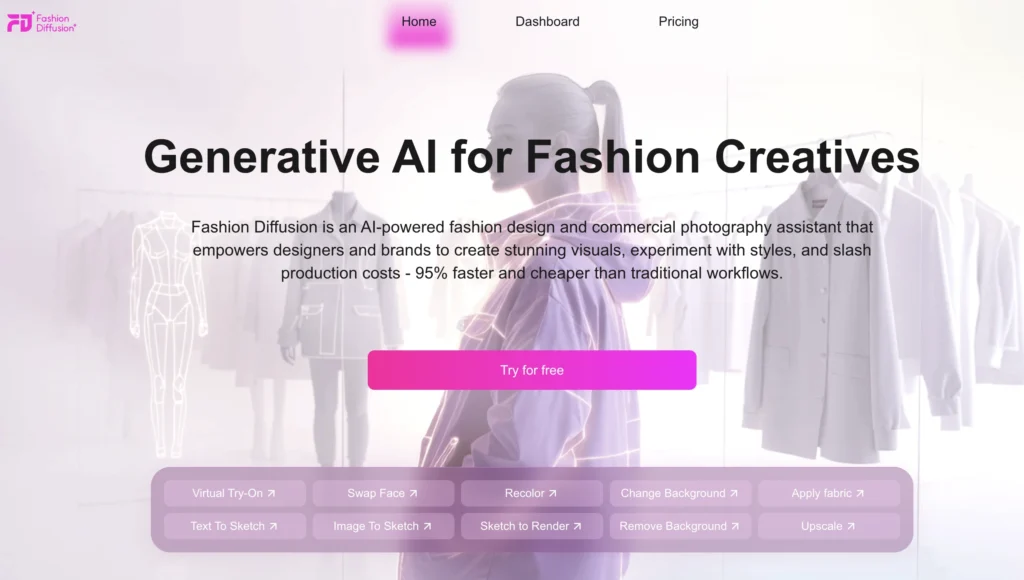
1. Fashion Diffusion

Accepts sketches, mood boards, or text descriptions and converts them into high-quality fashion visuals quickly.

Fashion Diffusion

Main Features:

  • Accepts sketches, mood boards, or text prompts as inputs.
  • Produces high-quality fashion renders quickly.
  • Prioritizes fabric realism and commercial usability.
  • Simple, user-friendly interface.

Best for: E-commerce sellers, fast-fashion brands, and design teams needing visuals for lookbooks, ads, or sketch to image market testing.

2. Reelmind.ai

Transforms rough sketches into polished designs, supports multi-frame visuals, style experimentation, and even custom model training.

ReelMind

Main Features:

  • Transforms hand-drawn sketches or CAD flats into polished renders.
  • Supports multi-frame visualization (different angles or poses).
  • Offers style experimentation (textures, fabrics, artistic directions).
  • Allows custom model training, ideal for brands with a consistent design language.

Best for: Professional designers, studios, and brands that need customized sketch to render AI.

3. NewArc.ai

Lets you upload simple line sketches and enrich them with text prompts (e.g., “emerald silk evening gown with sheer overlay”).

NewArc

Main Features:

  • Upload hand sketches or CAD drawings to generate renders.
  • Uses Stable Diffusion + ControlNet for accurate sketch alignment.
  • Text prompts for fabrics (e.g., silk, denim), colors, and style details.
  • Built-in brush and eraser tools for fine-tuning outputs.

Best for: Independent designers, students, and startups needing fast, low-entry AI sketch to render.

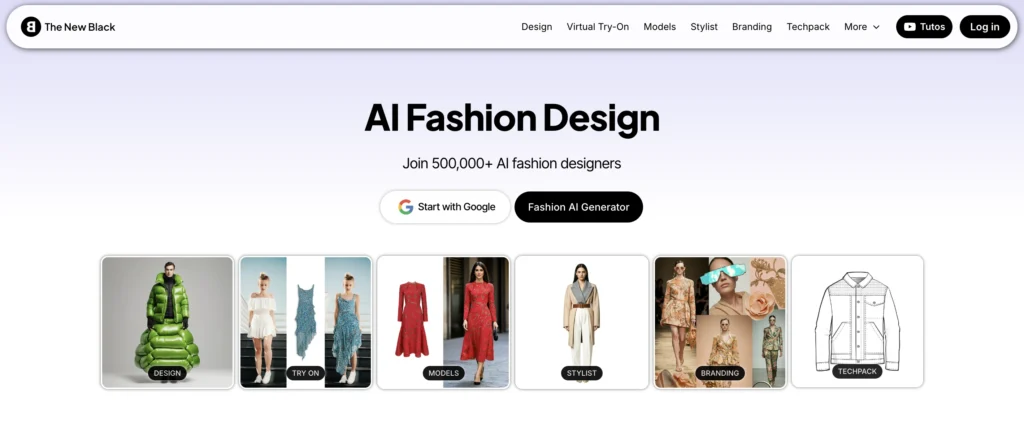
4. The Fabricant

Upload sketches, add reference aesthetics, then tweak with style sliders and AI prompts for refined, photoreal outcomes.

The Fabricant

Main Features:

  • Upload sketches and combine them with aesthetic reference images (mood boards, fashion photography).
  • Provides style sliders and AI prompts for iterative refinement.
  • Focuses on artistic, high-fashion visuals (suitable for digital fashion shows).
  • Generates virtual fashion assets for integration with 3D avatars.

Best for: High-fashion designers, digital artists, and brands working on virtual wearables, NFTs, and AI rendering architecture projects.

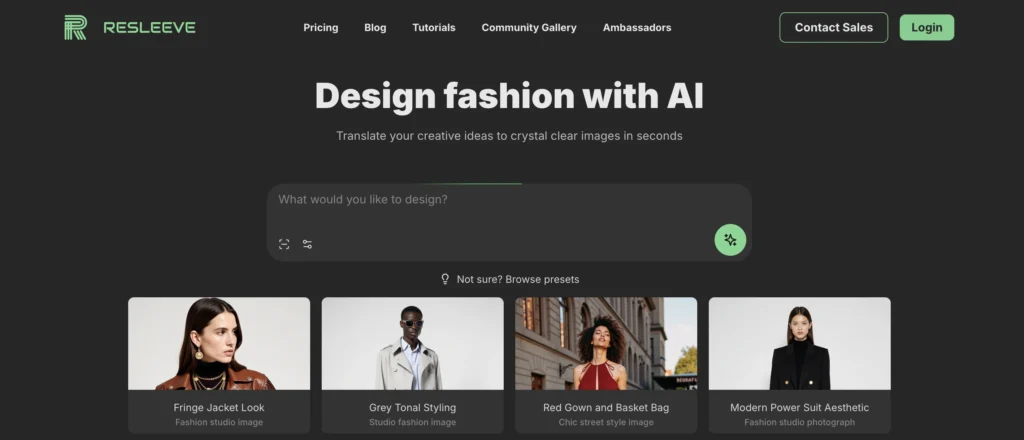
5. Raspberry AI

A fast, intuitive AI tool for turning 2D sketches into lifelike renders.

Resleeve

Main Features:

  • Easy-to-use workflow for turning sketches into photorealistic 2D renders.
  • Outputs are close to real-life garment photography.
  • Beginner-friendly interface, minimal learning curve.
  • Gaining investor traction, with strong future potential.

Best for: Indie designers, startups, and studios that want AI from sketch to render results for presentations or client pitches.

How to Use Fashion Diffusion to Convert Your Fashion Sketch

Turning your fashion ideas into reality with Fashion Diffusion AI is a straightforward process. With just two steps, you can transform your creative vision into professional-quality results.

Step 1: Prepare Your Fashion Sketch

Start with a clear sketch. You can either use a line drawing you’ve already created, or generate one instantly with Fashion Diffusion’s Sketch AI Tool. This tool supports two powerful methods:

Image to Sketch

If you already have a photo of a garment, this feature instantly converts it into a precise fashion sketch. The AI extracts key visual elements and creates clean, customizable line art—no advanced editing skills required.

Text to Sketch

If you don’t have an existing sketch or garment photo, the text-to-sketch tool will surprise you. Simply describe your design idea, and our AI will generate a professional fashion sketch in seconds. This speeds up your creative process and allows you to explore multiple design directions.

Example: Enter a prompt like “A long dress, flowing skirt, puff sleeves, fitted bodice, sweetheart neckline, floor-length hem, sleeveless design, draped silhouette, minimalistic style.”

Using Fashion Diffusion to Convert Your Fashion Sketch
Fashion Diffusion AI-generated

Step 2: Generate a Fashion Render

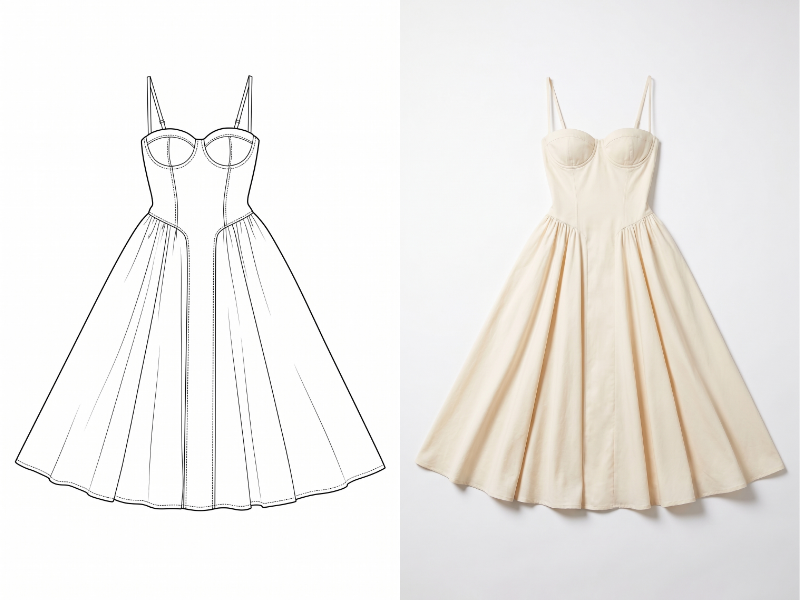
Once your sketch is ready, use the Sketch to Render AI tool to create a high-quality fashion render. Just upload your sketch, add a description of your desired fabrics, colors, or style, and let the AI bring your concept to life. If the first result isn’t perfect, you can easily refine your inputs and regenerate the image until you achieve the exact look you want.

This process saves time and effort. It allows designers to test different ideas and share concepts with clients quickly.

Why AI-Enhanced Sketch Rendering Is a Game-Changer in Fashion

AI-powered sketch rendering is revolutionizing the fashion industry, making the design process faster and more flexible. This technology offers several key benefits:

  • Accelerated Ideation: Quickly generate countless variations of a single design in seconds. This allows for rapid prototyping and faster decision-making.
  • Increased Accessibility: AI tools lower the barrier to entry, so you don’t need to be an expert artist or 3D modeler. A simple sketch is all you need to get a photorealistic render.
  • Enhanced Realism: AI adds complex details like realistic textures, shadows, and lighting. This high level of detail helps designers and clients visualize the final product with greater accuracy.
  • Cost and Time Efficiency: The traditional rendering process is expensive and time-consuming. Using AI saves money and frees up time for designers to focus on other creative tasks.

Co-creating the Future of AI Fashion Design with Fashion Diffusion

AI tools are becoming smarter and more accessible. Whether you’re using sketch to render AI free versions or advanced platforms, the goal is the same: to enhance creativity, not replace it.

The ability to go from sketch to render with AI means fashion designers can spend more time innovating and less time on technical work. The rise of sketch to image AI is making the industry more efficient, affordable, and creative than ever.

👉 Try Fashion Diffusion today—see how effortlessly you can go from sketch to stunning render, experiment with fabrics, style variations, and visualization, and create visuals that inspire and sell.

Frequently Asked Questions

What is Fashion Diffusion AI and how does it work?

Fashion Diffusion AI is an all-in-one AI fashion design tool that helps designers, brands, and students turn creative ideas into professional-quality fashion visuals. Instead of relying on costly photoshoots, manual rendering, or advanced 3D modeling skills, Fashion Diffusion uses generative AI to transform sketches, text prompts, or reference images into realistic clothing designs and campaign-ready imagery.

Can I create a fashion sketch without drawing skills?

Yes. With the text-to-sketch generator, you don’t need any drawing experience. Simply describe your design (e.g., “silk blouse with puff sleeves and ruffled collar”), and the AI will instantly create a professional fashion sketch for you.

How accurate are the AI-generated fashion renders?

The AI fashion render is highly realistic and customizable. By refining prompts (fabrics, colors, style details), you can adjust the output to match your vision. Designers often use the tool to quickly explore multiple variations before finalizing their collection.

Can I edit or refine the AI-generated designs?

Yes. After generating a fashion render, you can modify your sketch or text prompts and regenerate the image. This iterative process ensures you get the exact look, fabric, and silhouette you need.

Avatar photo 通过Sophia Mille

How to Design Fashion Clothes with an AI Clothing Generator

Designing fashion clothes has become significantly more accessible and efficient, all thanks to the advent of AI technology. If you’ve ever found yourself asking, “How can I design clothes?” or have been intrigued by the concept of using AI in fashion, this comprehensive guide is here to walk you through the process of creating stunning styles with an AI Clothing Generator.

What is an AI Clothing Generator

An AI Clothing Generator is a revolutionary tool that harnesses the power of generative AI to transform your fashion ideas into tangible designs. It operates by taking various types of inputs, such as detailed text descriptions, rough sketches, or existing images, and then uses advanced algorithms to generate polished, photorealistic visuals.

Tools like Fashion Diffusion have streamlined this process, allowing designers, whether beginners or professionals, to turn a simple concept into a fully-fledged design in a matter of minutes, without the need for extensive design skills.​

Step – by – Step Guide: Designing Fashion Clothes with AI​

1. Conceptualize Your Design​

The first crucial step in designing fashion clothes with AI is to have a clear idea of what you want to create. You can initiate this process in several ways:​

Text Descriptions

Be as detailed as possible when typing in your ideas. For example, instead of just saying “dress,” you could describe it as “a flowy, knee-length summer dress in pastel blue with a floral print and spaghetti straps.” The more specific you are, the more accurately the AI can interpret your vision.​

AI can quickly generate a basic sketch that captures the essence of your design
Fashion Diffusion AI-generated

Sketches

Whether it’s a quick hand-drawn sketch on a piece of paper or a digital draft created using basic drawing software, uploading your sketches to the AI Clothing Generator can serve as a great starting point. Even if your sketch is rough, the AI can use it as a base to build upon and refine the design.​

Images

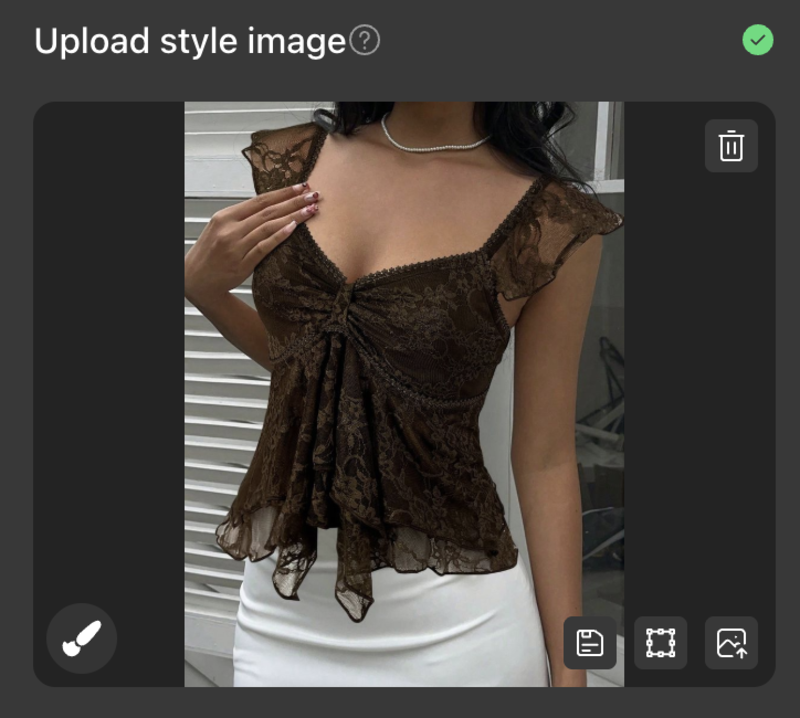
If you’ve seen a particular clothing item that you like and want to use it as inspiration or modify it, you can upload the image. For instance, if you have a picture of a classic white shirt but want to add a modern twist, the AI can analyze the image and generate new designs based on your input.

2. Select the Right AI Fashion Design Tool​

There are numerous AI fashion design tools available in the market, each with its own set of features. When using Fashion Diffusion, it’s important to understand and utilize the tools that best suit your design needs:​

Text to Sketch

This feature is incredibly useful for those who are more comfortable expressing their ideas in words. By simply typing in your text description, the AI can quickly generate a basic sketch that captures the essence of your design. For example, if you describe a “retro-style jumpsuit with wide-leg pants and a halter neck,” the Text to Sketch tool will translate this into a visual representation.​

Sketch to Render

Once you have a basic sketch, either drawn by hand or generated by the Text to Sketch tool, the Sketch to Render feature comes into play. It takes the sketch and turns it into a detailed, colored design, complete with fabric textures.

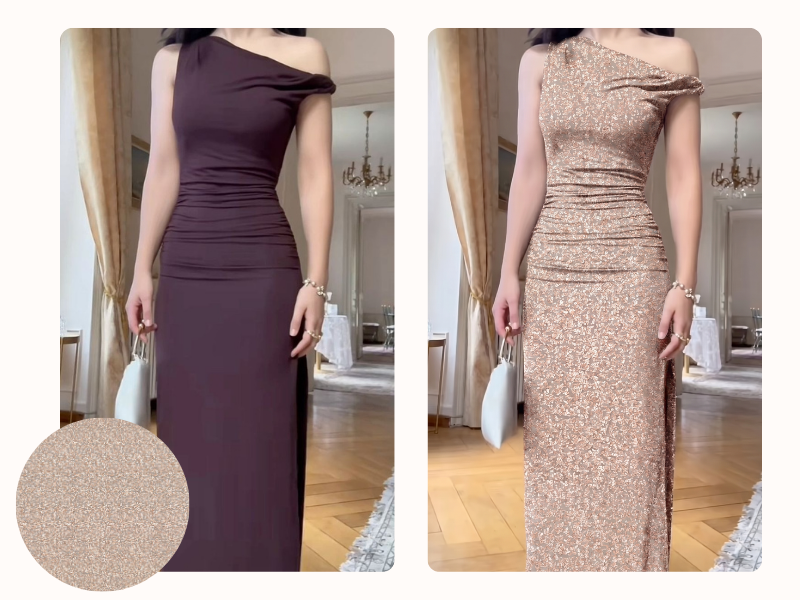
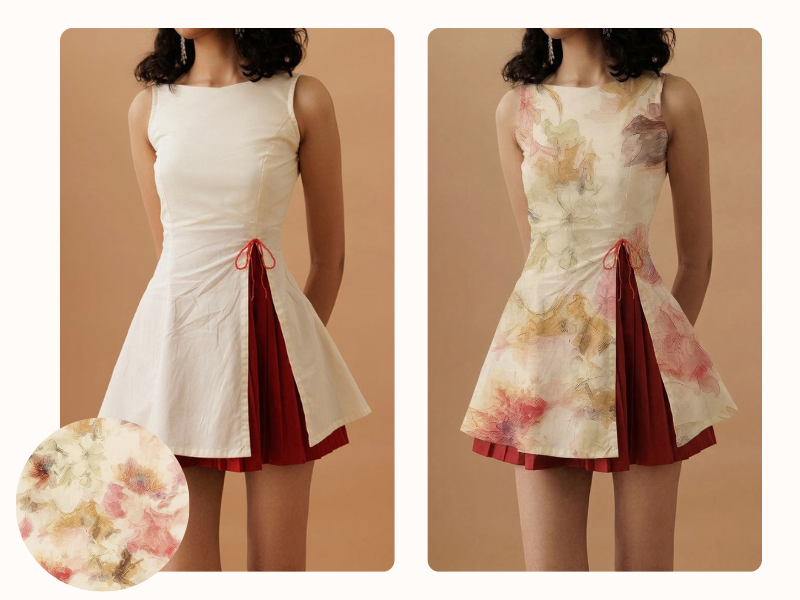
Apply Fabric

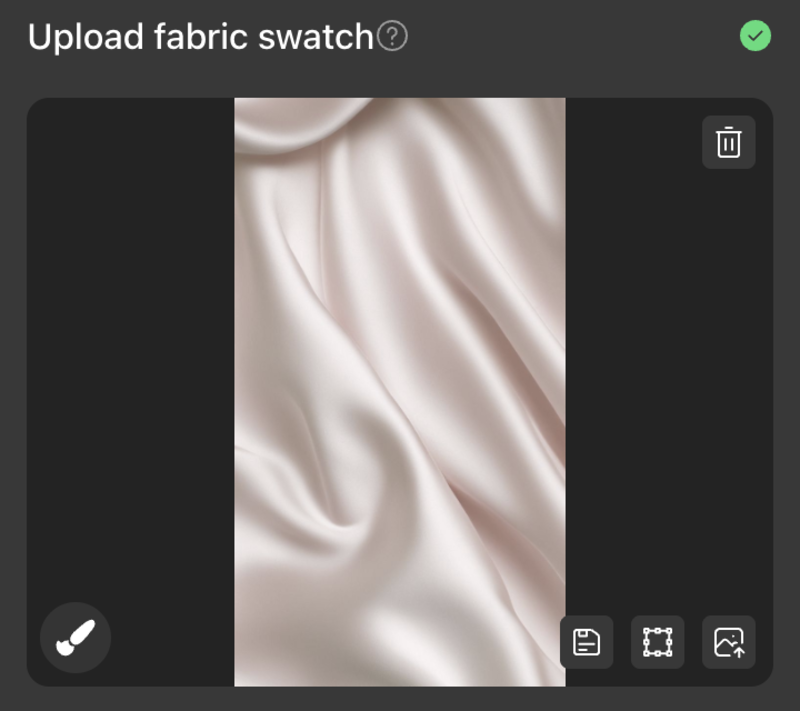
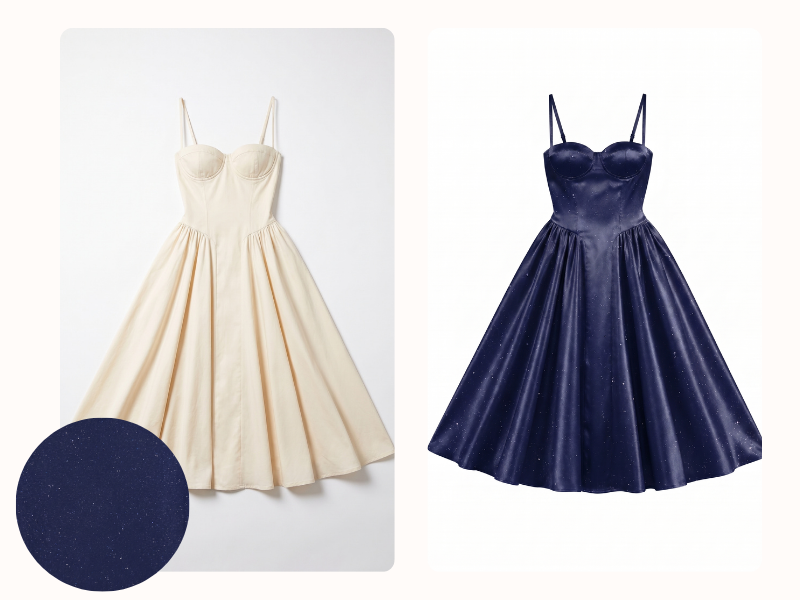
One of the exciting features of AI fashion design tools is the ability to easily change the fabric of your design. With just a click, you can transform a design from looking like it’s made of denim to silk, velvet, or even a high-tech performance fabric. This allows you to experiment with different fabric looks and see which one best suits your overall design concept.​

Recolor

Color can make a huge difference in the overall look of a garment. The Recolor tool enables you to test out different color palettes for your design. You can quickly change a black dress to a bright red one, or create a monochromatic collection by varying the shades of a single color.​

3. Refine Your Design​

After obtaining a basic design, it’s time to refine it to perfection:​

Change Background

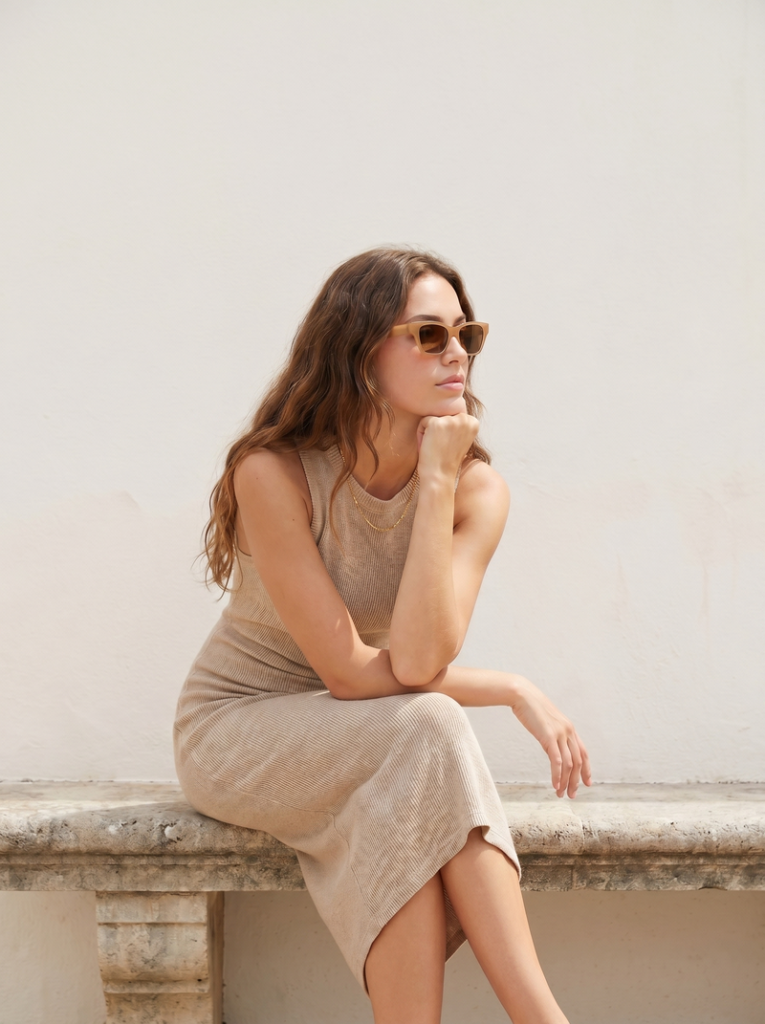
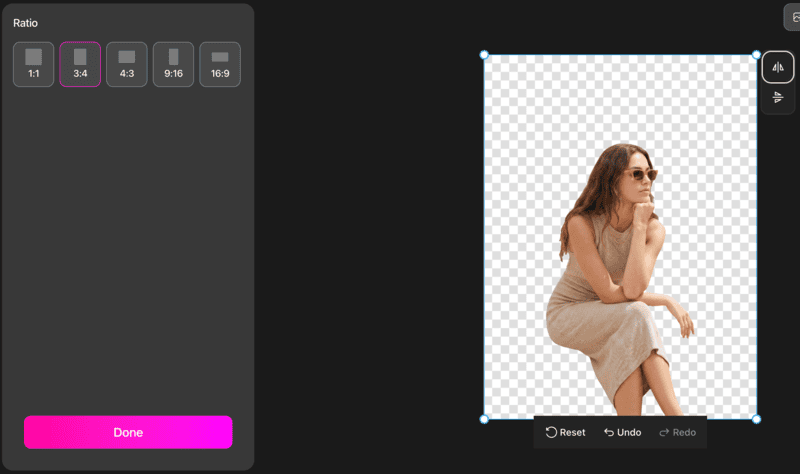
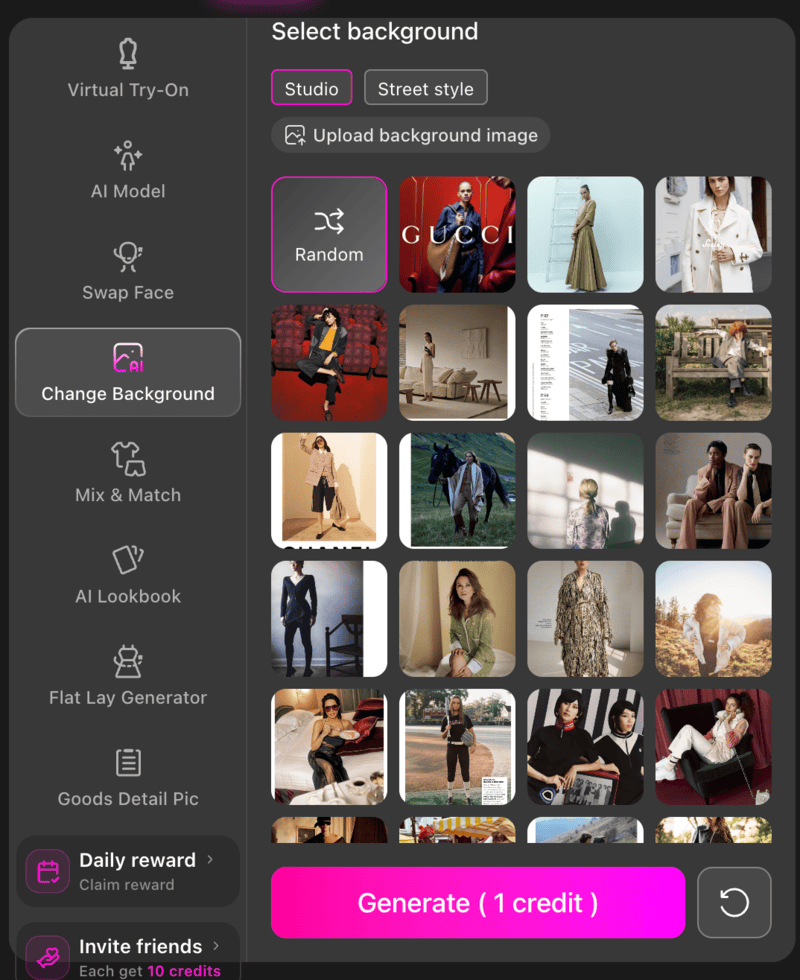
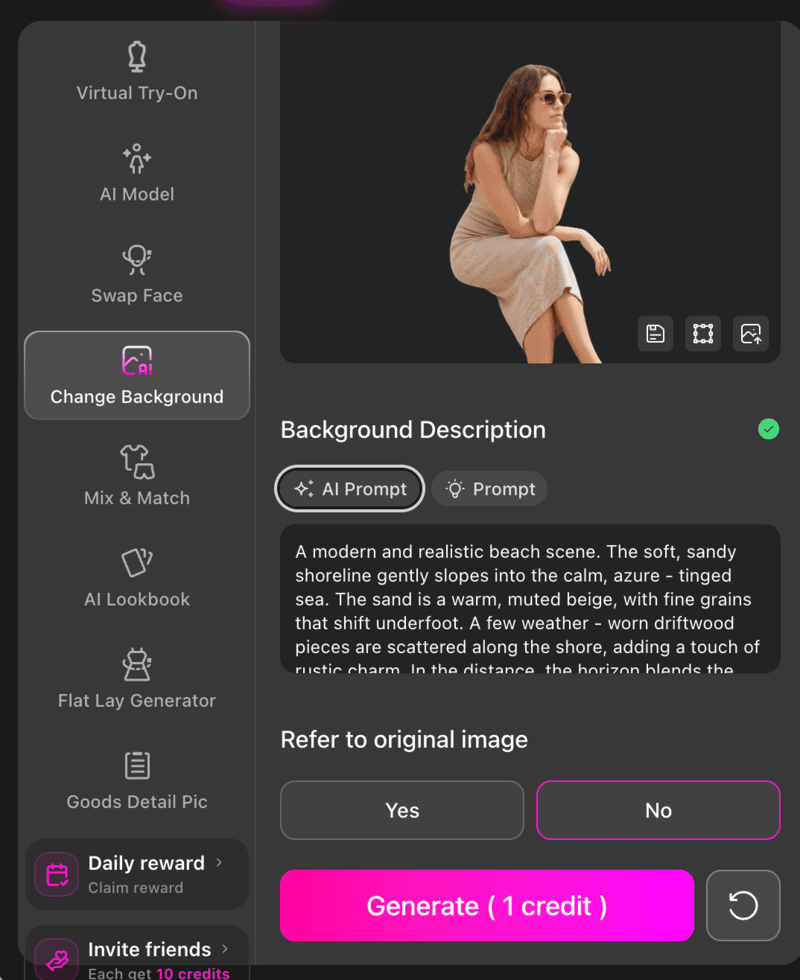
The background against which your clothing design is presented can greatly impact how it is perceived. By swapping a plain white background with a more realistic scene, such as a beach, a city street, or a fashion runway, you can better visualize how the clothes will look in real-life situations. This can be especially useful when presenting your designs to clients or for marketing purposes.​

Change Background
Fashion Diffusion AI-generated

Virtual Try-On

Many AI fashion design tools, including Fashion Diffusion, offer a virtual try-on feature. This allows you to see how your design will fit on different body types. By using virtual models with varying body shapes and sizes, you can ensure that your design is inclusive and looks good on a wide range of people. It also saves the time and cost associated with hiring real models for fittings.​

Fashion Diffusion's Swap Face leverages cutting-edge AI to perfectly match lighting, skin tones, and angles.

Swap Face

In addition to virtual try-on, the ability to swap faces on virtual models can be beneficial. You can choose from a library of diverse virtual models to showcase your clothes. This is particularly useful for creating a more personalized look for your designs or for targeting specific demographics.

4. Prepare Your Design for Use​

Once you’re satisfied with the design, it’s time to prepare it for its intended use, whether it’s for production or marketing:​

Remove Background

A clean, uncluttered image is often preferred for use in lookbooks, online stores, or advertising. The Remove Background tool can quickly and easily eliminate the background from your design, leaving you with a clear, focused image of the clothing item.​

Upscale

To ensure that your design looks sharp and professional, especially when used for print or large-scale online ads, you can use the Upscale feature. This increases the resolution of the image without losing any detail, resulting in a high-quality visual that can be used across different platforms.

Why Use AI Fashion Design Tools

AI fashion design tools like Fashion Diffusion make fashion design easier for everyone, from beginners to brands:

  • Saves time: Each design takes 5-7 hours less than traditional methods. No more tedious revisions.
  • Cuts costs: Reduces model and photoshoot costs by 95%—AI generates virtual models and backgrounds.
  • Fits all skill levels: You don’t need AI expertise. The interface is as simple as basic design software.
  • Works for small brands: Startups and independent designers can create high-quality designs without a big budget.

Getting Started with Fashion Diffusion

With AI Clothing Generators, designing fashion clothes is no longer limited by time, cost, or skill. Tools like Fashion Diffusion let you turn ideas into reality quickly, whether you’re a new designer or a growing brand.

Are you ready to embark on this exciting journey with Fashion Diffusion? Start now and discover how AI clothing generators can revolutionize your fashion design process.

Avatar photo 通过Sophia Mille

Generative AI: Reshaping Fashion Design for a Sustainable Future

The fashion industry constantly seeks innovation. Generative Artificial Intelligence (Generative AI) is now emerging as a powerful tool, particularly for sustainable design. This technology offers new ways to create, reduce waste, and speed up development. This post explores what Generative AI is, fashion’s environmental challenge, and how this technology provides solutions.

The Environmental Impact of the Fashion Industry​

Generative AI

The fashion industry is a powerhouse of creativity and expression, but it faces an undeniable crisis: its immense environmental footprint. This isn’t hyperbole – the numbers are staggering.

According to the UNEP, fashion is responsible for 10% of global carbon emissions–more than all international flights and maritime shipping combined. McKinsey & Company further emphasizes the urgency, projecting emissions could surge by 50% by 2030 without drastic intervention.

Fashion faces significant sustainability challenges:

  • High Waste: Massive pre-production waste (unsold samples, fabric scraps) and post-consumer waste (landfilled garments).
  • Resource Intensive: Heavy water usage and pollution from dyeing and finishing fabrics.
  • Carbon Footprint: Global supply chains contribute heavily to greenhouse gas emissions. Reducing physical sampling and overproduction is crucial.

These issues show why the industry needs better, more sustainable practices. That’s where generative AI comes in.

What is Generative AI

Generative AI refers to a type of artificial intelligence that creates new, original content. Unlike standard AI that analyzes data, generative AI learns patterns from existing information–like images, text, or designs–and generates similar but unique outputs. Think of it as an AI generator capable of producing novel visuals, concepts, or designs based on its training. Popular examples include tools for generating images from text descriptions.

What Is Generative AI in Fashion

Generative AI in fashion is a branch of artificial intelligence that creates new, original fashion-related content—such as designs, patterns, virtual try-on, or styling suggestions—by learning from vast amounts of existing fashion data. Unlike traditional AI that might analyze trends or predict sales, generative AI actively generates fresh ideas, acting as a creative partner for designers, brands, and retailers.

How Generative AI Can Revolutionize Fashion Design

Generative AI can be a powerful to create a more sustainable fashion industry. It can simulate garment appearance and fit on diverse body types, reducing physical samples and production waste. With Fashion Diffusion, you can visualize designs on various virtual models, experiment with styles, and make informed decisions before cutting any physical material.

Virtual Prototyping to Reduce Waste

Generative AI enables virtual prototyping, minimizing the need for multiple physical samples. This significantly cuts production waste and helps create a more sustainable design process. Fashion Diffusion allows you to test and refine your designs virtually, saving time and resources.

Personalized, On-Demand Fashion

AI-driven platforms can analyze user preferences, body data, and environmental factors to create custom designs. This shift from mass production to on-demand fashion minimizes overproduction and waste. Fashion Diffusion enables you to create designs tailored to individual preferences, embracing a more sustainable and personalized approach.

Sustainable Material Optimization

AI can analyze fabric databases and recommend sustainable materials based on design requirements. It can also predict material performance, ensuring durability and reducing returns. Fashion Diffusion helps you incorporate sustainable materials into your designs by providing valuable insights and recommendations.

Accelerating the Design-to-Production Pipeline

Generative AI tools streamline the design process, allowing faster prototyping and iteration. This efficiency reduces energy consumption and resource use across the production pipeline. Fashion Diffusion’s AI-powered tools help you accelerate your design process, bringing collections to market more quickly and efficiently.

AI-Powered Supply Chain Efficiency

AI enhances transparency and traceability by tracking materials from source to shelf. Brands can identify carbon-intensive stages and optimize logistics to lower their environmental impact. Fashion Diffusion contributes to supply chain efficiency by providing valuable data and insights.

Enhancing Creativity While Embracing Eco-Ethics

Generative AI empowers designers to explore a wider range of concepts quickly, allowing more room to integrate sustainable elements into their work. Fashion Diffusion helps you expand your creative horizons while staying true to eco-ethical principles.

Brands are Using Generative AI in Fashion

Fashion brands are already weaving generative AI into every stage of the value chain:

  • Tommy Hilfiger teamed up with IBM and FIT to feed 15 years of runway photos and fabric data into an AI system that spits out mood boards, color palettes, and first-draft silhouettes—cutting weeks off the concept phase.
  • H&M’s Circular Innovation Lab uses generative models to shape garments for maximum recyclability and to upcycle dead-stock fabrics into new styles, slashing both waste and design lead-times.
  • Revery AI supplies retailers with generative virtual try-on tech that renders outfits on diverse body types in real time, reducing returns and boosting shopper confidence.

Getting Started with Fashion Diffusion

Generative AI is transforming the fashion industry, making sustainability more achievable than ever. By combining creativity with advanced technology, it paves the way for a future where fashion is both beautiful and environmentally responsible.

Fashion Diffusion offers a range of tools and features to help you begin your sustainable fashion design journey. You can experiment with AI-powered tools like SketchAI, which transforms hand-drawn sketches or digital designs into polished fashion illustrations. The intuitive interface requires no technical skills, allowing you to focus on your creativity.

Are you ready to embark on this exciting journey with Fashion Diffusion? Start now and discover how generative AI can elevate your sustainability goals and revolutionize your fashion design process.

FAQs

Is generative AI hard to use for someone new to technology?​

No. AI fashion design tools like Fashion Diffusion are made to be simple. You just need to describe what you want in words, and the AI does the rest.

What skills are needed to use an AI fashion generator?​​

Strong fashion sense (understanding silhouettes, fabrics, and construction) and the ability to write clear, descriptive prompts are key. Deep technical AI knowledge isn’t usually required.

How does Generative AI improve fashion sustainability?​​

By enabling extensive digital prototyping and design exploration, it drastically reduces physical samples​​ (cutting fabric waste and transport emissions), ​​minimizes overproduction risks, and conserves water (by reducing cotton/synthetic production needed for samples).

Avatar photo 通过Sophia Mille

What Is Cyberpunk Fashion? A Complete and In-Depth Breakdown

Cyberpunk fashion is more than just a trend–it’s a visual story that mixes technology, rebellion, and future visions. If you’ve seen neon lights, bold silhouettes, or gear that looks like it’s from a high-tech world, you’ve probably noticed cyberpunk style. But what exactly is it, and where did it start? Let’s break it down.

What is cyberpunk fashion?

What is cyberpunk fashion
Fashion Diffusion AI-generated

Cyberpunk fashion is a distinctive style blending futuristic technology aesthetics with gritty, urban decay. It visually embodies the “high-tech, low-life” concept central to the cyberpunk genre: a world of advanced artificial intelligence, cybernetics, and neon-lit megacities existing alongside social breakdown, inequality, and rebellion. This fashion rejects conventional norms, favoring an edgy, often dystopian look that incorporates functionality and technological integration.

The core characteristics of the cyberpunk style

  • Aesthetic Contrast: Sleek, high-tech elements clash with worn, grungy textures.
  • Key Materials: Leather (often distressed), synthetic fabrics (nylon, PVC), and ​​reflective materials mimicking city lights.
  • Color Palette: Dominated by blacks, greys, and metallics, dramatically punctuated by neon colors (electric blue, hot pink, acid green).
  • Layering & Silhouette: Complex layering of techwear–functional garments often featuring multiple pockets, straps, and adjustable elements. Combines tight-fitting pieces with loose, draped layers.
  • Futuristic Accessories: Goggles, respirators, tech-integrated gloves, holographic elements, and visible cybernetic enhancements.
  • DIY Ethos & Customization: Heavy emphasis on personalization, modification, and a handmade, anti-establishment feel, often using recycled or repurposed items.

Where Did Cyberpunk Fashion Come From?​​

Cyberpunk fashion emerged directly from the literary and cinematic cyberpunk genre of the late 20th century.

Literary Roots (Early 1980s)

William Gibson’s seminal novel “Neuromancer” (1984) was foundational. It introduced concepts like “cyberspace” and depicted a world saturated with technology yet socially fragmented, providing rich visual inspiration.

Cinematic Landmark (1982)

Ridley Scott’s “Blade Runner” visually defined the genre. Its rain-slicked, neon-drenched depiction of a decaying future Los Angeles, filled with diverse yet marginalized inhabitants and advanced tech, became the archetypal cyberpunk visual language.

Early Fashion Adoption (Late 1980s – 1990s)

The striking visuals from these works quickly influenced designers and street culture. Key figures like Jean Paul Gaultier and Helmut Lang began incorporating metallic hardware,  neon accents, dark layering, and synthetic materials into their collections, translating the genre’s aesthetic into wearable fashion. Streetwear adopted the “hacker chic” look—utilitarian, dark, and edged with rebellion.

Cyberpunk Fashion Today: From Subculture to Mainstream​

Cyberpunk fashion has transcended its niche origins to reshape contemporary streetwear, high fashion, and digital design.

The Key Trends of Cyberpunk Fashion

Techwear and Functionality

Techwear is a cornerstone of cyberpunk fashion, emphasizing functionality and durability. Brands like ACRONYM and PSYLO have popularized this trend, offering garments with innovative materials and practical features. These designs often include waterproof and breathable fabrics, reflective surfaces, and integrated technology, such as LED lights and smart pockets.

ACRONYMs clothing style showcase

Military and Tactical Elements

Military-inspired clothing is another significant influence on cyberpunk fashion. Tactical vests, cargo pants, and oversized jackets have become staples, offering a practical and edgy look. These garments often feature multiple pockets, webbing, and camouflage patterns, adding to the overall aesthetic.

Oversized Silhouettes

Oversized and baggy silhouettes are a defining feature of cyberpunk fashion. Harem pants, joggers, and wide-leg pants are popular choices, offering a comfortable yet rebellious fit. These garments often feature unique details like oversized pockets and unconventional closures, enhancing the overall look.

Neon and Reflective Materials

Neon colors and reflective materials are essential to the cyberpunk aesthetic. These elements add a futuristic and vibrant touch to the clothing, reflecting the chaotic energy of cyberpunk cityscapes. Brands often incorporate neon accents and reflective fabrics into their designs to create a striking visual impact.

The impact of cyberpunk fashion on mainstream fashion

High Fashion and Runway Shows

Mainstream designers have increasingly embraced cyberpunk themes, incorporating them into their runway shows and collections. Brands like Yeezy, A-Cold-Wall, and Y-3 have all featured cyberpunk-inspired elements in their designs, blending futuristic aesthetics with practical functionality. These collections often feature monochromatic palettes, metallic accents, and innovative materials.

A-Cold-Wall incorporates cyberpunk elements into its clothing designs.

Streetwear and Everyday Style

The influence of cyberpunk fashion has also trickled down to streetwear and everyday style. Brands are now offering capsule collections that feature reflective materials, futuristic prints, and oversized silhouettes. This accessibility allows fans to integrate elements of cyberpunk into their personal wardrobes, from statement outerwear to minimalist techwear.

The Future of Cyberpunk Fashion

As seen in 2025’s runway shows, cyberpunk continues to influence high fashion. Designers like Rick Owens and Demna Gvasalia (Balenciaga) presented post-apocalyptic couture with armor-like silhouettes and upcycled materials, while New York Fashion Week featured cyberpunk touches like utility clips and Bluetooth accessories. The metaverse also plays a role, with events like Decentraland’s Metaverse Fashion Week (2025) showcasing digital cyberpunk designs.

Looking ahead, cyberpunk’s fusion of sustainability (e.g., recycled PVC, upcycled leather) and futuristic tech (LEDs, smart textiles) positions it as a trend with staying power. Whether through couture or streetwear, it remains a powerful tool for self-expression and social commentary in an increasingly digitized world.

In essence, cyberpunk fashion’s journey from subculture to mainstream is a testament to its adaptability and relevance. By blending dystopian fantasy with real-world concerns, it offers a vision of the future that is both cautionary and empowering.

Explore Cyberpunk Design with Fashion Diffusion​​

Explore Cyberpunk Design with Fashion Diffusion
Fashion Diffusion AI-generated

Creating intricate cyberpunk concepts can be time-consuming. Fashion Diffusion offers AI-powered tools to streamline this process. Designers can rapidly generate and iterate on cyberpunk-inspired sketches, apply virtual fabrics and textures, create photorealistic renders on diverse AI models, and experiment with futuristic backgrounds.

Explore Fashion Diffusion today and discover how AI can transform your fashion visuals—no technical skills needed, just endless creativity!

FAQs

What is cyberpunk fashion style?

Cyberpunk fashion style is a distinctive and influential aesthetic that originated in the world of science fiction and has since made a significant impact on the fashion industry. It combines elements of high technology, dystopian themes, and a rebellious spirit to create a look that is both futuristic and edgy.

What are the core elements of cyberpunk fashion?

Neon colors, metallic textures, utilitarian accessories (straps, goggles), holographic/reflective fabrics, and the contradictory aesthetic of “high tech meets decay.”

Is there a difference between cyberpunk and “cybercore”?

Cybercore leans more into Y2K rretro-futurism (sequins, low-rise), while cyberpunk emphasizes dystopian darkness and functionality.

Avatar photo 通过Sophia Mille

AI Fashion Photo: AI Revolution in Fashion Photography

The fashion industry is always evolving, and the introduction of AI fashion photo technology has brought a revolutionary change to fashion photography. It is not just a tool but a game-changer that offers endless possibilities for creativity and innovation.

What is AI Fashion Photo?

AI Fashion Photo

AI fashion photo involves the use of artificial intelligence to create, edit, model, and enhance fashion photographs. From automatic editing tools to the creation of virtual models and outfits, AI fashion photo technology has transformed the way fashion visuals are produced.

Benefits of AI Fashion Photo

Time and Cost Efficiency

One of the key advantages of AI fashion photo is its ability to save time and reduce costs. Designers can quickly turn their sketches into polished designs without going through multiple rounds of tedious revisions. Additionally, AI-generated virtual models and scenes eliminate the need for expensive photoshoots, saving up to 95% on models and shoots cost.

Unleashed Creativity

AI fashion photo allows designers to break free from the limitations of traditional photography. With AI, you can create fashion visuals in any setting imaginable, whether it’s a futuristic cityscape or a serene beach at sunset. It enables you to experiment with different styles, fabrics, and designs with just a few clicks.

Personalization and Customization

AI fashion photo tools can analyze customer data to provide personalized fashion photos and tailored marketing content. This helps brands build stronger relationships with their customers by offering them unique and customized fashion experiences.

Applications of AI Fashion Photo

Virtual Try-On

AI-powered virtual try-on technology allows customers to see how clothes would look on them without actually trying them on. This not only improves customer satisfaction but also reduces returns and helps customers experiment with different styles virtually.

Virtual Photo Studio

AI virtual photo studios enable creators to produce professional-looking fashion photos from anywhere. You can choose from a variety of backdrops and settings, making it easy to create engaging social media content or personalized marketing materials without the need for expensive studio equipment.

Fashion Storytelling

AI fashion photo opens up new avenues for fashion storytelling. You can create a series of photos that tell a story, such as transforming into different fashion icons throughout history or embarking on a fantastical fashion journey. This adds a new dimension to fashion photography and allows for more creative expression.

The Technology Behind AI Fashion Photo

AI fashion photo relies on advanced learning and neural networks. These technologies analyze vast amounts of past data to improve photo quality, styling recommendations, and even predict the best settings for different scenarios. Some AI tools can also suggest the optimal positions and layouts for a fashion shoot, making the process more efficient.

The Power of Fashion Diffusion

Fashion Diffusion stands out as a premier AI-powered fashion design and commercial photography assistant. It empowers designers and brands to create stunning visuals, experiment with styles, and significantly reduce production costs. Here’s how Fashion Diffusion is making a difference:

Fashion Diffusion'Virtual Try-On tool
  • Time Efficiency: With Fashion Diffusion, designers can save a remarkable 5 – 7 hours on each design. The AI instantly transforms sketches into polished designs, eliminating tedious revisions and freeing up time for true creativity.
  • Cost Reduction: Traditional fashion photoshoots can be incredibly expensive, involving models, studios, and various other resources. Fashion Diffusion offers a cost-effective solution, allowing brands to save up to 95% on models and shoots costs by utilizing AI-generated studios, diverse virtual models, and scenes.
  • All-in-One Platform: Fashion Diffusion provides a comprehensive suite of tools for AI-powered design, from concept sketches to campaign-ready visuals. Designers can access everything they need in one place, without the hassle of switching between different platforms.

The Future of AI Fashion Photo

As AI technology continues to advance, the potential for AI fashion photo is limitless. It will become even more sophisticated, allowing for hyper-customization and even more realistic virtual models. AI will also play a bigger role in integrating with other fashion technologies, such as virtual reality and augmented reality, to create immersive fashion experiences.

Unlock Your Fashion Creativity with Fashion Diffusion

AI fashion photo is not just a trend but a powerful tool that is here to stay. It is transforming the fashion industry by making fashion photography more accessible, creative, and efficient. Whether you are a designer, brand, or fashion enthusiast, embracing AI fashion photo technology can help you unlock new levels of creativity and stay ahead in the ever-changing world of fashion.

Explore Fashion Diffusion today and discover how AI can transform your fashion visuals—no technical skills needed, just endless creativity!