分类归档 未分类

Avatar photo 通过Sophia Mille

AI Model Swap:What It Is and How It’s Changing Digital Fashion

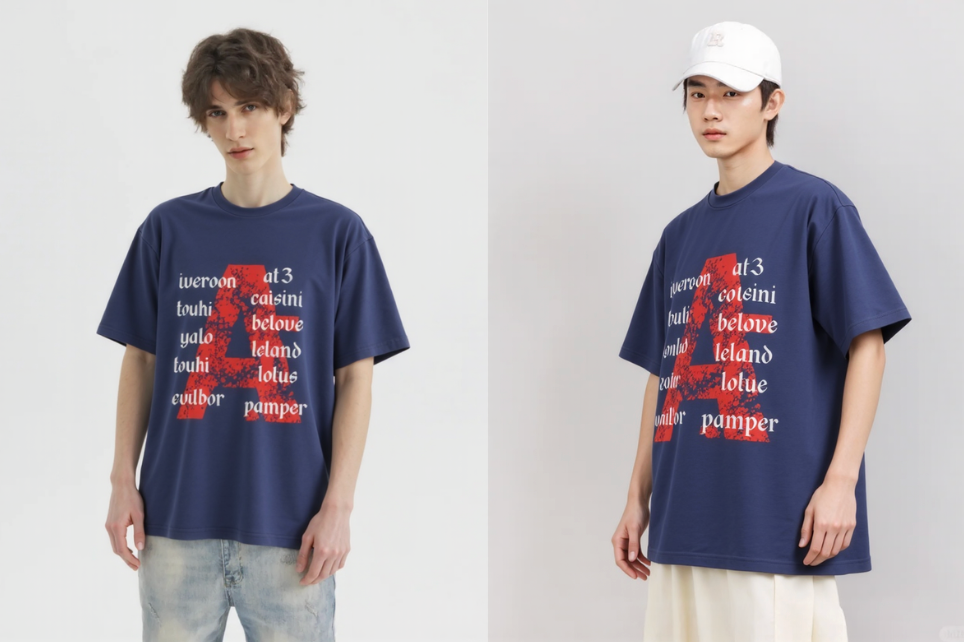
Scrolling through an online store today, you might notice something interesting: the same outfit shown on different models or styles. Yet, there are no obvious signs of multiple photoshoots. This effect comes from AI model swap, a technology quietly changing how fashion visuals are created and scaled online.

In this article, we’ll explain how AI model swap works, how it works with Fashion Diffusion, and why it’s becoming a must-have tool in modern fashion workflows.

What is AI Model Swap?

AI model swap is a technology that uses AI to replace the human model in an image. The product itself stays the same. Clothing, accessories, pose, and lighting remain unchanged—only the model is swapped. It’s part of a broader trend called AI Virtual Models. Digital models can be generated, customized, and reused across multiple visuals.

With AI model swap, brands and creators can reuse a single product image and instantly show it on different models. No new photoshoots or rebuilt assets are needed.

Unlike basic image editing or face swap tools, AI model swap works on the entire model. The AI understands body structure, proportions, and how garments fit different silhouettes.

In fashion and e-commerce, this makes it possible to showcase the same item across diverse body types, styles, and markets. The process is faster, more scalable, and far more efficient than traditional workflows.

How AI Model Swap works?

At first glance, AI model swap might seem like magic. However, behind the scenes, it follows a clear process to keep clothing realistic while seamlessly changing the model.

The workflow typically looks like this:

  1. Image analysis: The AI scans the original image to identify key elements. It separates the model, pose, clothing, and background.
  1. Garment preservation: Clothing details—fabric texture, folds, shadows, and proportions—are carefully kept. This ensures the item stays true to the original design.
  1. Model replacement: A new model is introduced. The AI adjusts body shape, skin tone, and posture, making sure the garment fits naturally on the new silhouette.
  1. Final blending: Lighting, perspective, and edges are refined. The swapped model looks like part of the original photo, not an obvious AI edit.

Where Can AI Model Swap be Used?

AI model swap is already used across different stages of fashion and creative workflows. From product pages to global marketing campaigns, it helps brands scale visuals faster and more flexibly.

Common use cases include:

  • Fashion e-commerce: Show the same product on different models without reshooting. This makes it easier to highlight fit, styling, and versatility across collections.
  • Digital marketing and advertising: Quickly generate multiple visual versions of the same campaign, tailored for different audiences, platforms, or regions.
  • Localization and inclusivity: Adapt one product image to reflect different body types, skin tones, or cultural preferences. This makes visuals more relevant in global markets.
  • Creative content and virtual styling: Experiment with looks, concepts, and styling ideas faster, without being limited by traditional production cycles.

The Advantages and Limitations of AI Model Swap

AI model swap is changing how fashion brands create and scale visual content. By digitally placing the same garment on different models, brands can produce flexible visuals without the time, cost, and logistics of traditional photoshoots. Like any technology, it comes with both advantages and limitations worth understanding.

Advantages

  • Higher efficiency: One product image can be reused to create multiple model variations. This cuts down photoshoot time, costs, and production cycles.
  • More creative flexibility: Showing the same item on different body types, skin tones, or styling directions helps shoppers imagine how it might look in real life.
  • Better global reach: Brands can localize visuals for different markets without coordinating models and shoots across multiple regions.
  • Faster testing and iteration: Different looks and visual styles can be tested quickly, making it easier to see what resonates and optimize campaigns.

Limitations

  • Image and Garment Constraints: Results depend heavily on image quality and garment complexity. Certain fabrics, details, or lighting conditions can still be challenging for AI to reproduce perfectly.
  • Ethical and transparency concerns: As AI-generated visuals become more realistic, brands need to clearly disclose their use and avoid misleading representations.
  • Limited human expression: While AI can replicate appearance, it may still fall short when it comes to subtle emotion, movement, or styling nuances that human models naturally bring.

How to do AI Model Swap with Fashion Diffusion?

In today’s digital world, high-quality visuals are key for brands looking to grab attention. Traditional photoshoots? They take time, money, and lots of coordination.

That’s where AI model swap comes in. It lets you showcase the same piece of clothing on different models, poses, and styles with just a few clicks. Stunning visuals—without the usual hassle.

Fashion Diffusion offers two powerful features for AI model swap: Swap Face and Virtual Try-On. Whether you want to showcase diversity or quickly generate multiple visuals for your online store, these tools have you covered.

Swap Face

Swap Face lets you replace the face of the model in your clothing image while keeping the outfit, pose, lighting, and background intact. It’s perfect for showing the same outfit on different types of people, helping your brand feel more inclusive and relatable.
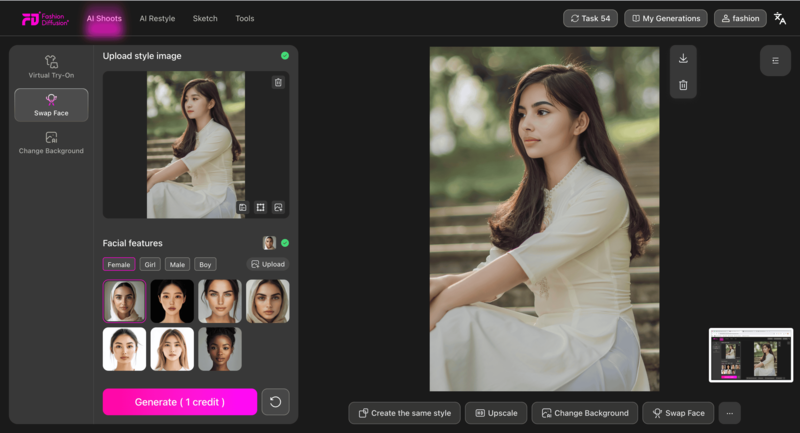
SwapFace

How to do it:

  1. Upload your clothing photo with a model.
  2. Choose a model from the platform or upload a custom face.
  3. Hit “Generate” and watch AI seamlessly merge the new face onto the original image.

Where to use it:

  • Regional marketing: Show your clothing on faces that resonate with local audiences.
  • Show diversity: Highlight different types of people wearing your products to increase engagement.
  • Save on shoots: One base photo can generate multiple model variations without extra photoshoots.

Virtual Try-On

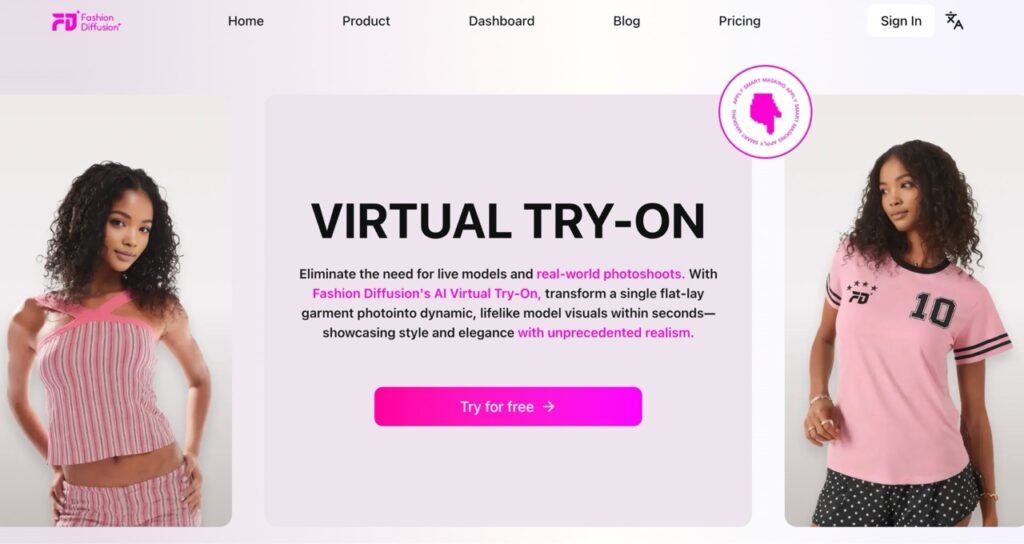
Virtual Try-On lets your clothing “try itself on” different models, generating realistic outfit images. Perfect for e-commerce product pages or pre-launch design previews.
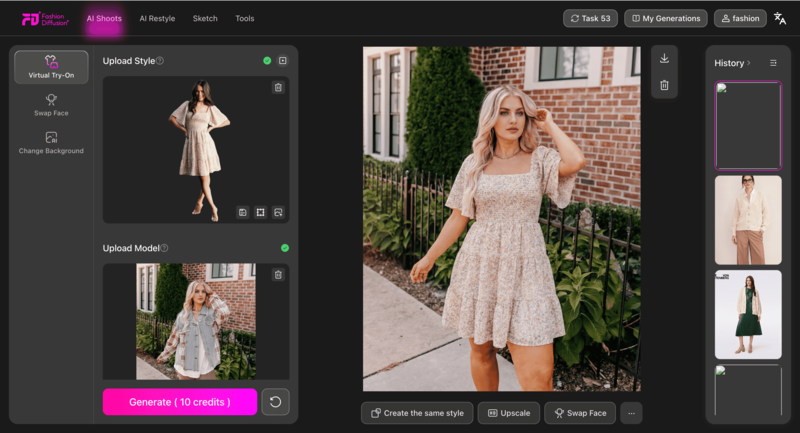
Virtual Try-On

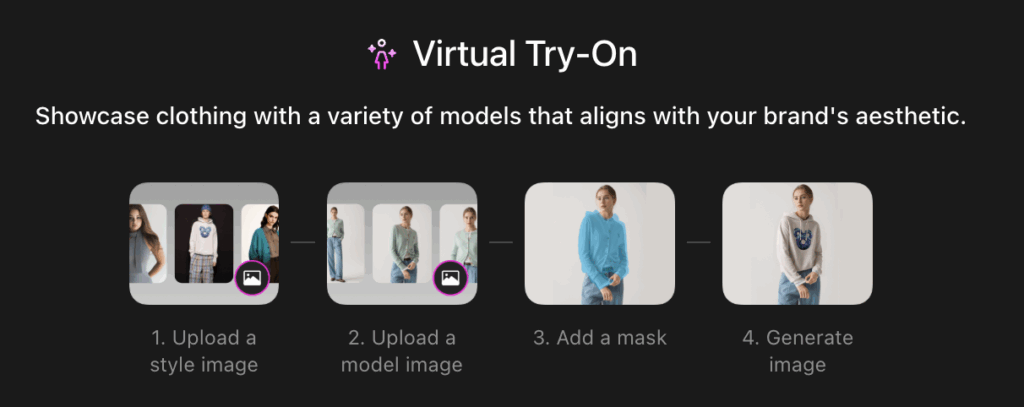
How it works:

  1. Upload your clothing item (flat lay or design sketch)
  2. Upload or select a model image (platform model or your own)
  3. AI automatically recognizes the clothing outline and details, fitting it naturally onto the model.
  4. Generate multiple images ready to use on product pages, social media, or ads.

Where to use it:

  • Boost product pages: Multiple angles and outfit versions give shoppers more confidence.
  • Design testing: Preview designs before making physical samples.
  • Interactive shopping: Combine with customers’ selfies for a “real-life try-on” experience online.

Example: Virtual Try-On + Swap Face in One Workflow

Imagine a brand launching a new cardigan. Instead of planning multiple photoshoots, they use Fashion Diffusion to create all the visuals digitally.

Step 1: Virtual Try-On

The brand uploads a flat-lay image of the cardigan and selects a base model. Using Virtual Try-On, the AI generates realistic images of the cardigan worn on the model, keeping the fit, fabric, and overall shape natural. This step focuses on getting the outfit itself right.
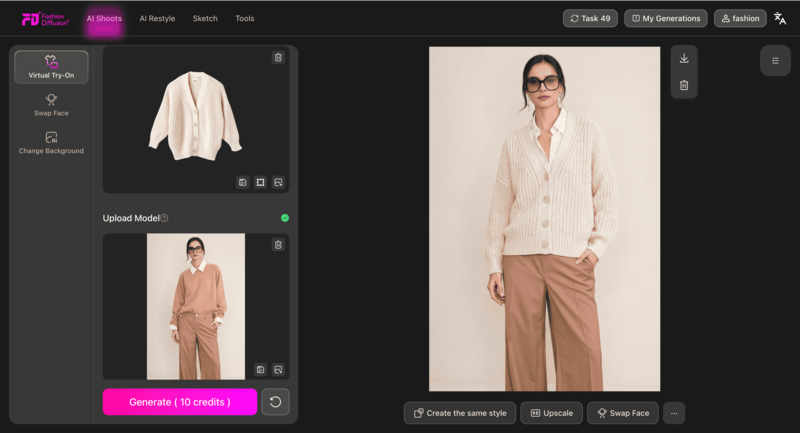
example virtual try-on

Step 2: Swap Face

Once the outfit looks perfect, the brand uses Swap Face to swap the model’s face while keeping everything else the same. This allows the same cardigan to be shown on different faces for various audiences or markets—without redoing the try-on.
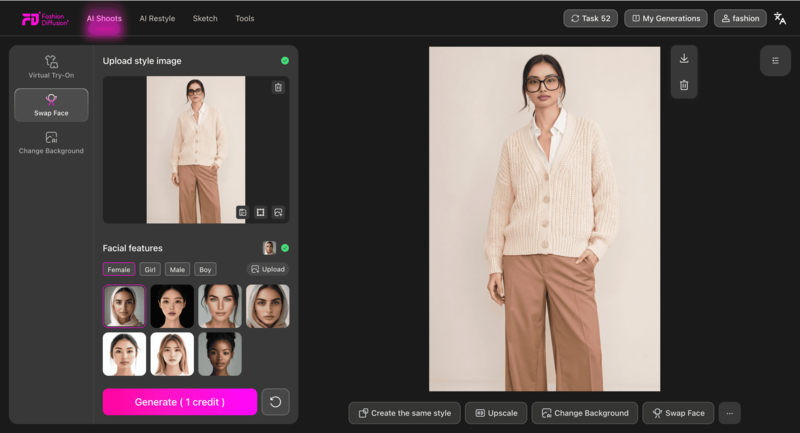
Example Swap Face

One outfit, multiple model variations, and a full set of visuals ready for product pages, social media, and ads.

The Future Trend of AI Model Swap

AI model swap is still gaining momentum, but it’s already reshaping how fashion brands create and scale visual content. As the technology continues to evolve, it will move beyond simple image generation and become a core part of digital fashion experiences.

More Realistic and Human-Like Visuals

AI-generated models will look increasingly natural, with better facial expressions, posture, and movement. Visuals will feel less “AI-made” and more like real photoshoots, helping brands communicate mood, lifestyle, and emotion more effectively.

Hyper-Personalized Shopping Experiences

Personalization will go further than ever. Shoppers may be able to see outfits on AI-generated versions of themselves, making virtual try-on more interactive and emotionally engaging. This shift will turn online shopping into a more immersive experience rather than a static one.

Stronger Focus on Ethics and Transparency

As AI visuals become harder to distinguish from real images, transparency will matter more. Brands that clearly disclose the use of AI and follow ethical guidelines will build stronger trust and long-term relationships with their audiences.

Deeper Integration with Digital Channels

AI model swap will increasingly connect with AR, social commerce, and live shopping. From AI-enhanced livestreams to shareable virtual outfits, fashion visuals will become more dynamic, interactive, and social.

Start Using AI Model Swap to Scale Fashion Visuals

AI model swap is quickly becoming a practical tool for fashion brands and designers—not just an experiment. It helps turn a single outfit into multiple visuals, adapt content for different audiences, and speed up the creative process without relying on repeated photoshoots.

With Fashion Diffusion, getting started doesn’t require complex setups or technical skills. From virtual try-on to face swap, the platform lets you create realistic, flexible fashion visuals in just a few steps, making it easier to test ideas, update product images, and scale content across channels.

FAQ

What is an AI model on Instagram?

An AI model on Instagram is a computer-generated digital personality. It could be an influencer, a character, or even a digital twin of a real person. Created using artificial intelligence, it can post photos and videos and interact with audiences like a human. These AI models often look highly realistic while giving brands full creative control. This reduces costs and allows for endless content variations. However, it can sometimes blur the line between reality and AI-generated content. They are trained on data to generate unique content from text prompts. Brands commonly use them as virtual models for marketing or entertainment.

What exactly is an AI model?

An AI model is a trained computer program that uses algorithms and large datasets to recognize patterns and learn from them. It can then make predictions, take decisions, or generate new content—without needing step-by-step programming for every scenario. Think of it as a digital brain. Like a child learning to identify animals by seeing many pictures, it can process huge amounts of data and uncover complex patterns that humans might miss.
Avatar photo 通过Sophia Mille

Top 10 Online Fashion Sketch Tools for Modern Designers

Fashion sketching has always been central to design, turning ideas into visual direction. With online tools and AI fashion design tools like Fashion Diffusion, designers can now create sketches quickly—no complex setups or years of experience required.

AI is transforming the process, allowing designers to explore silhouettes, fabrics, and styles in minutes, making fashion design more accessible to a wider range of creators.

What Are Online Fashion Sketch Tools?

An online fashion sketch tool is a digital platform that helps designers create and refine fashion ideas without relying on traditional pen and paper. These tools make it easier to sketch, edit, and experiment with designs, whether you’re working on early concepts or more detailed visuals.

Some platforms now go a step further by using AI. An AI fashion sketch generator can turn text prompts or reference images into fashion sketches, helping designers explore ideas faster and with less manual effort. Together, traditional and AI-powered tools are making fashion sketching more flexible, efficient, and accessible for designers at every level.

10 Useful Tools for Fashion Sketching

There are plenty of tools out there to bring your fashion ideas to life. From AI-powered platforms to traditional drawing software, each one offers unique features to help you sketch, design, and experiment with ease. Here are 10 popular fashion sketching tools and what makes them stand out:

1. Fashion Diffusion

fashion diffusion

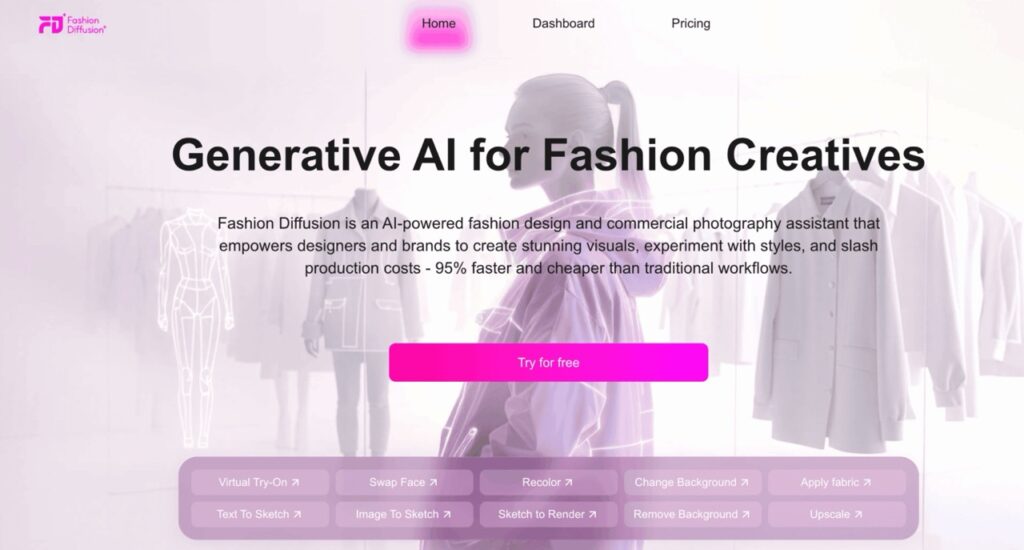
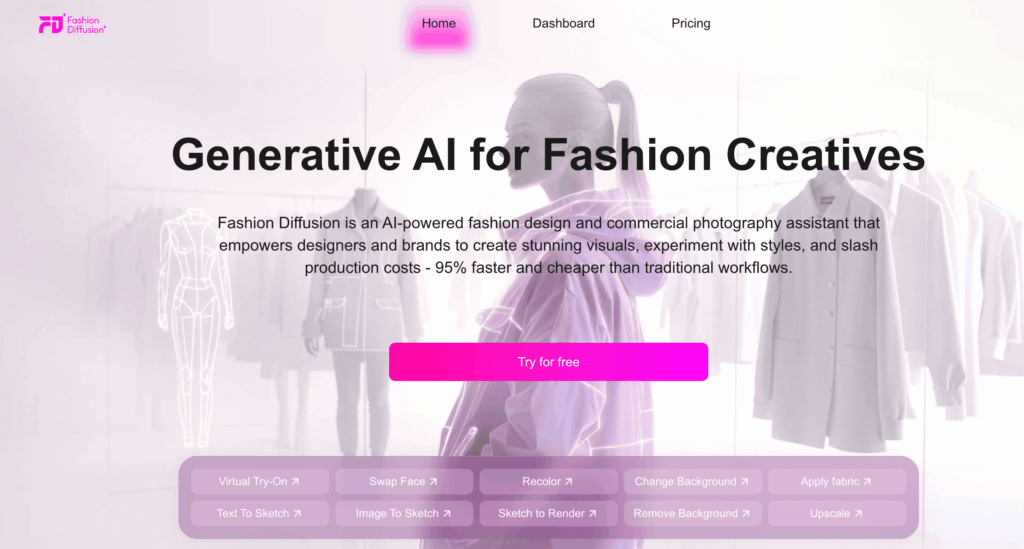
Fashion Diffusion is an AI-powered fashion design and visual creation platform for designers and brands. It helps teams create high-quality visuals faster and at a much lower cost than traditional workflows.

One of the main tools in Fashion Diffusion is the AI sketching tool. These tools are designed for the early concept stage, allowing designers to explore silhouettes, styles, and creative directions without starting from a blank page.

Rather than focusing on technical precision, the platform makes it easy to generate quick visual ideas through AI-powered sketching. This combination of speed, flexibility, and ease of use makes Fashion Diffusion a strong paid option for ideation and concept development.

How Fashion Diffusion supports sketching and concept development:

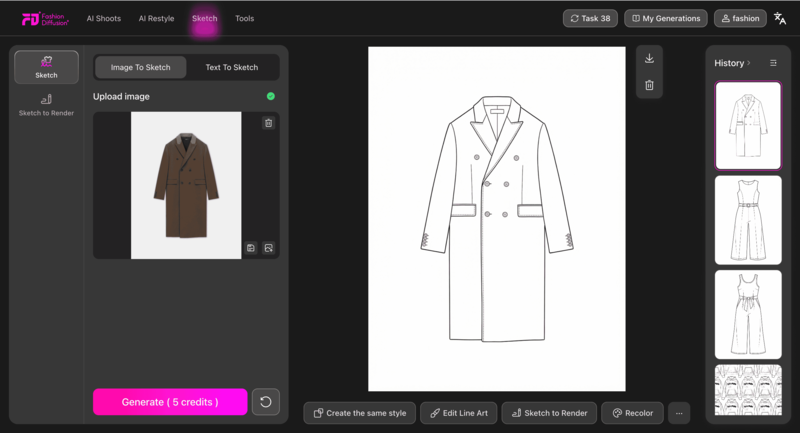
  • Designers can upload reference photos or garment images and use Image to Sketch to convert them into clean fashion line drawings, making it easier to rework existing styles or analyze structure.
image to sketch
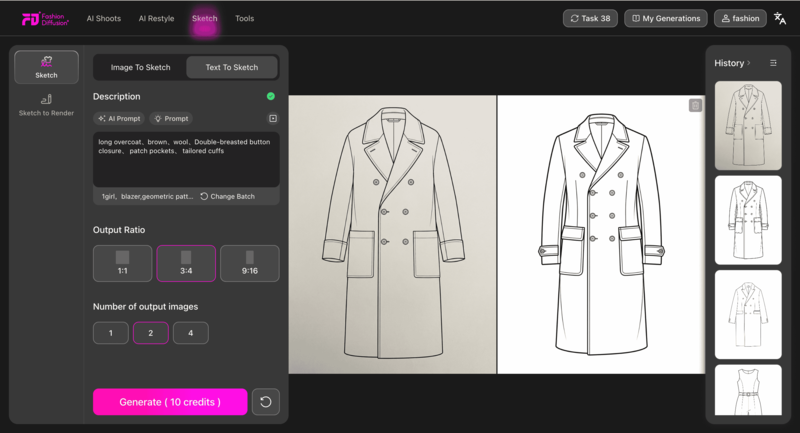
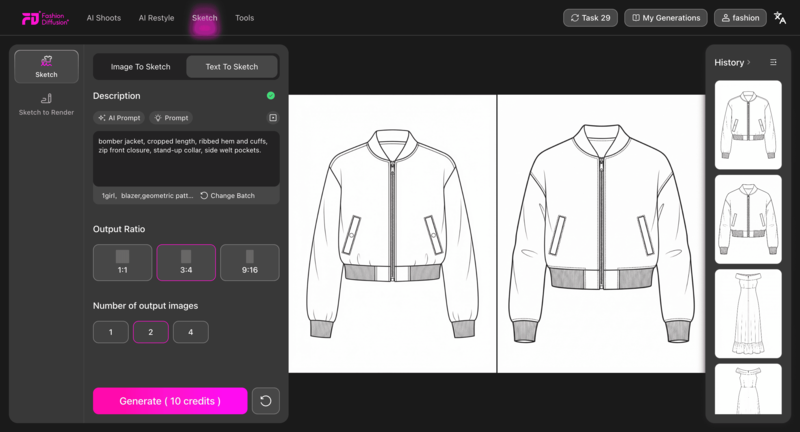
  • When starting from an idea rather than an image, Text to Sketch allows designers to generate sketches directly from written descriptions, such as silhouette, sleeve shape, or overall mood.
text-to-sketch
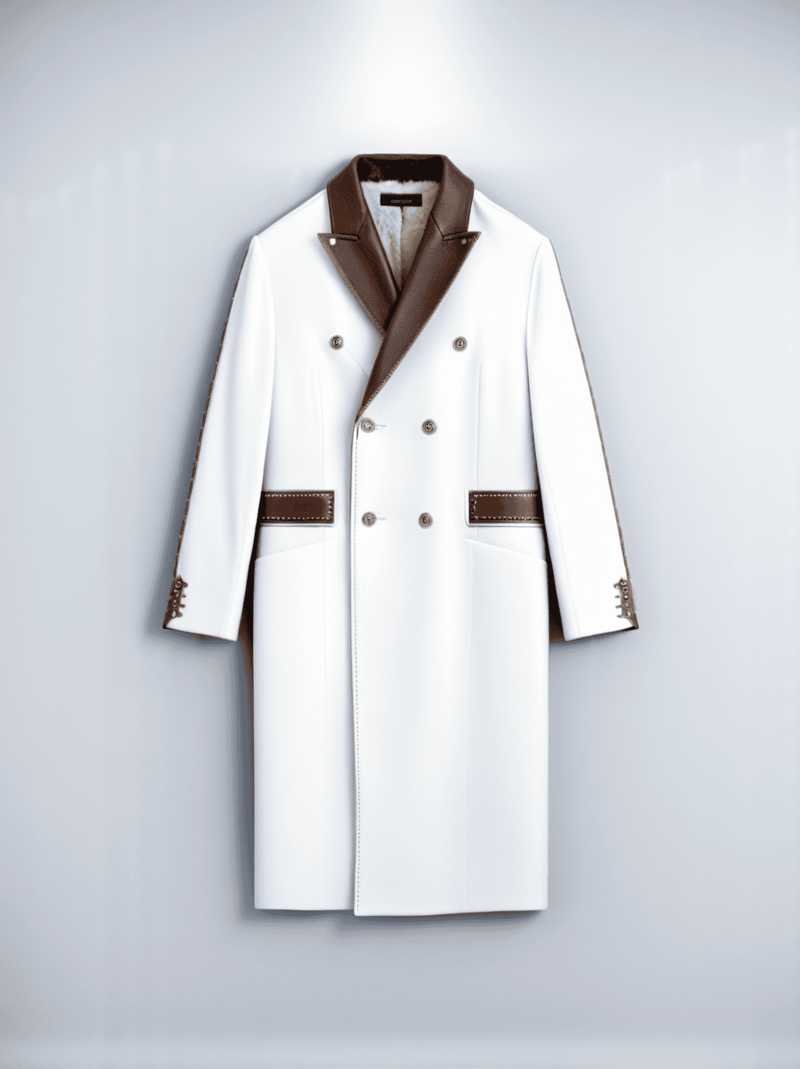
  • Once a line sketch is ready, Sketch to Render helps transform it into a more realistic visual by adding fabric, color, and texture details, making concepts easier to present and evaluate.
sketch to render
Fashion Diffusion AI-generated

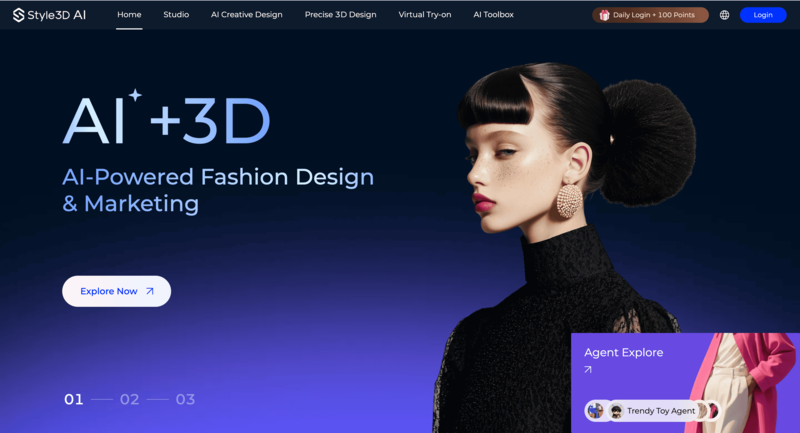
2. Style3D AI

style3D

Style3D AI focuses on realistic 3D fashion visualization. It allows designers to see how garments look and behave in three dimensions, making it easier to understand proportions, fit, and fabric movement.

The tool has a moderate learning curve and is best suited for designers who want to move beyond flat sketches. As a paid platform, it works especially well during the visualization and prototyping stage.

How Style3D AI supports design visualization:

  • Designers can transform flat designs into 3D garments to better evaluate silhouette, fit, and overall balance before sampling.
  • Fabric drape and material behavior are simulated digitally, helping designers anticipate how a design might perform in real life.
  • The tool is useful for bridging the gap between concept sketches and production-ready visuals.

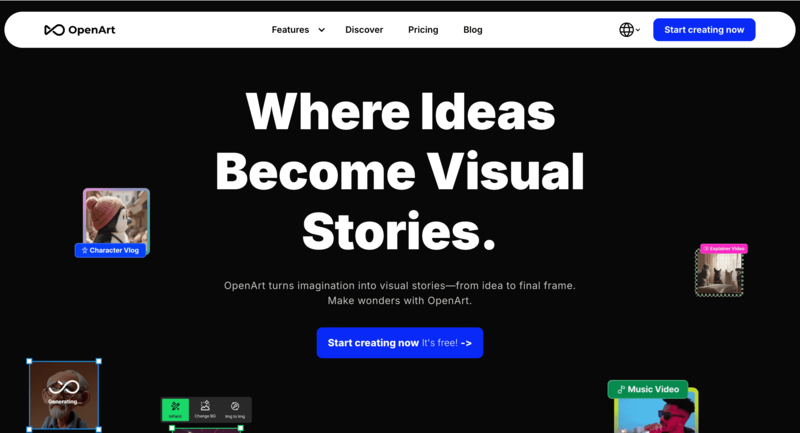
3. OpenArt

openart

OpenArt is an AI-powered platform designed for creative exploration and visual inspiration. It helps designers experiment with styles, aesthetics, and ideas quickly without committing to a final direction. Its simple interface makes it accessible for beginners, and it fits naturally into the early concept and mood-building stage.

How OpenArt supports creative exploration:

  • Designers can generate visual concepts and sketches from text prompts, making it easy to explore different styles and design directions.
  • AI-generated imagery can be used to build mood boards or test visual themes before moving into detailed sketching.
  • The tool encourages fast experimentation, helping designers refine ideas through iteration rather than precision.

4. Adobe Illustrator

adobe illustrator

Adobe Illustrator is a classic tool for precision vector illustration. It’s widely used in the fashion industry for creating clean flats, technical drawings, and production-ready visuals. While it has a steeper learning curve and requires a subscription, it remains essential for detailed and accurate design work.

How Adobe Illustrator supports technical fashion design:

  • Designers use vector tools to create precise fashion flats and technical sketches with consistent proportions.
  • Editable paths and layers make it easy to refine details, adjust measurements, and prepare files for production.
  • Illustrator is best suited for later design stages where accuracy and clarity matter most.

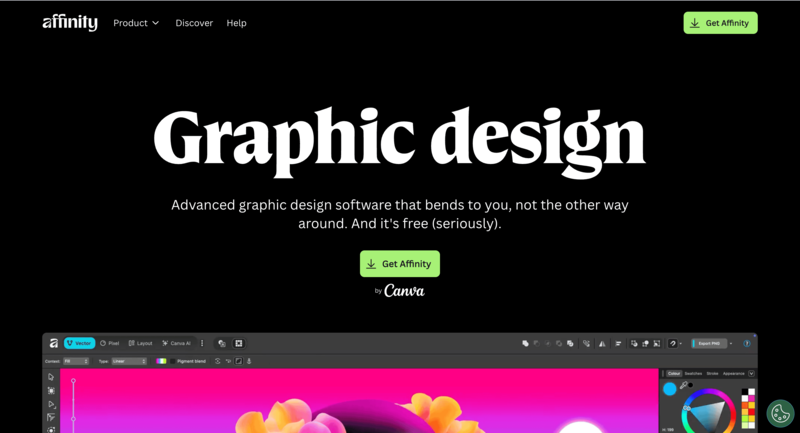
5. Affinity Designer

affinity designer

Affinity Designer offers many of the same vector illustration capabilities as Illustrator but with a lighter interface and a one-time purchase model. It’s a strong option for designers who want professional results without committing to ongoing subscription costs.

How Affinity Designer supports digital sketching:

  • Designers can create clean vector sketches and fashion flats with precise control over lines and shapes.
  • The streamlined interface makes it easier to learn while still supporting advanced illustration needs.
  • It works well for both refined concept sketches and technical drawings.

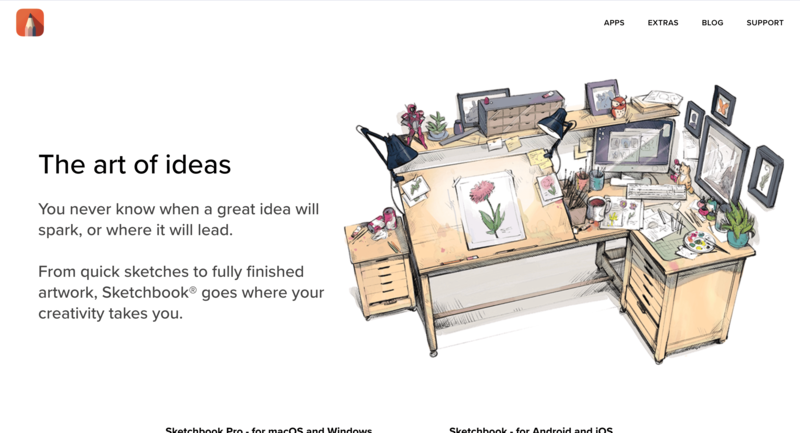
6. Sketchbook

sketchbook

Sketchbook is built specifically for freehand digital drawing. It’s popular among designers who prefer a natural, hand-drawn approach to sketching fashion ideas. The tool is intuitive and flexible, making it suitable for early-stage concept work.

How Sketchbook supports hand-drawn sketching:

  • Designers can use a wide range of brushes to create expressive, loose fashion sketches.
  • Layer-based drawing makes it easy to refine rough ideas into cleaner illustrations.
  • The app supports a natural drawing flow, especially when used with tablets and styluses.

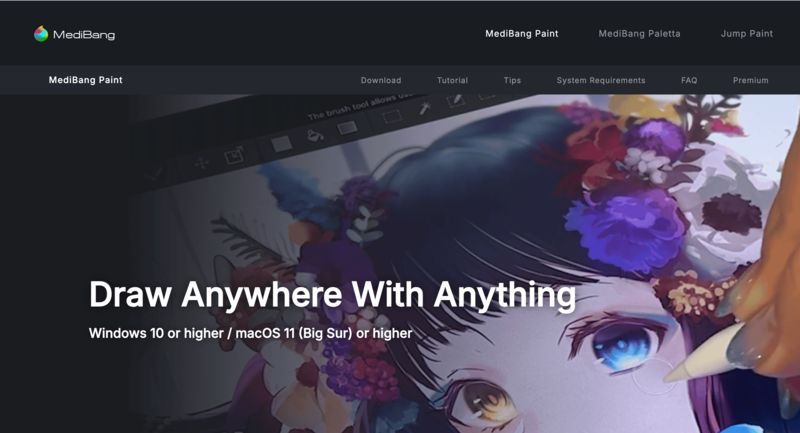
7. MediBang Paint

mediBang paint

MediBang Paint is a lightweight and beginner-friendly digital drawing tool. It’s especially useful for designers who want to sketch quickly without complex setup. As a free tool, it’s accessible to students and independent creators alike.

How MediBang Paint supports quick fashion sketches:

  • Designers can create detailed sketches efficiently using simple brush and layer controls.
  • Cloud storage allows sketches to be accessed and edited across multiple devices.
  • The tool works well for early concept sketching and casual illustration.

8. Canva

Canva

Canva is a user-friendly design platform focused on visual presentation rather than technical drawing. It’s often used for mood boards, concept layouts, and design storytelling. Its drag-and-drop interface makes it easy to use, even without a design background.

How Canva supports concept presentation:

  • Designers can organize sketches, colors, and references into clear mood boards.
  • Pre-made templates help present design ideas in a polished and shareable format.
  • Canva is ideal for communicating concepts visually rather than creating detailed sketches.

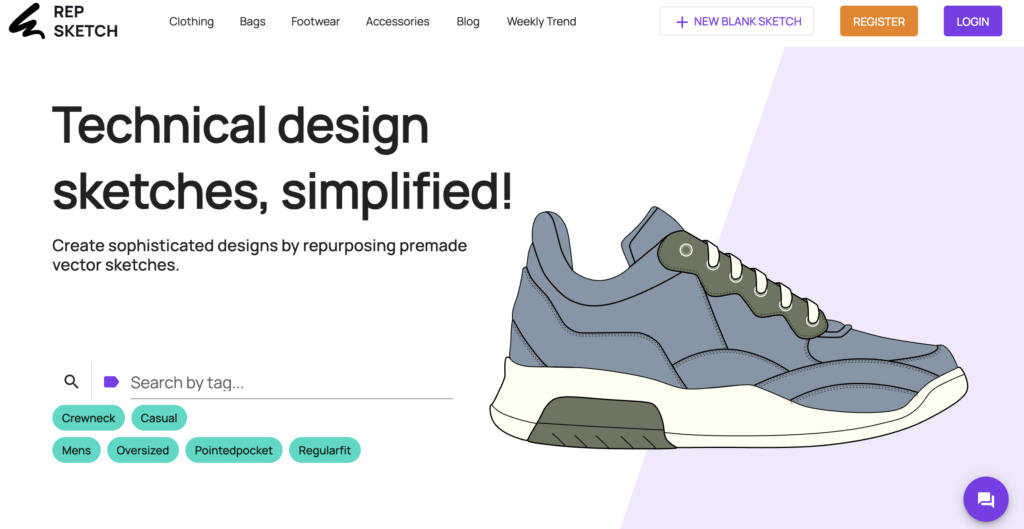
9. Repsketch

Repsketch

Repsketch is a fashion-specific sketching tool designed to speed up the illustration process. It provides built-in templates that align with industry standards. This paid tool is best suited for designers working on refined concepts or professional sketches.
How Repsketch supports fashion illustration:

  • Designers can start from pre-built fashion templates instead of drawing base figures from scratch.
  • Fashion-focused tools help maintain consistent proportions and clean presentation.
  • The platform streamlines sketching for faster professional output.

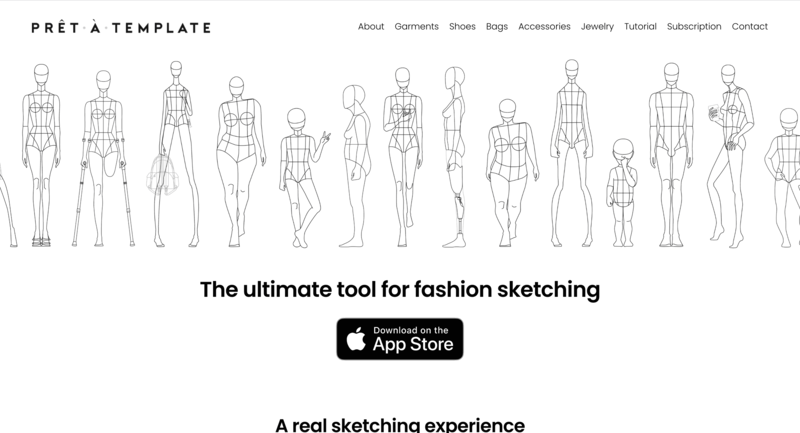
10. Pret-a-Template

pret-a-template

Pret-a-Template offers ready-made fashion templates for sketching and pattern planning. It allows designers to focus on creativity rather than setup. With a low learning curve, it’s ideal for quick concept development.

How Pret-a-Template supports structured sketching:

  • Designers can use pre-designed body and garment templates to speed up sketch creation.
  • The tool helps maintain consistency across multiple design ideas.
  • It works well for early-stage planning and fast visual exploration.

When it comes to bringing fashion ideas to life, the right tool can make all the difference. From AI fashion sketch generators to traditional digital drawing software, each platform serves a unique purpose in the design process. To make it easier to see which tool fits your needs, here’s a handy overview of 10 popular fashion sketching tools.

ToolType / CategoryDifficultyPaid / FreeBest ForStage of Design
Fashion DiffusionAI fashion design platformEasyPaidDesigners seeking inspirationConcept / Idea generation
Style3D AI3D visualizationMediumPaidDesigners needing realistic fit & drapePrototype / Visualization
OpenArtAI inspirationEasyFree/PaidQuick mood boards & concept testingConcept / Idea generation
Adobe IllustratorVector illustrationHardPaidProfessionals creating technical drawingsTechnical design / Final illustration
Affinity DesignerVector illustrationMediumPaid (one-time)Designers wanting affordable vector toolsTechnical design / Final illustration
Sketchbook (Autodesk)Freehand digital drawingMediumFree/PaidHand-drawn concept sketchesConcept / Sketching
MediBang PaintFreehand digital drawingEasyFreeQuick, detailed sketchesConcept / Sketching
CanvaDesign / Mood boardsEasyFree/PaidQuick visuals and boardsConcept / Presentation
RepsketchTemplate-based sketchingMediumPaidFashion-specific professional sketchesConcept / Technical illustration
Pret-a-TemplateTemplate-based sketchingEasyPaidFocus on creativity over setupConcept / Pattern planning

How AI is Changing the Fashion Sketching Trend

AI is transforming the way designers approach fashion sketching, making the creative process faster, more flexible, and more experimental. What once took hours of manual drawing can now be generated in seconds, allowing designers to focus less on repetitive work and more on creative exploration.

Beyond speed, AI encourages experimentation. By suggesting new silhouettes, color palettes, and texture, AI tools help designers break out of familiar patterns and explore bolder, more innovative ideas that might not emerge through traditional sketching alone.

AI also makes fashion design more accessible. Emerging designers and hobbyists who may not have advanced drawing skills can now create professional-looking sketches and visualize their ideas with greater confidence. This lowers the barrier to entry and opens fashion sketching to a wider creative community.

As AI continues to evolve, it’s no longer just a convenience tool—it’s actively shaping design trends and influencing how fashion concepts move from imagination to visual reality. For designers looking to take the next step, this guide on how to turn a sketch into a render with AI shows how tools like Fashion Diffusion help transform early sketches into more polished, production-ready visuals.

Finding the Right Fashion Sketch Tool for Your Workflow

Choosing the right fashion sketch tool can make a huge difference in your creative process. With so many options available, it helps to understand which tools fit your style, workflow, and goals before diving in.

Understand Your Creative Style

Choosing the right fashion sketching tool starts with understanding how you like to create. If you enjoy exploring ideas quickly and visually, AI-powered tools can help generate concepts and inspiration in seconds, without the pressure of starting from a blank canvas.

Consider Your Skill Level

Your experience level plays an important role in tool selection. Beginners or non-designers may prefer platforms with templates and intuitive interfaces, while experienced designers often look for tools that offer more control over details, layers, and precisions.

Match the Tool to Your Workflow

Different tools serve different purposes. Some are great for fast concept sketches and mood boards, while others are better for technical drawings or design refinement. Think about whether your goal is inspiration, presentation, or production when choosing a tool.

Combine Tools for Better Results

You don’t have to stick to just one tool. Many designers use AI tools for brainstorming and idea generation, then switch to traditional illustration software to polish their sketches. The best setup is one that fits your workflow and helps you design with confidence.

The future of Fashion Sketching

Fashion sketching is evolving fast, driven by AI and digital tools that make the creative process quicker and more flexible. Designers today have more ways to explore ideas, experiment with styles, and turn concepts into visual without being limited by traditional methods.

Choosing the right tools is about finding what fits your workflow. AI fashion design tools like Fashion Diffusion make it easier to generate ideas, refine designs, and stay creative without getting stuck on the blank page. As fashion design moves forward, embracing tools like Fashion Diffusion is a smart step toward working faster, smarter, and more creatively.

FAQ

Where can I learn fashion designing for free?

You can find free fashion design courses on platforms like Coursera, edX, and Alison, offering basics in sketching, textiles, pattern making, and digital skills, often with audit options or trials for full content access, plus institutions like Parsons School of Design and FutureLearn provide free modules on digital fashion and branding, while places like Oxford Home Study Centre and eLearning College offer free short courses for beginners with certificates available, covering design principles, construction, and business fundamentals. 

Can I design clothes if I can’t draw?

Think through the functionality. Even if you can’t draw, imagine how the front, side, and back of your design will look and what detail you want where. Then you can walk others through your design showing your reference images, samples, and notes as you describe each side of the garment.

How to start drawing fashion sketches?

To draw fashion sketches as a beginner, start with a basic, elongated figure called a croquis (using shapes like ovals, triangles, cylinders for head, torso, limbs) as your template, focusing on the clothing’s flow and detail (pleats, folds) over perfect facial features, using pencils for outlining and light layers of color/shading to give dimension, and remember practice is key. 

Avatar photo 通过Sophia Mille

The history of the Bomber Jacket: From Aviation Legend to Street Style

Few jackets have stayed relevant across decades quite like the bomber jacket. What began as functional outerwear for military pilots has become a timeless style staple today.

Behind its simple silhouette lies a story shaped by aviation, culture, and fashion. This post explores the bomber jacket’s origins and its design evolution. It also looks at why it still feels modern today, with help from AI fashion design tools like Fashion Diffusion.

What is bomber jacket?

The bomber jacket was designed for military pilots in the early 20th century. It protected them from cold temperatures and strong winds at high altitudes.

Though born in the military, the bomber jacket later entered everyday wardrobes. Over time, it became a timeless fashion staple.

Its charm lies in this journey—from military uniform to streetwear, from functional gear to a fashion statement. The jacket carries a rich history while constantly being reinterpreted for modern style.

bomber jacket style
Fashion Diffusion AI-generated

What Makes a Bomber Jacket Stand Out

Despite changes in style and materials, classic bomber jackets share key features.

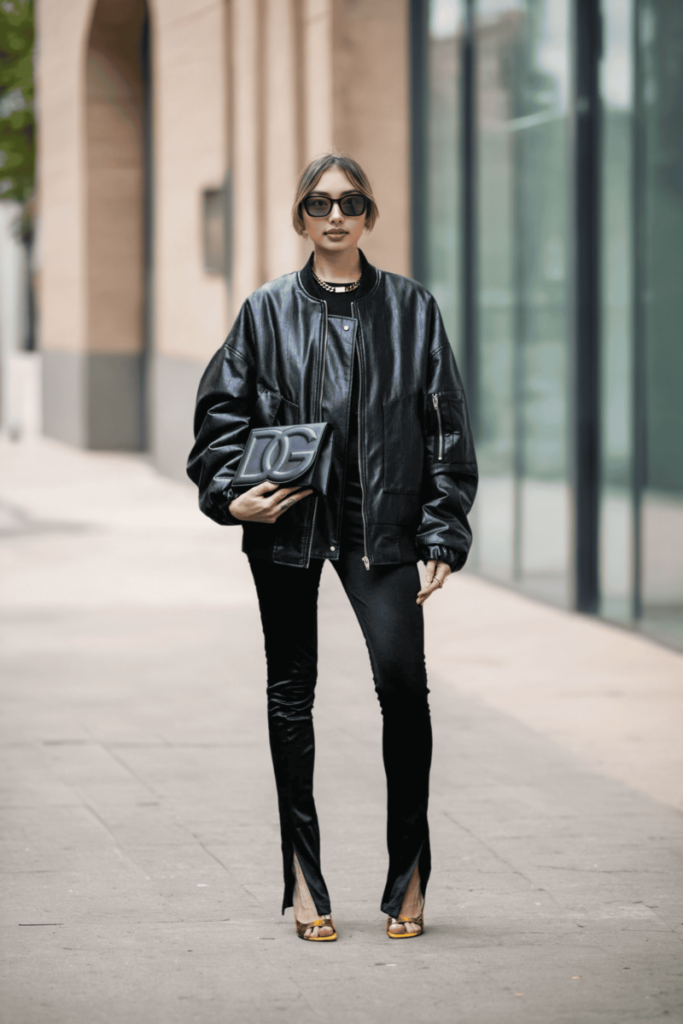
  • Cropped Length: Typically hitting around the waist or hips, it keeps your movement free and the overall look sharp.
  • Ribbed Collar, Cuffs, and Hem: These details block wind, retain warmth, and define the bomber’s iconic shape.
  • Front Zipper: Originally practical for quick wear and removal, it also adds to the jacket’s functional appeal.
  • Relaxed Fit: Originally made for cockpit movement, it’s now a staple of casual and street style.

These functional details help the bomber jacket stay relevant as trends change.

The History of the Bomber Jacket

Before it became a fashion icon, the bomber jacket was born out of necessity. Its origins lie in early aviation. Its design evolved alongside advances in flight technology.

Origins

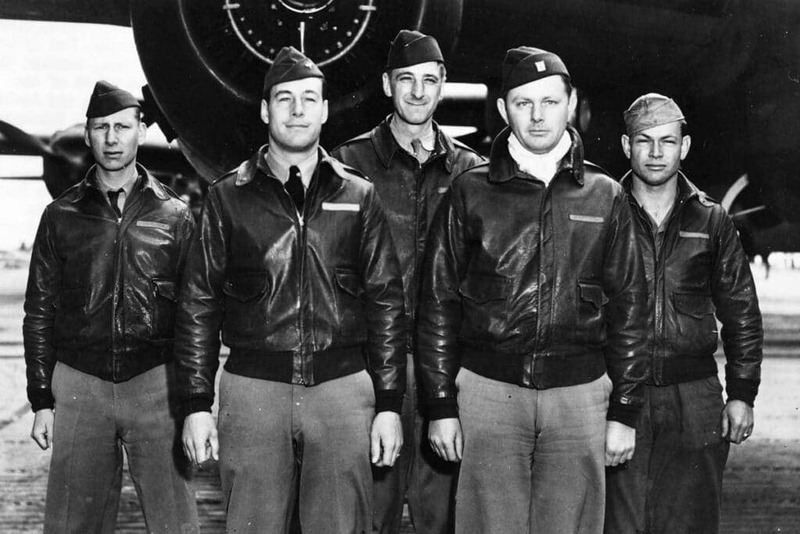
The bomber jacket first appeared in the early 20th century, born out of military aviation. During World War I, most aircraft had open cockpits. Pilots faced freezing temperatures and strong winds at high altitudes. Standard military uniforms just weren’t up to the task, so the military began designing specialized jackets for aviators.

Back then, practicality was everything. Thick leather, wool, or fur linings were used to keep pilots warm. A loose fit allowed for movement inside the cockpit. High collars and snug cuffs helped block out cold drafts. These rugged details laid the foundation for the bomber jacket’s original, functional design.

origin bomber jacket

Evolution Over Time

As aviation technology advanced, the design of the bomber jacket quietly evolved. By World War II, pilots flew higher and longer missions. Jackets needed warmth, lightness, and flexibility. Zippers gradually replaced buttons, while ribbed cuffs and hems improved both fit and comfort.

After the war, the rise of jet planes and enclosed cockpits completely changed the flying environment. Heavy leather was no longer the only option—lighter materials like nylon and other synthetics became mainstream. This shift made bomber jackets more practical and gave them a cleaner, more streamlined look.

During this period, bomber jackets entered everyday life and popular culture. They became a street-style staple while keeping their core spirit of durability and practicality.

How the Bomber Jacket Became a Fashion Staple

The bomber jacket became popular not only because of its design. Cultural and media influences also played a key role.

After World War II, many pilots retired, and these jackets gradually moved out of the military and into daily wardrobes. Durable, practical, and easy to wear, they quickly won over regular consumers, shedding their strictly military identity.

The Influence of Pop Culture

Movies and popular media played a big role too. On screen, characters often linked bomber jackets with bravery, freedom, and personality. This gave the originally functional jacket attitude and emotional appeal.

Over time, music, street culture, and youth subcultures reshaped the bomber jacket.
It evolved from a military relic into a symbol of personal style.

Fashion Brands’ Redesigns

When fashion brands started experimenting with it, the jacket’s potential grew even further. Designers kept the classic silhouette but experimented with new materials and colors. These updates made the bomber jacket suitable for more occasions and outfits.

From military gear to runways, streetwear, and everyday closets, the bomber jacket evolved naturally. Its transformation has been both lasting and influential.

Its enduring appeal lies in carrying history while constantly being reimagined.

The Current Trends of the Bomber Jacket

Today, the bomber jacket has gone far beyond its military roots, becoming a fashion staple that balances timelessness with trendiness. Several key trends stand out, many of which also align with broader fashion trend forecasts for the coming years.

More Fabric Options and Richer Colors

Designers now experiment with cotton, suede, denim, and mixed fabrics. Colors also go beyond classic greens, blacks, and khakis. Trending shades like deep blue or soft pink are becoming more common.

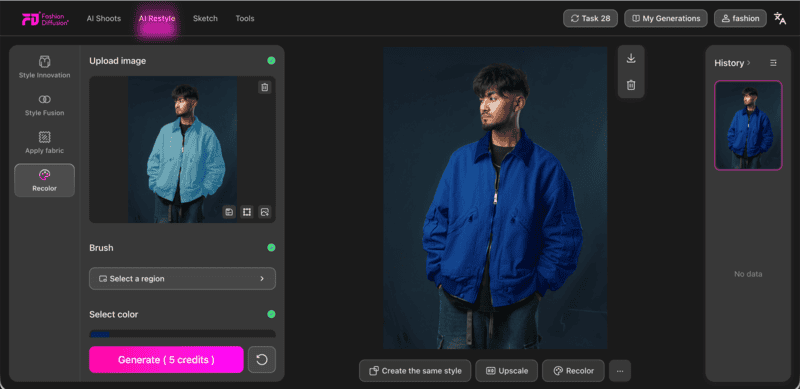
With AI tools like Apply Fabric & Recolor, these variations can be visualized in seconds. Designers can test materials and colors without physical samples. This makes it easier to adapt designs for different seasons and everyday wear.

denim bomber jacket
Fashion Diffusion AI-generated

Modernized Cuts and Fits

While respecting the classic silhouette, modern bombers feature cropped lengths, relaxed fits, and sharper tailoring. AI-powered Style Innovation helps designers explore new proportions and silhouettes early on.

It also allows quick testing of trend-inspired details. As a result, designers can iterate on fit and structure faster, without physical sampling.

croptop bomber jacket
Fashion Diffusion AI-generated

Frequent Crossovers

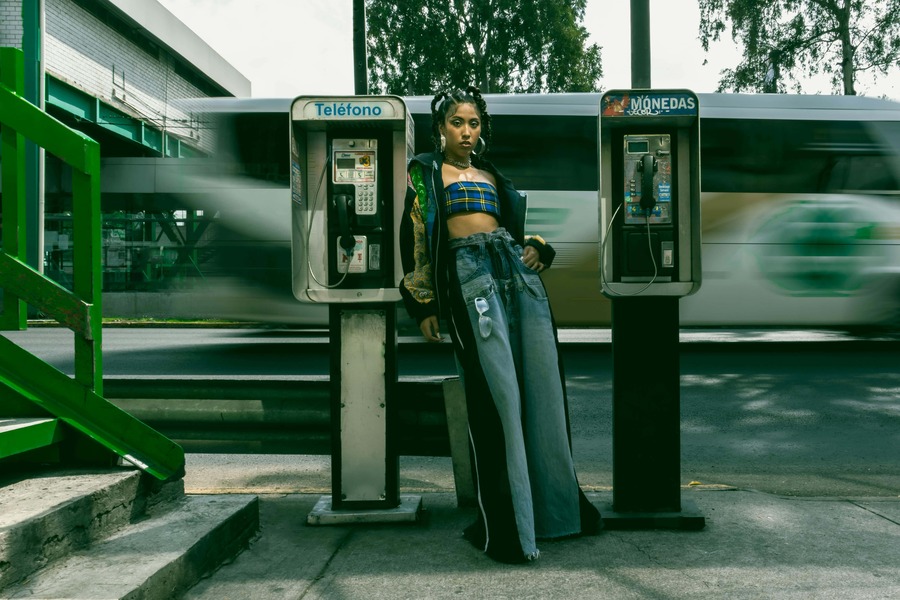
Bomber jackets now appear in collaborations, limited editions, and streetwear crossovers. Using Style Innovation, designers can mix street aesthetics with luxury tailoring, utility elements, or experimental graphics to create hybrid concepts. This helps generate fresh, culturally relevant designs quickly, while maintaining the jacket’s iconic appeal.

street style
Fashion Diffusion AI-generated

Together, these trends show how the bomber jacket remains a timeless yet adaptable piece—practical, stylish, and full of personality.

Designing Your Own Modern Bomber Jacket with AI Fashion Design Tools

With Fashion Diffusion, designing your own bomber jacket has never been easier or more fun.

Start by generating ideas with Text-to-Sketch, or refine your concept using Sketch-to-Render. These tools turn your imagination or hand-drawn sketches into polished digital designs in seconds.

Bomber-jacket-sketch

Next, experiment with fabrics, colors, and trims using Apply Fabric & Recolor. You can instantly see how satin, or knit panels work. Bold or trending color palettes can be test without physical samples.

recolor

Use Virtual Try-On to preview how your jacket fits different body types and pairs with various outfits. It’s like giving your design a magic mirror—you’ll see it in action before it even exists.

Finally, explore Style Innovation to tweak silhouettes, merge aesthetics, or add creative details. It helps you push your bomber jacket design beyond the ordinary, making it truly unique.

restyle

A Bomber Jacket with a story to tell

From its military roots to street style, the bomber jacket has made a remarkable journey. It has evolved from functional gear into a true fashion icon. Today, it’s more than a practical layer for warmth and protection. It’s also a statement of personality and attitude.

Next time you’re picking out an outer layer, consider reaching for this classic with a story to tell. A bomber jacket isn’t just about style—it carries a piece of history with it.

Bring your fashion ideas to life with Fashion Diffusion—experiment, visualize, and style your designs faster, smarter, and more creatively.

FAQ

Why do they call it a bomber jacket?

They are called bomber jackets because they were designed for pilots flying bomber aircraft in World War I and II. 
These pilots needed warm, durable jackets for cold, high-altitude cockpits. The airmen were often called“bomber boys,” which led to the jacket’s name. Styles like the B-3 and MA-1 later became iconic beyond the military.

Are bomber jackets still in style in 2025?

Yes, bomber jackets are still in style in 2025. They remain a versatile fashion staple across runways and street style. Popular trends include oversized fits, brown leather, sustainable fabrics, and technical materials. Their adaptable silhouettes make them a timeless investment.

What is a bomber jacket?

A bomber jacket is a waist-length, casual jacket that features a zippered front and fitted cuffs and waistband. Originally designed for military pilots in World War I, the bomber jacket was made for protection and mobility. Over time, it evolved from heavy leather and wool into lighter materials. Today, bomber jackets are made from nylon, satin, cotton, and other fabrics.

What body type looks good in a bomber jacket?

Bomber jackets work well on all body types. They can add volume to slim frames and highlight athletic builds. With the right fit, they also flatter curves and petite proportions.

Why do bomber jackets have orange inside?

The bright orange lining comes from the military MA-1 flight jacket. Downed pilots could reverse the jacket to increase visibility. This helped signal rescue teams in emergencies or crashes. This reversible, high-visibility feature made it a popular civilian fashion item, a nod to its practical, utilitarian origins.  

Avatar photo 通过Sophia Mille

12 Essential Clothing Design Tools for Every Fashion Designer

The fashion industry demands unprecedented speed and precision, and today’s digital design tools are ready to deliver. From early sketches to 3D simulations and final outputs, these tools enhance precision, accelerate iteration, and expand creative possibilities.

In this guide, we spotlight 12 essential tools that elevate every stage of the design process, enabling a smarter, more streamlined, and more innovative way to create.

1. Fashion Diffusion — AI-Powered Fashion Design 

Clothing Design Tool: Fashion Diffusion

If you’re looking for an all-in-one platform that supports the entire fashion design workflow, Fashion Diffusion stands out as the ultimate choice.

It brings AI into the clothing product development pipeline, allowing designers to accelerate style creation while cutting the cost of traditional commercial photography. 

By accurately recognizing key garment elements like silhouette, fabric, and construction details, Fashion Diffusion can generate clean sketches, polished renders, and PDP-ready virtual try-on images from simple text prompts or reference photos. 

The platform also excels as an inspiration engine. When you hit a creative block or fall into repetitive design patterns, its style innovation feature can instantly produce diverse variations using a short prompt or two contrasting garment references.

For designers aiming to design faster, explore more ideas, and increase output with less effort, Fashion Diffusion is a strong companion to add to the digital toolkit.

2. Vogue Runway — Fashion Inspiration

Clothing Design Tool: Vogue Runway

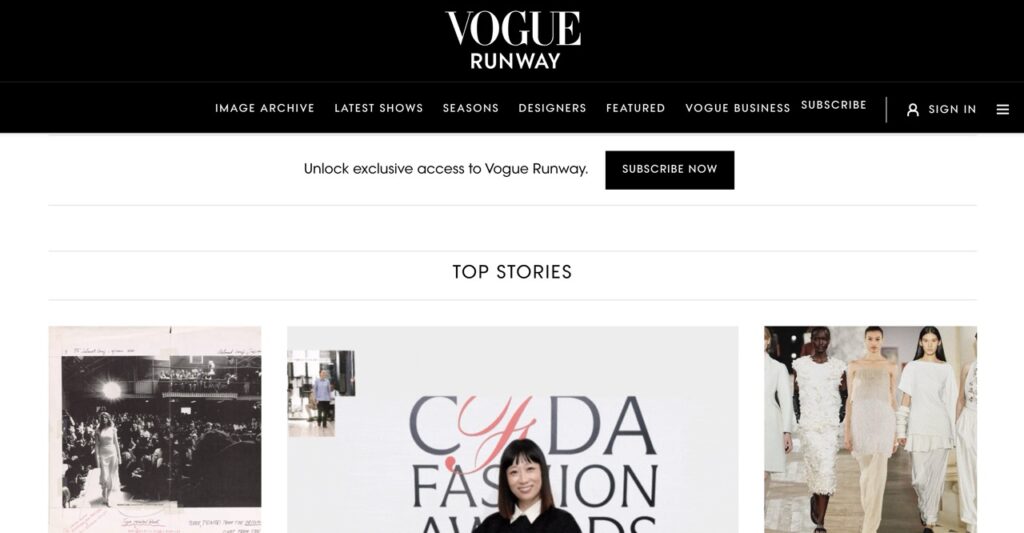
Vogue Runway is Vogue’s comprehensive digital platform and app dedicated to real-time fashion show coverage. It provides full runway collections, high-resolution look images, expert reviews, trend breakdowns, and an extensive archive of past seasons. All of these features establishes it as one of the most authoritative sources for tracking the trends of global fashion.

With instant access to thousands of shows across major fashion capitals, Vogue Runway gives designers a powerful way to stay ahead of seasonal shifts, identify emerging styles, and reference historical collections.

3. Heuritech — Trend Prediction

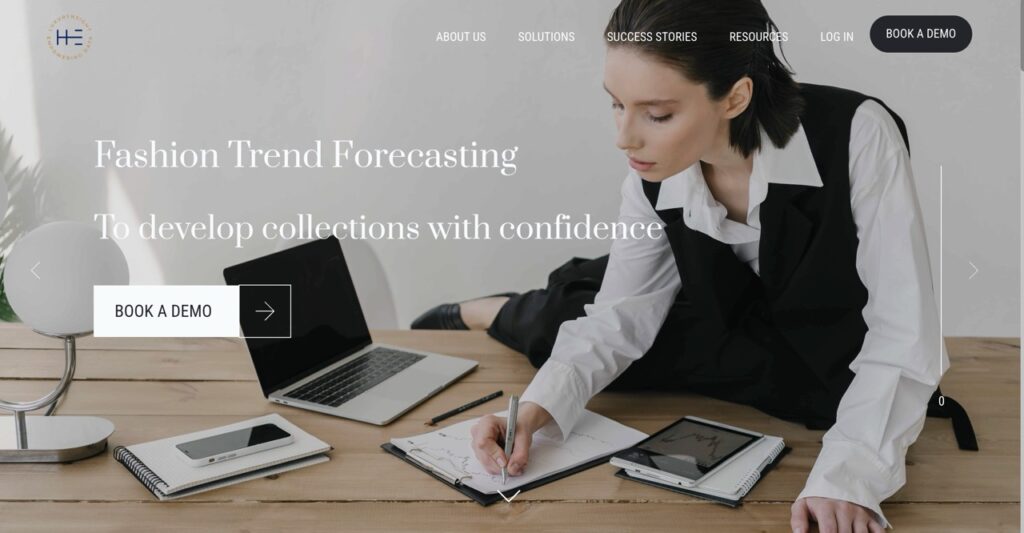
Heuritech is a fashion tech firm offering image recognition and predictive analytics to forecast trends in luxury and apparel.

Its AI analyzes vast volumes of visual content—from social media, runways, and e-commerce—to deliver clear, data-driven trend insights. By spotting trends before they go mainstream, Heuritech enables brands to forecast consumer demand with improved precision.

4. Make the Dot — Collaborative Moodboard

Clothing Design Tool: Make the Dot

Make the Dot is a collaborative moodboarding tool designed specifically for fashion teams. With its collaborative design canvas, multiple stakeholders—designers, merchandisers, and creative directors—can work together on one board. This ensures faster alignment on themes, colors, silhouettes, and fabric direction.

For teams aiming to turn scattered inspiration into a unified creative vision, Make the Dot provides an intuitive workspace. It enhances clarity, speeds decision-making, and reduces back-and-forth during concept development.

5. Procreate — Digital Sketch & Illustration

Clothing Design Tool: Procreate

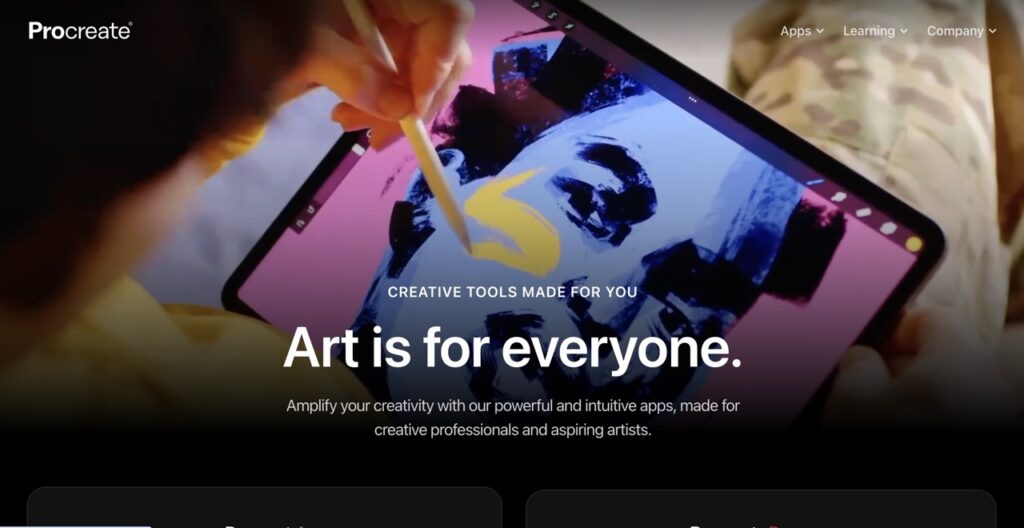
Procreate is a top digital illustration app for iPad, offering a fast, intuitive tool for sketching and concept development. With advanced brushes, layering tools, and gesture controls, Procreate combines the fluid, tactile feel of traditional drawing with the power and versatility of digital editing.

6. Adobe Illustrator — Precision Vector Drafting

Clothing Design Tool: Adobe Illustrator

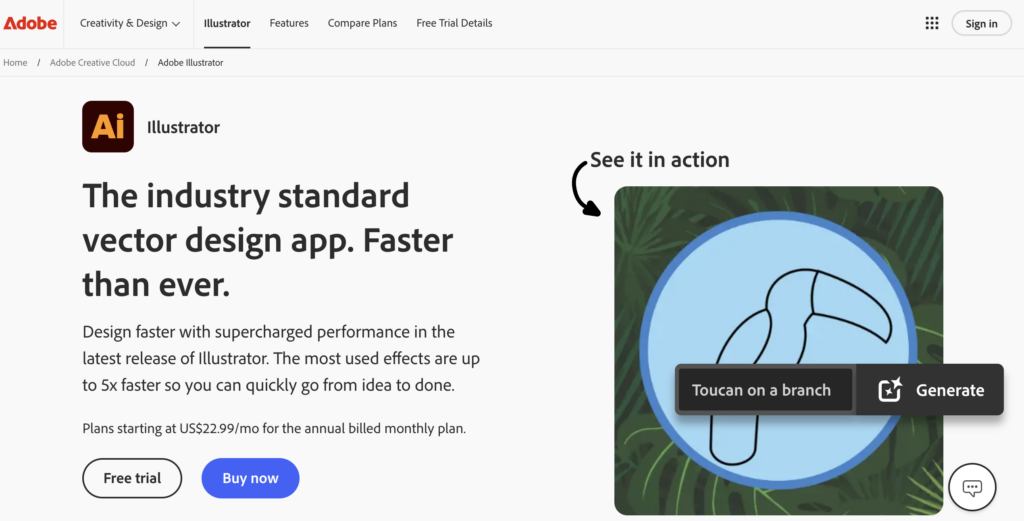
Adobe Illustrator is an industry-standard vector graphics software widely used to create precise, scalable illustrations and technical flats. 

Illustrator offers robust tools for layering, path editing, typography, and color management. It enables designers to create precise line drawings, detailed garments, and complex design elements for both sketches and technical production.

7. Repsketch — Quick Fashion Sketch Templates

Clothing Design Tool: Repsketch

Fashion designers often lack the time required to produce detailed, hand-drawn sketches; consequently, a specialized rapid sketching platform becomes essential.

Repsketch addresses this with a large library of clean, customizable fashion templates. Designers can skip a blank page and dive directly into concept development, iterating freely on ideas.

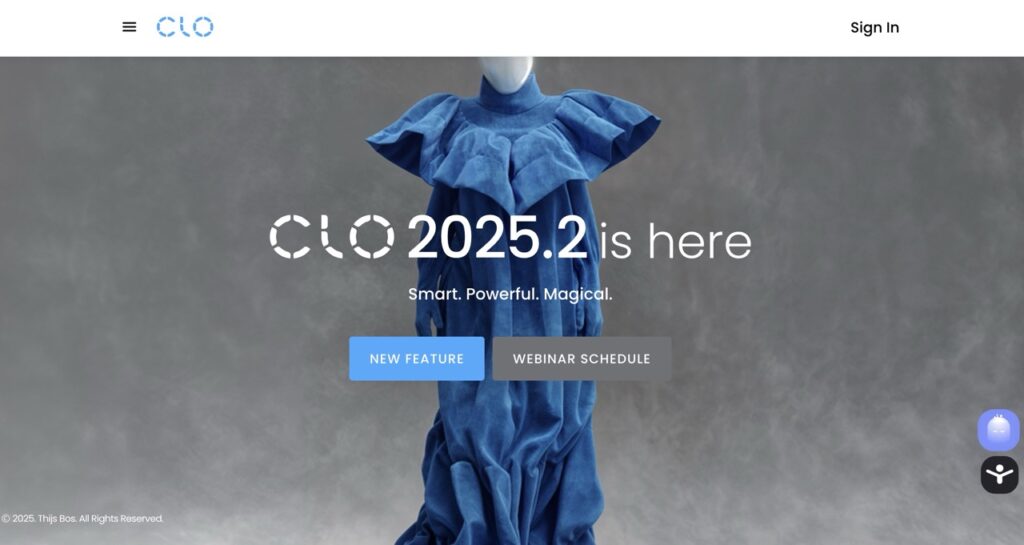
8. CLO 3D — 3D Garment Design

Clothing Design Tool: CLO 3D

CLO 3D is professional 3D fashion design software, enabling designers to create realistic garments with accurate fabric, fit, and drape. Teams can visualize designs on virtual avatars, adjust patterns, and experiment with materials before making physical samples.

Equipped with tools like pattern drafter, texture editor, and avatar fitting, CLO 3D streamlines the prototyping process and reduces reliance on costly samples, providing a complete solution for digital garment creation.

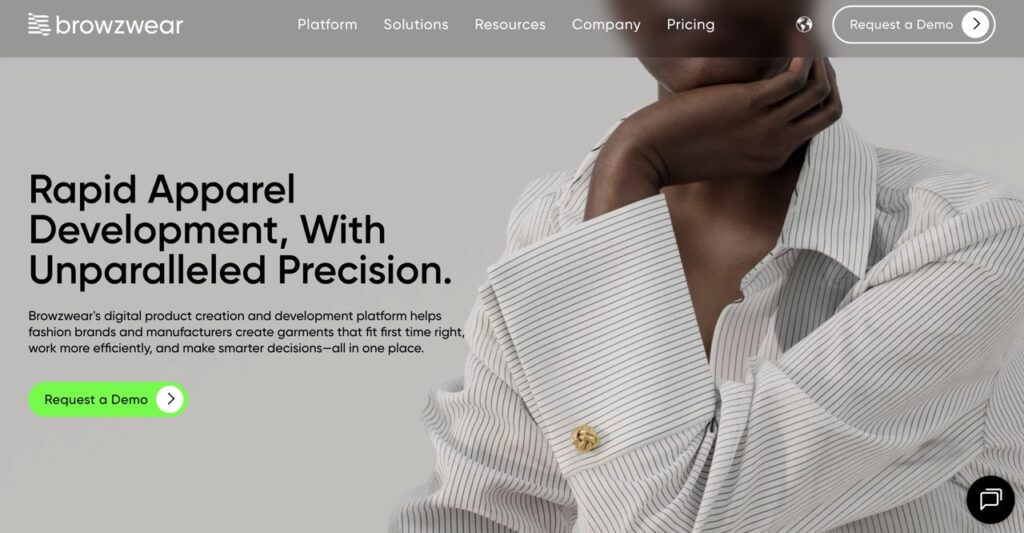
9. Browzwear VStitcher — Virtual Prototyping

Clothing Design Tool: Browzwear

Browzwear is a leading platform for digital garment design, enabling brands, designers, and manufacturers to create, visualize, and optimize garments entirely digitally. It revolutionizes the traditional sampling process with its core product, VStitcher and Stylezone. 

VStitcher offers realistic 3D garment simulation, letting designers adjust patterns and test fabrics virtually to resolve fit issues early and reduce physical samples. Stylezone complements it with a cloud-based space for reviewing, approving, and sharing virtual samples in real time, keeping teams and manufacturers aligned.

Together, Browzwear delivers a comprehensive solution for faster, more accurate, and fully digital product development.

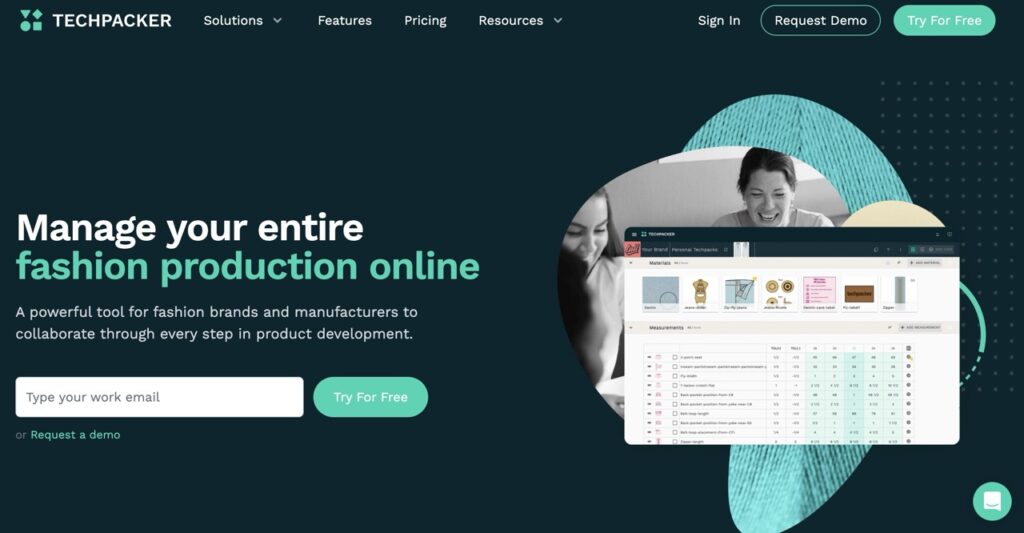
10. Techpacker — Tech Pack Management

Clothing Design Tool: Techpacker

Creating accurate tech packs is crucial for smooth fashion production—but it can be time-consuming and error-prone. Techpacker simplifies this process by allowing designers to turn sketches or mock-ups into ready-to-use tech packs in minutes, collaborate with factories, and track production progress effortlessly.

Using a visual, card-based system, Techpacker organizes design details—sketches, materials, measurements, and more—making it easy for teams and manufacturers worldwide to collaborate, monitor changes, and accelerate the sampling process.

11. Sewport — Manufacturer Matching

Clothing Design Tool: Sewport

Finding the right manufacturer for your fashion brand isn’t easy, especially when you need quality, reliability, and efficiency. That’s where Sewport comes in. 

This B2B platform connects designers and brands with a global network of verified garment manufacturers, allowing you to browse factory profiles, request quotes, and manage production—all in one place.

Once you submit your finalized tech pack and design files, Sewport immediately matches you with suitable factories and centralizes your entire production workflow, offering full transparency from start to finish.

12. Mood Fabrics — Fabric Sourcing

Clothing Design Tool: Mood Fabrics

Mood Fabrics is a premier online fabric retailer known for its extensive selection of high-quality textiles used in fashion design, sewing, and costume creation. 

Based in New York City—with additional locations and a fully stocked e-commerce platform—it offers designers access to thousands of fabrics ranging from luxury silks and wools to denim, lace, and specialty materials.

The Essential Toolkit for Clothing Design

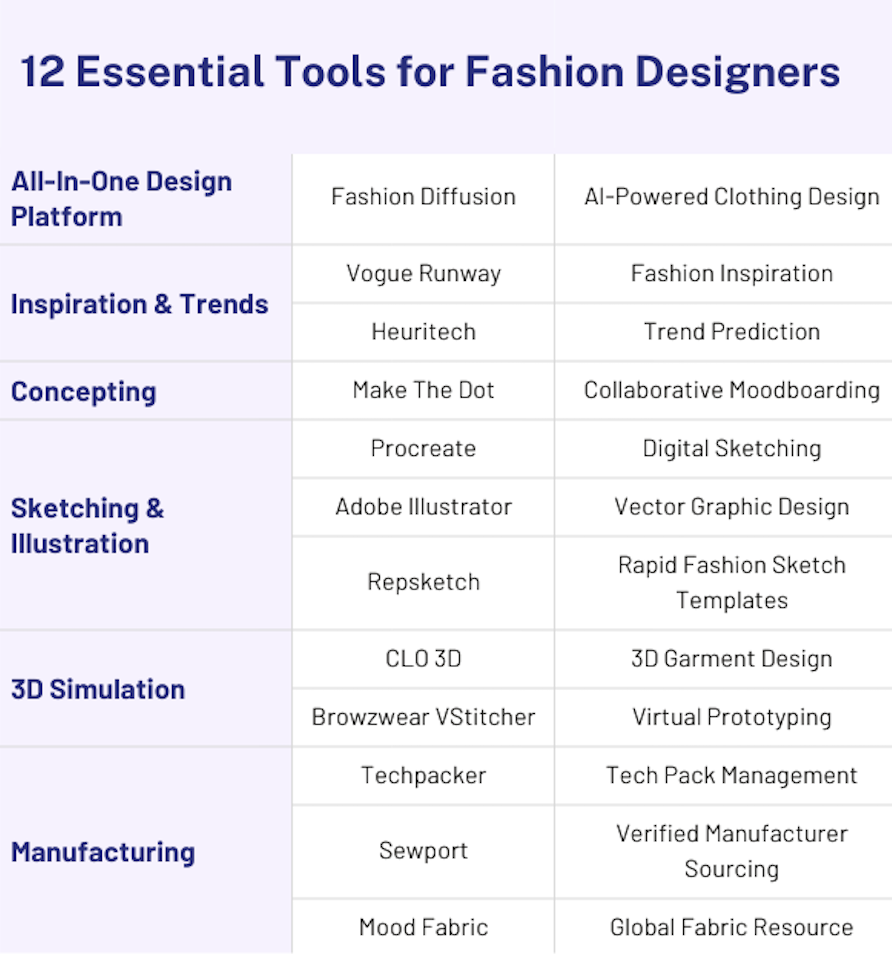
To wrap things up, here’s a simple, at-a-glance summary of all the tools we covered. Think of it as a quick cheat sheet to help you decide which platforms fit your design needs the best.

12 Essential Tools for Fashion Designers

For those seeking a single platform that brings the entire digital fashion workflow together, Fashion Diffusion offers unmatched speed, flexibility, and creative power.

By unifying multiple stages of the design process into one streamlined workspace, it eliminates tool-switching, reduces production costs, and helps teams move from concept to polished visuals in minutes rather than days.

As AI reshapes the industry, Fashion Diffusion gives you an all-in-one, future-ready workflow to design faster and smarter—starting now.

FAQs

What software do most clothing designers use?

Most designers today combine 2D sketching apps and 3D garment software for their work. Recently, many have begun using AI fashion design tools such as Fashion Diffusion to create ideas faster and produce higher-quality design assets.

What technology do fashion designers use?

Traditional technology used for fashion design includes digital drawing apps, 3D design software, and cloud collaboration platforms. Additionally, AI platforms are increasingly utilized to predict fashion trends and rapidly generate designs.

Which CAD software is mostly used in the apparel industry?

Many fashion companies rely on established CAD tools like CLO 3D and Browzwear’s VStitcher. Style3D has also emerged as a fast-growing option thanks to its AI-powered tools and cloud ecosystem.

Can I design clothes in Canva?

Canva allows you to put together simple apparel designs using its templates and design elements. For professional fashion design—like patterns, tech packs, or 3D samples—you’ll need dedicated tools such as CLO 3D or Fashion Diffusion.

Avatar photo 通过Sophia Mille

2026 AI Fashion Trends: Transforming How Brands Create, Sell & Engage

The fashion world is undergoing a systematic shift as we enter 2026. Economic uncertainty, changing customer priorities, and rapid tech advancements are reshaping how brands operate.

Forward-thinking labels are now integrating AI into every single part of the fashion workflow—from trend discovery to content creation and automation. 

This article dives into 8 key AI fashion trends defining 2026—and shows how designers and brands can leverage AI fashion tools to stay ahead in a fast-changing fashion market.

Why AI Is Indispensable for Fashion in 2026

2026 AI Fashion Trends

The fashion industry has never been afraid of change—but 2026 marks a turning point. Years of digital experimentation have finally converged, and now AI is reshaping everything from design to discovery.

On the tech side, Generative visuals, 3D simulation, and multimodal agents are now strong enough to support real end-to-end automation for the first time.

At the same time, commerce platforms have raised consumer expectations. Virtual try-on, AI recommendations, and hyper-personalized content are quickly becoming standard. Brands that can’t produce large volumes of high-quality visuals simply lose visibility.

And perhaps the biggest motivation comes from within fashion brands themselves. Acquisition costs are rising, content needs are exploding, and teams are expected to deliver more with fewer resources. For small and mid-sized brands, especially, AI may be the only realistic way to reduce costs and stay competitive.

In short, AI in fashion isn’t just another short-lived trend. It’s the natural outcome of technological maturity, economic pressure, and large-scale structural changes across the global fashion sector.

8 Key AI Fashion Trends to Watch in 2026

From creative work to customer experience and operational efficiency, these trends reveal how AI is reshaping fashion—and what brands need to do to keep up.

1. AI-Powered Fashion Design Acceleration

In 2026, one of the most widely adopted uses of AI in fashion is design acceleration. Modern AI fashion design platforms, such as Fashion Diffusion, bring all visual tasks into a seamless, unified workflow. They automate the tedious manual tasks, speed up iteration cycles, and boost overall efficiency.

AI supports the design process across three practical stages:

AI Sketch

AI Sketch accelerates the design process by turning concept ideas and initial sketches into high-quality, photorealistic visuals almost instantly.

  • Text/Image to Sketch: Designers input text descriptions or upload reference images, then AI generates clear, structurally accurate preliminary sketches.
  • Sketch-to-Render: Converts designer sketches into high-fidelity 3D renders. Helps validate product concepts more quickly and reduces the need for early physical samples.

AI Restyle

AI Restyle helps speed up design modifications and iterations, allowing designers to quickly experiment with new styles, fabrics, and colors using simple text commands or reference images.

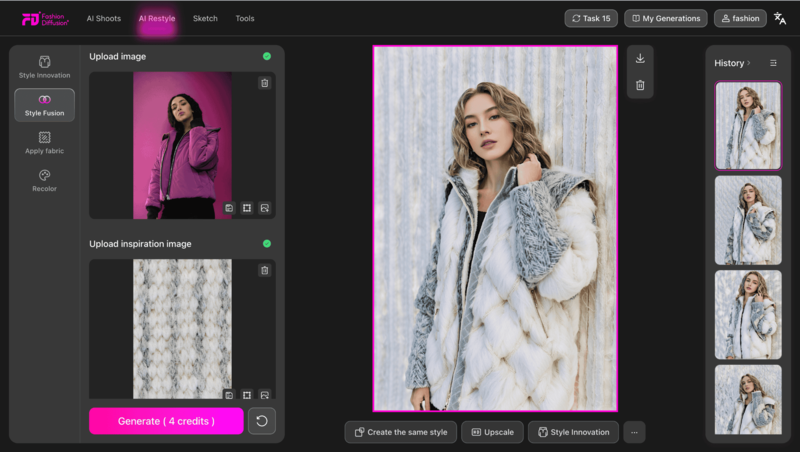
  • Style Innovation: Rapidly generates design variations or combines elements from existing collections to create new styles with text prompts.
  • Apply Fabric & Recolor: Instantly simulates complex fabrics like leather, silk, or denim, complete with realistic physics, and adjusts colors with precision—making real-time testing of materials and variants effortless.

AI Shoots

AI Shoots replaces traditional photography by generating studio-quality, marketing-ready visuals at scale.

  • Virtual Try-On (VTO): Produces hyper-realistic images of products on diverse, user-defined models. Eliminate the need for live models and real-world photoshoots.
  • Change Background: Instantly places products in any commercial or editorial setting—street, studio, or exotic locations—eliminating the need for costly location shoots.
  • Swap Face: Quickly localizes and customizes model identities for global campaigns while keeping styling and poses consistent.

By integrating AI into fashion design, brands can streamline the entire design-to-market process, turning a single concept into dozens of market-ready assets for global markets in an instant.

This approach lets AI handle repetitive, time-consuming tasks, freeing designers to focus entirely on creativity and concept development.

2. AI Fashion Trend Prediction

Fashion trend forecasting used to rely on manual research and instinctive guesses. However, AI can now predict emerging styles months in advance by processing massive visual data from global runways, street style photography, and social platforms like TikTok, Pinterest, and Instagram.

Using advanced visual algorithms, AI identifies emerging colors, silhouettes, fabrics, and style elements. By combining these insights with historical trends and real-time consumer behavior, AI can forecast which styles are most likely to gain popularity—helping brands make faster, data-driven decisions and stay ahead of the curve.

For example, Heuritech,  a French AI fashion trend analysis platform, recently reported correctly forecasting dotted prints, flat-thong sandals, and even a surge in yellow—trends that later appeared on fashion runways.  

That said, human expertise still matters in guiding concept development, validating AI insights, and making final decisions. For fashion brands, AI amplifies human judgment, reduces risk, and enables trend-driven decisions with greater speed and confidence.

3. AI Fashion Influencers

2025 has seen an increase in fashion brands collaborating with AI influencers. These virtual personalities are designed to generate content, embody brand aesthetics, and serve as reliable, risk-free brand ambassadors. 

Their rise reflects a broader shift. Audiences now openly welcome virtual influencers, and brands benefit from creators who can be anywhere, wear anything, and post content without production limits.

Human celebrities or KOLs often come with high fees and “character collapse” risks. In contrast, AI fashion Influencers offer a zero-risk, 24/7, highly controllable solution while achieving engagement levels comparable to human influencers.

There are two types of AI fashion influencers, both delivering high business value. Popular independent IPs, like Lil Miquela, require significant collaboration fees. Brand-owned AI virtual influencers, such as Prada’s Candy, a virtual muse of a Prada fragrance “candy”,  are fully custom-built around the brand’s aesthetic, with tailored image, voice, and backstory.

4. Virtual Try-On for Fashion E-Commerce

As major shopping platforms like Amazon and Google Shopping adopt virtual try-on(VTO), it’s becoming a standard part of fashion e-commerce.

Powered by advances in AI, 3D modeling, and augmented reality(AR), virtual try-on now features realistic fit previews, accurately reflecting drape, fabric behavior, and body proportions.

Virtual try-on lets customers see how a garment actually looks on them, instead of relying on a single, often unrepresentative model. This boosts confidence, reduces hesitation at checkout, and helps lower return rates.

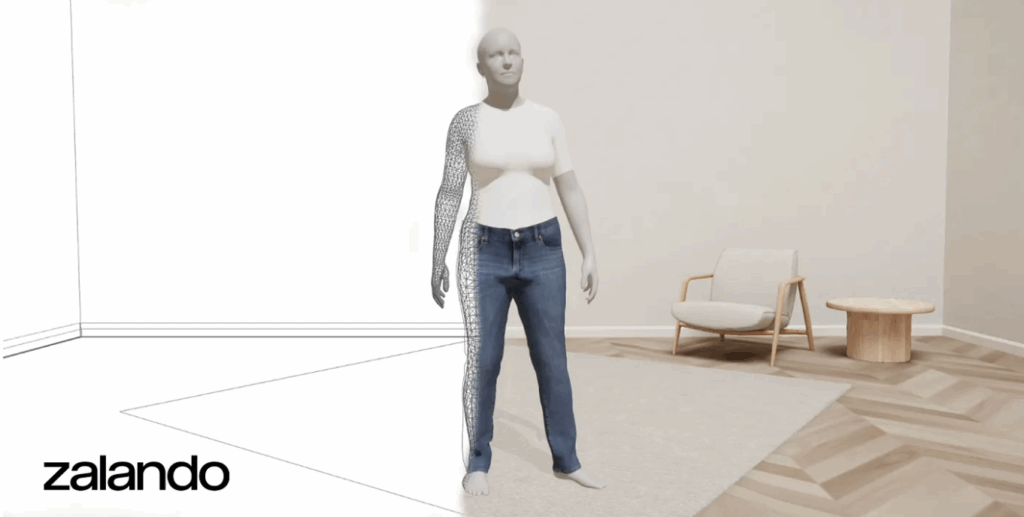
A compelling example is the visual fitting room by European e-commerce giant Zalando. Users can generate a personalized 3D avatar by entering basic measurements—such as height, weight, and gender—to preview how different sizes fit.

Zolando Virtual Fitting Room
source from Zalando Product Design on Medium

5. AI Personalized Fashion Shopping

AI personalized fashion shopping is transforming how shoppers discover and buy clothing online. Today’s shoppers demand much more than simple, generic recommendations.

By analyzing browsing behavior, past purchases, and style preferences, AI recommends outfits and accessories tailored to each shopper. This AI-driven fashion shopping personalization boosts engagement, increases conversion rates, and helps fashion brands connect with customers more effectively.

Stitch Fix, a leading personalized styling service, is already using AI to reinvent online style discovery. Its new beta tool,  Stitch Fix Vision, uses Generative AI to create personalized, inspirational images of shoppers wearing recommended outfits. 

By seeing themselves in different looks, customers can explore styles more intuitively and find pieces that match both their personal taste and current fashion trends.

6. AI in Fashion Marketing

As budgets tighten and customer acquisition costs rise, fashion brands are turning to AI to enhance every stage of the marketing process. By analyzing large volumes of audience and performance data, AI enables brands to make smarter, real-time decisions. 

By improving personalization, automating campaign and creative content production, and revealing richer customer insights, AI helps brands deliver more efficient and effective marketing results.

For example, Adidas has enhanced email marketing with AI personalization via Salesforce Marketing Cloud. It chooses the most relevant images and offers for millions of subscribers the moment they open the email. This allows Adidas to send highly tailored content all within a single global campaign.

7.  AI-Driven Supply Chain Optimization

AI is reshaping fashion supply chains by moving beyond task automation and into true decision support. Fashion brands can now use AI to predict issues, simulate scenarios, and optimize responses in real time. 

AI combines historical data, live inputs, and large-scale pattern recognition to make supply chains faster, smarter, and more resilient. Key applications of AI in supply chain management include:

  • Demand Forecasting: Uses real-time data and signals to produce highly accurate demand predictions, enabling businesses to plan proactively. 
  • Inventory Optimization: Calculates ideal stock levels across locations to reduce excess inventory while preventing stockouts.
  • Supply Network Optimization: Simulates routes and supply scenarios to improve delivery efficiency and strengthen resilience.
  • Decision Support: Provides a unified intelligence layer that automates workflows and recommends optimal operational actions.

H&M has improved its inventory system using data, real-time demand signals, and trend forecasts to align stock with what local shoppers actually buy. AI now guides product allocation and timing to reduce both overstock and stockouts. 

According to Daniel Erver, H&M’s CEO: “H&M’s improved operating profit margin in the fourth quarter (of 2024) was partially attributable to a better product assortment.”

8. Sustainable Fashion with AI

Sustainability is becoming a key focus in fashion, as brands face growing pressure to reduce waste and lower carbon emissions. 

By forecasting demand more accurately, AI prevents overproduction and excess inventory. In supply chains, AI identifies inefficiencies, suggests eco-friendly sourcing, and optimizes logistics to lower environmental impact. 

Together, these capabilities allow brands to make smarter, greener decisions while maintaining creativity and efficiency. 

To tackle excess inventory and waste, Levi Strauss & Co. uses AI-driven predictive forecasting and smart buying to better match production with market demand. Digital prototyping further reduces the need for physical samples, lowering material usage and environmental impact.

Risks and Ethical Boundaries

With AI fully integrated within the fashion industry, brands and businesses face a new set of risks that cannot be ignored:

Algorithmic Bias

AI models trained on image data can unintentionally reinforce damaging biases concerning body type, skin color, and cultural norms. 

If datasets are incomplete, skewed, or unauthorized, the result could be misleading trend predictions, incorrect sizing, or culturally insensitive content. Brands must proactively invest in bias detection and diversity measures.

IP ambiguity

The legal landscape is still catching up. Ownership of AI-generated content and the unauthorized use of images for training are significant and emerging challenges. 

Brands must select AI platforms that offer clear copyright policies and provide auditable generation steps to protect their assets.

Over-automation

Relying too heavily on AI for content production or decision-making risks a homogenized aesthetic. It can lead to misaligned product assortments and, critically, damage the unique identity that defines the brand.

Transparency Issue

Consumers, regulators, and creative professionals now demand transparency regarding AI use, whether it’s in product design or influencer marketing. 

In 2026, responsible AI adoption in fashion means establishing clear guardrails, actively auditing models, and ensuring AI enhances human expertise rather than silently replacing skilled teams.

Conclusion

The year 2026 marks the definitive moment when AI evolves from an optional feature to a fundamental power engine of the fashion industry.

Success belongs to those who treat AI as a core capability and embed it across fashion design, operations, and customer experience. Creativity will accelerate, processes will become more efficient, and consumer interactions will feel increasingly fluid, predictive, and personal.

For fashion brands, the next step is clear: experiment boldly, invest strategically, and begin integrating AI fashion solutions into the workflows that matter most. The future won’t wait—start building your 2026 AI advantage now.

FAQs

Can AI forecast fashion trends?

Yes. AI analyzes runway data, social media signals, sales history, and consumer behavior to predict upcoming styles and inform design, merchandising, and inventory decisions.

What’s the best AI fashion design generator?

The best generator depends on your workflow, but top platforms like Fashion Diffusion combine high-quality outputs, customization, and integration into existing design pipelines.

What are the fashion trends for 2026?

Minimalism, bold colors, and upcycled or recycled materials dominate, alongside tech-enhanced fashion like AR-ready garments and AI-assisted styling.

Avatar photo 通过Ethan Davis

Virtual Model AI for Fashion E-Commerce: Everything You Need to Know

When Louis Vuitton featured the virtual model Lightning in a campaign, it wasn’t a stunt. It was a clear signal that fashion is rapidly moving toward AI-powered modeling and visual production.

Today, virtual models are revolutionizing fashion e-commerce—enabling brands to generate on-model product images instantly, digitally fit clothing, and scale content creation without studios, logistics, or costly reshoots.

This article provides a complete guide to AI virtual models, covering what they are, how they work, their key benefits, and practical steps to create them.

What Is an AI Virtual Model?

Virtual Models AI for Fashion E-Commerce

AI Virtual Models form the digital foundation of visual content in fashion e-commerce. They are hyper-realistic, human-form digital assets created entirely by AI, designed specifically for the professional display of clothing and accessories.

Key Concept

An AI Virtual Model is a photorealistic, three-dimensional (3D) human likeness created using Generative Artificial Intelligence to replace live photoshoots.

Unlike traditional models, AI virtual models are fully digitized assets—from skin texture to every strand of hair. They’re not retouched photographs; they are infinitely customizable digital humans whose appearance, body type, pose, and expression can be adjusted on demand. 

Three Main Types of AI Virtual Models

Although all are digital human representations, virtual models generally fall into three key categories based on how they’re used in fashion:

1. Product Display Models

​​These virtual models are built to serve Product Detail Pages (PDPs) and large-scale e-commerce workflows. Their purpose is to showcase clothing accurately—capturing fit, drape, texture, and proportions across different body types and sizes.

They prioritize realism, consistency, and repeatability, without the need for personalities, stories, or social media presence.

2. Virtual Try-On for Customers

Virtual try-on (VTO)  allows shoppers to visualize how a garment looks and fits on their own body shape or a personalized digital double, often using Augmented Reality (AR) or AI body mapping.

The key value is 1:1 personalization and maximizing fit accuracy. This is a direct tool to boost purchasing confidence and reduce return rates. For instance, major platforms like Google Shopping have integrated VTO capabilities, allowing users to virtually ‘try on’ clothes directly within the search environment.

3. Virtual Fashion Influencers

These models act as digital brand ambassadors, designed for campaigns, storytelling, and social engagement. They are given distinct personalities, aesthetics, and narratives. The goal is to build audience affinity and community, giving brands a fully controlled representative who can appear in campaigns, videos, and influencer-style content.

One of the most globally recognized examples is Lil Miquela, a fictional, computer-generated influencer created by the robotics and AI firm Brud in 2016. With millions of followers on Instagram, she has successfully partnered with luxury brands such as Prada and Calvin Klein.

How AI Virtual Models Work

Understanding the mechanics behind AI virtual models is crucial for brands selecting the right content production strategy. Currently, two primary technological streams are used to create these digital assets: CGI and Generative AI, both offering different trade-offs in control, speed, and cost.

However, the efficiency, scalability, and lower technical barriers have made AI virtual modeling the dominant choice for high-volume fashion e-commerce today.

CGI Virtual Models

This method relies on Computer-Generated Imagery (CGI) and 3D graphics software. Professional 3D artists manually sculpt and texture the virtual model, creating a detailed digital skeleton (rig) and skin. The garment is either designed digitally or recreated from a physical scan, then digitally “dressed” onto the rig.

It offers the highest level of precision and control over every detail, ensuring perfect anatomical accuracy and lighting. However, the drawbacks are significant. The process is highly labor-intensive, requires specialized artistic and technical skills, and results in high upfront costs and slow production cycles.

AI Virtual Models

This is the cutting-edge method that makes virtual modeling accessible and scalable. It leverages advanced Diffusion Models to merge existing product images with generated human forms.

Unlike CGI’s reliance on manual 3D modeling, Generative AI uses Image-to-Image synthesis techniques to create the final visual. The central concept is the decoupling of the garment from the model. 

AI is extensively trained on vast datasets to understand textile behavior and how those textiles interact with the human form. When a user provides a flat-lay image and a text prompt, the AI performs two critical tasks:

  • Model Generation: Generates a high-quality digital human figure matching the user’s prompt (pose, light, and features).
  • Garment Fitting: It intelligently extracts the texture and pattern from the flat-lay image. Then it projects it onto the generated digital figure, adjusting for perspective and simulating realistic wrinkles and folds based on the model’s pose.
AI Virtual Model

Generative AI may occasionally require minor post-production cleanup and offers less absolute control than bespoke CGI. However, its advantages in speed, scalability, and cost-efficiency cement its status as the superior choice for high-volume fashion e-commerce today.

Benefits for Fashion Brands & E-commerce

AI Virtual Models aren’t just a new way to produce visuals—they solve long-standing challenges in fashion e-commerce, from production bottlenecks to consistency issues across SKUs. 

For brands managing large assortments or frequent drops, AI virtual models create a faster, more controllable, and more cost-effective workflow.

Operational Efficiency

The immediate gains from using virtual models are seen in the streamlining of the content production pipeline, directly addressing the pain points of physical photography.

Lower Production Costs

Virtual models remove many of the major expenses tied to traditional photoshoots—model fees, studio rentals, travel, and constant reshoots. Once the core digital model is created, producing new images becomes a predictable, low-cost process, especially for large catalogs.

Quick Turnaround Time

By eliminating the need for casting, scheduling, travel, makeup, and physical studio time, brands can generate thousands of modeled images in hours, not weeks. This speed allows for quicker reactions to market trends, inventory changes, and immediate product launches.

Full SKU Coverage

With a reusable virtual model, brands can generate on-model imagery for every item in the collection—including colorways, replenishments, and products still awaiting final samples. This solves the common problem of mismatched or incomplete PDP visuals during new drops.

Brand Visuals

Virtual models empower brands to deliver a more effective and ethical visual experience to their customers, directly impacting conversion and loyalty.

Visual Consistency

Virtual assets guarantee uniformity in every image. Lighting, angle, pose, and background can be perfectly replicated across hundreds of product pages. This gives e-commerce sites a cleaner, more professional look and builds greater trust for first-time buyers.

Inclusive Representation

Fashion Diffusion AI-Generated

Brands can easily adjust a virtual model’s body type, skin tone, and features to reflect different customer segments. This allows shoppers to better visualize fit and styling, which often leads to higher engagement and fewer returns.

Strategic Growth

Beyond operational gains, virtual models offer critical long-term benefits related to brand strategy and corporate responsibility.

Marketing Control and Safety

Brands maintain absolute control over the virtual model’s persona, eliminating the risk of reputational damage, social media scandals, or contractual issues associated with human influencers and public figures.

Sustainable Development

By reducing the need for travel, shipping samples, and physical resources, virtual content creation significantly lowers the brand’s carbon footprint, aligning with growing consumer demand for sustainable practices.

Creative Expression

Virtual environments are unconstrained by physics. Brands can achieve highly creative, hyper-realistic, or abstract visual effects, poses, and settings that would be either impossible or prohibitively expensive to capture in a physical studio.

How to Create Virtual Models Using FashionDiffusion.ai

Creating professional, photorealistic virtual models has never been easier. With Fashion Diffusion, fashion e-commerce brands can transform sketches, flat-lays, or product photos into on-model visuals in just a few steps.

Fashion Diffusion: Virtual Try-On

4 Steps to Create a Virtual Model

The process of bringing your apparel to life with AI is fluid and simple, designed to maximize both speed and creative control without learning curves:

4 Steps to Create a Virtual Model in Fashion Diffusion

1. Upload Source Image

Start by uploading your garment’s source image—whether it’s a standard flat-lay photograph or an existing model photo. The AI instantly scans and identifies the crucial clothing contours and fabric details.

With Fashion Diffusion’s image/text to sketch tools, even hand-drawn designs or just text descriptions can become professional assets—laying the groundwork for virtual try-on.

2. Select Your AI Model

Next, find the perfect model for your garment. Browse the platform’s diverse virtual model library, featuring various body types, skin tones, genders, and poses. Whether you’re showcasing casual wear or high-fashion collections, there’s a model to match every style.

For brand consistency, the Face Swap feature allows you to apply brand-specific facial aesthetics. You can also customize body shape, skin tone, and hairstyle, ensuring your virtual models reflect your target audience and diversity goals. All models are saved in your personal gallery for reuse in future collections, keeping visuals consistent across campaigns.

3. Apply Smart Masking

To achieve lifelike results, guide the AI using masking tools to lock the garment areas. The system then automatically optimizes alignment, ensuring natural folds, realistic draping, and zero awkward distortions.

This step guarantees that every on-model image looks authentic, giving your customers a clear view of fit and style, just like a professional photoshoot.

4. Generate AI Fashion Photos

Finally, hit “Generate” and watch the AI work its magic. The platform seamlessly combines your model’s pose, the clothing dynamics, and lighting settings to produce HD, photorealistic renders in seconds.

These images are ready to deploy across product pages, social media, or marketing campaigns. With FashionDiffusion, brands can quickly scale content production, showcase every SKU, and experiment with creative visuals without the costs or delays of traditional photography.

The Future of AI Virtual Models

AI virtual models are no longer experimental visuals—they are rapidly becoming the new standard for fashion e-commerce. Adopting AI virtual modeling today is not merely about cutting costs. It’s about future-proofing visual strategy and investing in the immersive, personalized shopping experiences that customers will soon demand. 

Looking ahead, the evolution of AI modeling will accelerate beyond static images. We anticipate a shift toward high-quality AI-generated video, personalized Virtual Try-On (VTO) experiences, and seamless integration into AR and the Metaverse. 

For fashion brands and e-commerce teams, now is the moment to build the foundation. Try Fashion Diffusion.ai to adopt virtual models without technical barriers—reducing production costs, accelerating launches, and expanding creative possibilities from day one.

FAQs

What is an AI virtual model?

An AI virtual model is a photorealistic digital human used to display clothing online, allowing brands to produce scalable, consistent on-model images without physical photoshoots.

What is an AI-generated influencer?

An AI-generated influencer is a computer-created personality that produces photos, videos, and social content, allowing brands to run campaigns without relying on real creators.

Are there any free AI fashion virtual model generators?

Yes. You can find AI tools that offer a free trial to generate virtual models for product displays, letting brands test outfits, build lookbooks, and create marketing visuals at no cost.

How are virtual models used for clothes and jewelry?

Virtual models display clothing and jewelry in realistic poses, helping brands showcase fit, styling, and details without physical shoots—ideal for e-commerce, lookbooks, and social campaigns.

How to make an AI virtual model?

You can create an AI virtual model by uploading reference images, choosing a base model, and customizing body type, face, and style using virtual try-on tools like FashionDiffusion.ai.

Avatar photo 通过Ethan Davis

AI Fashion Design: The Future of Creative Clothing Design (2025 Guide)

The fashion industry has always been synonymous with creativity, but as we step into 2025, a powerful new collaborator is reshaping the design landscape: Artificial Intelligence (AI). AI Fashion Design is no longer a futuristic concept; it’s a present-day reality that is fundamentally altering how clothing is conceived, designed, and produced.

This comprehensive guide explores the current state of AI Fashion Design, the essential tools available, key trends, and how designers can integrate AI into their creative workflow.

What Is AI Fashion Design?

AI fashion design is the use of artificial intelligence technologies—like machine learning, computer vision, and generative design—to assist or automate parts of the fashion creation process. Instead of starting from a blank sketchpad, designers can now collaborate with AI systems that generate new silhouettes, predict trends, or even simulate materials in 3D.

Common AI applications in fashion design include:

  • Generative AI tools that create design concepts and color palettes.
  • AI pattern-making systems that optimize fabric usage.
  • Trend prediction algorithms that analyze global data to forecast what’s next.
  • Virtual design studios that visualize outfits in real time.

AI doesn’t replace human creativity—it amplifies it. Designers gain more time for storytelling and innovation while AI handles repetitive or data-heavy tasks.

How AI Is Transforming Fashion Design in 2025

The year 2025 marks a critical inflection point where Artificial Intelligence (AI) ceases to be a novelty and becomes foundational to the creative and commercial success of the fashion industry. The transformation is defined by five synergistic shifts:

1. Data-Driven Creativity and Trend Mastery

AI acts as a tireless trend forecasting engine, analyzing massive, siloed datasets—from global runway archives and social media sentiment to minute-by-minute sales and search queries. This capability allows designers to move beyond mere intuition; they gain predictive mastery.

AI identifies emerging aesthetics and consumer desires with precision, ensuring that creative collections resonate powerfully with the market upon launch, minimizing commercial risk.

2. Radical Acceleration of Design Cycles

Design cycles that once took months can now happen in days. AI tools can instantly create dozens of mood board variations, sketch silhouettes, and even simulate how fabrics behave in motion.

This doesn’t just save time; it allows brands to react quickly to cultural shifts. Whether it’s a viral TikTok aesthetic or a new seasonal trend, designers can turn concepts into visuals in hours using AI outfit generators like Fashion Diffusion.

For independent creators or small labels, this speed levels the playing field—enabling them to compete with larger brands that once dominated production timelines.

3. Hyper-Personalization at Scale

AI fashion design is making mass personalization a reality. Instead of designing for general demographics, brands can design for individuals.

By analyzing a user’s preferences, purchase history, or body measurements, AI can generate personalized outfit recommendations or even custom clothing designs. This bridges the gap between creative vision and consumer demand—delivering pieces that feel uniquely “you.”

It also strengthens brand loyalty. When customers feel that a design understands their style, they’re far more likely to engage, purchase, and advocate for the brand.

4. Mandating Sustainable Innovation

AI serves as the industry’s most powerful ally in addressing the global sustainability crisis. It drives efficiency by optimizing fabric cutting patterns to achieve zero-waste layouts and streamlines supply chains to minimize carbon emissions. Furthermore, sophisticated generative models can simulate new, eco-friendly materials and rigorously test their durability and performance digitally, moving the industry toward a truly circular design process.

5. The Rise of Phygital Fashion and Virtual Commerce

Through AI outfit generators and increasingly accurate Virtual Try-On (VTO) experiences, customers can preview designs on personalized 3D avatars before making a physical purchase. This innovation significantly lowers return rates and aligns with the massive growth of digital fashion as a viable product category within gaming, Augmented Reality (AR), and metaverse ecosystems, blurring the lines between physical and virtual apparel.

Top AI Fashion Design Tools in 2025

The ecosystem of AI fashion tools is growing rapidly. Below are some of the most promising platforms in 2025 that empower designers and brands to innovate faster and smarter:

ToolCore Feature / StrengthBest For / Use Case
Fashion DiffusionText/sketch to photorealistic design visuals, virtual try-on, recolor, background changeAll-in-one AI design & marketing tool
The New BlackRapid concept generation and customizationDesigners creating original, brand-specific styles
Resleeve.aiPhotorealistic fashion visuals, brand-style trainingIndie designers & marketing visuals
CLO 3DTrue-to-life 3D garment simulation and fittingTechnical designers, pattern makers
BrowzwearEnd-to-end 3D workflow with accurate fabric physicsBrands focusing on production-ready 3D
BotikaAI on-model generation for e-commerce photosFashion retailers needing scalable visuals
YesPlzChatGPT-powered AI stylist & visual discoveryOnline stores optimizing user experience
DesignovelAI trend forecasting & design analyticsBrands using data to guide creative decisions
MakethedotAI-assisted pattern generation & gradingTechnical design and production teams
AbloCollaborative AI design platformStartups & co-creation teams
Vue.aiAI personalization, styling & virtual try-onE-commerce fashion platforms
HeuritechPredictive trend analytics from social dataTrend and merchandising departments
Lalaland.aiAI-generated diverse virtual modelsInclusive fashion e-commerce and campaigns
Reface AIFace-swap & digital modeling for campaign creationCreative marketing and virtual shoots
ArtbreederGenerative AI for creative concept explorationFashion concept artists & mood board ideation

Why Fashion Diffusion Leads the New Wave of AI Fashion Design

AI Fashion Design Tool | Fashion Diffusion

At the center of the next-generation AI design landscape, Fashion Diffusion stands out as a complete creative ecosystem built specifically for fashion designers, brands, and visual creators. It’s not just another AI generator—it’s a platform designed to accelerate every stage of the creative process, from concept to campaign.

Beyond visual generation, Fashion Diffusion also offers:

  • Text-to-Sketch & Sketch-to-Render: Turn text prompts or sketches into multiple design variations and photorealistic visuals within seconds.
  • AI Image Editing: Built-in tools for recoloring, background removal, model swap, and upscaling—ideal for e-commerce and social visuals.
  • Fabric Simulation: Upload fabric patterns or textures and preview realistic materials directly on your AI designs.
  • Virtual Try-On: Generate lifelike model shots, switch backgrounds, or test garments on different body types instantly.
  • Style Innovation & Fusion: Modify design strength or combine two styles to explore new creative directions effortlessly.

Fashion Diffusion helps creators design faster, visualize better, and reduce production costs—enabling a more efficient and sustainable fashion workflow.

How to Integrate AI into Your Fashion Design Workflow

Embracing AI doesn’t mean abandoning traditional design skills. It’s about blending creativity with technology. Here’s a practical roadmap to help you get started:

Step 1: Define Your Goals

Decide what role AI will play in your process. Are you using it for creative exploration, production efficiency, or marketing visuals? The clearer your goal, the easier it is to choose the right tools.

Step 2: Experiment and Iterate

Start small. Use tools like Fashion Diffusion to generate outfit ideas or test visual directions. Treat AI as a digital sketchbook—a space to brainstorm, not to finalize.

Step 3: Combine AI with Human Creativity

AI can generate ideas, but it’s your artistic vision that gives them meaning. Refine what AI creates. Adjust proportions, play with materials, and infuse emotion into the concept.

Step 4: Train AI on Your Brand Data

Advanced tools allow brands to “teach” AI their visual identity—from color palettes to signature silhouettes. Over time, the system becomes an extension of your creative DNA.

Step 5: Stay Ethical and Transparent

As AI becomes part of fashion storytelling, transparency matters. Disclose when AI is used in imagery or campaigns, and ensure that data sources respect copyright and diversity.

Now Is the Time to Embrace AI in Fashion

The global fashion market is more competitive than ever. Consumers expect innovation, personalization, and sustainability—all at once. Brands that integrate AI early will have a clear advantage: faster creativity, smarter insights, and deeper audience connections.

Whether you’re an established label or an emerging designer, AI fashion design tools like Fashion Diffusion can help you unlock creative freedom. With just a few words or images, you can visualize fresh ideas, explore new aesthetics, and bring your imagination to life.

FAQ

Can AI really design clothes from text prompts?

Yes. Modern AI outfit generators like Fashion Diffusion can transform short text prompts into detailed digital outfits within seconds. Designers can use these visuals for ideation, concept testing, or marketing campaigns without needing manual sketches.

What is the difference between generative AI fashion design and 3D simulation tools?

Generative AI tools (like Fashion Diffusion) create new design ideas, color palettes, and visual concepts from text or images.
3D simulation tools (like CLO 3D or Browzwear) focus on technical garment construction and virtual fitting.
Many brands combine both to move seamlessly from creative ideation to production.

Are AI fashion tools suitable for small brands or independent designers?

Absolutely. Many AI fashion design tools are cloud-based and affordable, making them accessible for small teams and solo creators. Tools like Fashion Diffusion and Resleeve.ai let emerging designers produce professional-grade visuals without expensive software or equipment.

Can AI replace human fashion designers?

No—AI can assist, but not replace, human creativity. It can analyze data and generate visuals, but true fashion design still relies on human intuition, cultural understanding, and artistic storytelling. AI is best viewed as a co-creator, not a competitor.

Where can I try AI fashion design tools for free?

You can experiment with Fashion Diffusion—an easy-to-use AI fashion design platform that lets you generate and refine digital outfits instantly. It’s ideal for testing ideas, creating campaign visuals, or speeding up your design workflow.

Avatar photo 通过Alexander Wilson

10 Inspiring Pop Style Fashion Trends from K-Pop to Streetwear in 2025

Pop style fashion has become a significant influence in the global fashion industry. From the vibrant aesthetics of K-pop to the dynamic energy of streetwear, pop culture has shaped modern fashion trends. In this article, we explore 10 inspiring pop style fashion trends and how Fashion Diffusion’s AI Fashion Design Tool helps designers and brands bring these trends to life efficiently.

Top Pop Style Fashion Trends

Inspiring Pop Style Fashion Trends

1. K-Pop Inspired Outfits

pop has turned fashion into a stage performance. Groups like BLACKPINK and BTS often wear custom pieces from brands such as Chanel, Dior, and Louis Vuitton during performances. Sequins, metallic fabrics, oversized jackets, and sneakers are now central to K-pop inspired fashion design.

K-Pop Inspired Outfits

2. Streetwear Meets Pop Culture

Streetwear now blends with anime, comic art, and gaming. Brands like Supreme and BAPE frequently collaborate with franchises such as Naruto or Marvel. Oversized hoodies, cargo pants, and graphic prints make these collaborations popular among Gen Z. This mix of streetwear and pop culture keeps designs fresh and widely recognizable.

3. Bright Color Blocking

Modern pop fashion trends often use strong contrasts. K-pop idols such as Red Velvet are known for outfits combining neon green with hot pink or red with cobalt blue during concerts. Color blocking is not limited to music idols—brands like Balenciaga and Versace also highlight this trend in runway shows.

4. Gender-Fluid Fashion

Pop fashion design is breaking gender rules. Idols like G-Dragon from BIGBANG wear skirts, oversized blazers, or pearl jewelry that blur gender lines. Luxury brands such as Gucci and Thom Browne promote unisex tailoring in their collections. This shows how pop culture in fashion design values freedom and inclusivity.

5. Retro 2000s Revival

Y2K fashion is back. Olivia Rodrigo and Dua Lipa have made crop tops, low-rise jeans, and shiny butterfly accessories trendy again. Retailers like Urban Outfitters and ASOS now sell capsule collections that directly reference the early 2000s. Nostalgia remains a strong driver of pop culture in fashion.

6. Layered Street Aesthetics

Layering is central to pop style clothing ideas. Artists like Billie Eilish often combine oversized hoodies, jackets, and baggy pants for her signature look. In Asia, layering jackets over hoodies with statement accessories is popular among streetwear fans in Tokyo and Seoul. This trend allows individuals to build flexible, unique pop style outfits.

7. Pop Icons as Fashion Symbols

Global stars influence collections worldwide. For example, NewJeans collaborated with Levi’s for its 150th anniversary, creating denim looks that went viral on social media. Similarly, BTS’s partnership with Louis Vuitton boosted luxury brand appeal among younger fans. These collaborations show how pop style outfits can shape global demand.

8. Bold Accessories and Statement Pieces

Modern pop fashion trends emphasize standout items. Rosé from BLACKPINK is known for pairing simple black dresses with oversized jewelry, while Travis Scott made chunky sneakers like the Nike Air Jordan 1 Cactus Jack iconic. Accessories define the outfit and often set new fashion waves.

9. Digital and Virtual Fashion

Pop culture in fashion design is entering the digital world. In 2022, Gucci launched virtual clothing on Roblox, and Nike introduced Nikeland for gamers to dress avatars in branded sneakers. Virtual fashion is now part of pop style clothing ideas, showing how Gen Z values digital identity as much as physical outfits.

10. Sustainability in Pop Style Fashion

Eco-conscious design is shaping pop fashion. Brands like Stella McCartney and Pangaia use recycled fabrics and eco-friendly dyes. In K-pop, groups like Twice have worn costumes made with sustainable materials during tours, highlighting how ethics and style can coexist. Pop style fashion is now linked with responsibility as much as creativity.

How Fashion Diffusion Transforms Pop Style Fashion for Brands

Fashion Diffusion is revolutionizing fashion design by providing brands with powerful AI tools to streamline the creative process. With its intuitive platform, designers can quickly transform concepts into market-ready visuals, enabling faster trend adaptation and more cohesive collections.

AI Fashion Design Tool | Fashion Diffusion

Core Features of Fashion Diffusion

Text-to-Sketch & Sketch-to-Render

Generate fashion sketches from text prompts or refine hand-drawn designs into polished digital illustrations. This accelerates the ideation process, allowing designers to explore multiple concepts rapidly.

Fabric Simulation

Upload fabric samples or textures to visualize them on your designs. This feature aids in assessing how different materials interact with various styles, enhancing the design’s realism.

Virtual Try-On

Create realistic model visuals by applying your designs to virtual avatars. This tool is invaluable for e-commerce, enabling customers to see how garments fit and move without physical samples.

Style Innovation

Experiment with design transformations using the Style Innovation slider. This feature encourages creative exploration and innovation.

AI Image Editing

Enhance your visuals with tools for background removal, recoloring, face swapping, and upscaling. These capabilities streamline the creation of marketing materials and product images.

Benefits for Brands to Use AI Fashion Design Tool

  • Accelerated Design Process: Reduce the time from concept to final design, enabling quicker response to emerging trends.
  • Cost Efficiency: Minimize expenses related to physical samples, photoshoots, and extensive revisions.
  • Enhanced Creativity: Access a suite of tools that foster innovation and experimentation within the design process.
  • Cohesive Collections: Maintain consistency across designs and marketing materials, ensuring a unified brand identity.

Final Thoughts

Pop style fashion is constantly evolving, shaped by music, street culture, digital trends, and sustainability. By understanding these key trends and leveraging tools like Fashion Diffusion’s AI Fashion Design Tool, brands can move faster from concept to collection, experiment with new styles, and create cohesive, market-ready outfits that resonate with global audiences.

Whether you’re drawing inspiration from K-pop, streetwear, or virtual fashion, integrating AI into your design workflow ensures creativity, efficiency, and relevance in today’s fast-paced fashion world.

👉 Explore Fashion Diffusion to turn pop style fashion trends into sellable products and elevate your brand with AI-powered design.

Pop Fashion Trends FAQs

What is pop style fashion?

Pop style fashion refers to clothing inspired by popular culture, music, and entertainment. It often includes bold colors, K-pop inspired outfits, and modern streetwear designs that appeal to younger generations.

How is K-pop influencing modern pop fashion trends?

K-pop idols such as BTS and BLACKPINK often wear unique stage outfits designed by luxury brands like Dior and Chanel. Their styles—oversized jackets, sequins, and bold sneakers—quickly become global pop style clothing ideas that fans adopt.

What are examples of pop culture in fashion design?

Pop culture influences fashion through collaborations and cultural references. For example, Supreme and Marvel, Gucci on Roblox, and NewJeans with Levi’s are examples of pop culture shaping fashion design.

How can brands create pop style outfits?

Brands can combine streetwear elements like hoodies and cargo pants with bold accessories, color blocking, or digital fashion designs. Adding sustainability, such as recycled fabrics, can also make pop style outfits more appealing to conscious consumers.

What are the key modern pop fashion trends in 2025?

The main trends include K-pop inspired fashion design, gender-fluid styles, Y2K revival, bold accessories, layered streetwear, digital fashion, and sustainable pop style clothing ideas.

Avatar photo 通过Ethan Davis

The Complete Guide to Pop Style Fashion in 2025: Trends, Design, and AI Innovation

Pop style fashion is one of the most dynamic segments of the fashion industry. It constantly changes with music, entertainment, and digital culture. In 2025, it is more than just a clothing trend—it is a global movement that combines creativity, technology, and cultural influence.

This guide explains what pop style fashion means today, the latest modern pop fashion trends, how pop culture shapes design choices, and how AI is transforming pop fashion design.

What is Pop Style Fashion?

Pop Style Fashion

Pop style fashion is rooted in visual impact. It embraces bold colors, playful patterns, and innovative silhouettes. Unlike traditional luxury fashion, which often focuses on heritage or craftsmanship, pop fashion design reflects what people see and hear in pop culture—celebrity outfits, music videos, and viral internet trends.

Typical elements of pop style clothing ideas include:

  • Graphic prints with cultural references.
  • Shiny and metallic fabrics, often used in performance wear.
  • Bright neon or pastel color palettes.
  • Oversized or exaggerated cuts that break away from formal structure.
  • Fun and expressive accessories, from chunky sneakers to statement jewelry.

Pop style fashion is not limited to youth culture—it appeals to anyone who wants to experiment, stand out, and express individuality.

2025 Modern Pop Fashion Trends: Whats In Now

This year’s pop style fashion draws inspiration from global runways and pop culture events. Four key trends stand out, each bringing a unique energy to the fashion landscape.

Feather Accents: Soft yet Bold

Feathers are making a strong return in pop fashion design. They add both drama and elegance, fitting perfectly into the expressive nature of pop style clothing.

  • Cultural Impact: Feathers symbolize freedom, lightness, and celebration—qualities people gravitate toward in uncertain times. Global pop stars often appear on stage in full feather outfits, turning concerts into visual spectacles.
  • Daily Wear Adaptations: Instead of head-to-toe feathers, everyday looks focus on subtle accents. Feather trims on denim jackets, feather earrings, or small feather appliqués on skirts are trending.

Stripes: Flexible and Structured

Stripes remain a core element of pop style fashion in 2025, but with more creative applications. Once limited to casual T-shirts, stripes now appear across dresses, tailored suits, knitwear, and even statement coats.

  • Why Stripes Work: They provide structure and balance in fashion, symbolizing order in a fast-moving world. Stripes also adapt easily across formal and casual looks.
  • Runway Inspiration: Designers are experimenting with asymmetric stripe placements, layered textures, and mixing wide and narrow stripes for fresh effects.

Leather (and Vegan Alternatives): Edgy and Versatile

Leather is back as one of the boldest modern pop fashion trends, but 2025 emphasizes sustainability and experimentation. Instead of traditional black leather, designers are introducing color variations and ethical materials.

  • Material Shift: Vegan leather, plant-based alternatives, and recycled leather are increasingly common, aligning with sustainability goals.
  • New Pop Palette: Red, tan, pink, and even metallic shades expand beyond black, adding vibrancy to pop style clothing ideas.
  • Styling Balance: Leather pairs well with softer fabrics like tulle, chiffon, or cotton to create contrast and versatility.

Y2K Revival: Bold and Nostalgic

The Y2K trend continues to dominate in 2025, blending early 2000s nostalgia with modern reinterpretations. Celebrities like XG and Tyla showcase Y2K-inspired outfits in music videos, fueling its popularity across global audiences.

  • Signature Elements: Low-rise jeans, neon crop tops, metallic mini skirts, shiny vinyl fabrics, butterfly motifs, and layered chains.
  • Cultural Relevance: Y2K fashion resonates with younger consumers through its playful, rebellious energy, while older generations enjoy the nostalgic connection.

Share Hailey Bieber’s Instagram post.

Pop Culture in Fashion Design: The Driving Force

The connection between pop style fashion and pop culture is unbreakable. In 2025, designs don’t just take inspiration from culture; they are a direct response to it. The rapid pace of modern media means that a single moment can launch a new trend overnight. This makes staying connected to the cultural pulse more critical than ever for designers.

Music Festivals and Celebrities: Trend Catalysts

Global music festivals are now fashion laboratories. At Coachella 2025, Lady Gaga’s dramatic lace gowns pushed romantic pop looks into the spotlight, while Jennie from BLACKPINK revived grunge-inspired leather outfits with a modern twist. These performances set the tone for upcoming collections, blending stage-ready drama with elements wearable in everyday life.

Jennie from BLACKPINK revived grunge-inspired leather outfits

Celebrity Influence on Pop Fashion

Celebrities remain the strongest ambassadors of modern pop fashion trends. Lisa’s Y2K-inspired sequin sets went viral on TikTok, driving renewed demand for shiny fabrics and bold silhouettes. Meanwhile, Laufey’s Chanel chiffon gowns introduced softer, ethereal aesthetics to pop style fashion. Each public appearance becomes a reference point for designers and fans, fueling micro-trends that spread across markets.

The Power of Social Media: The Shareable Aesthetic

Social media has transformed how trends spread. A single photo or video can reach millions, making trends hyper-fast.

  • “Shareable” Looks: In 2025, pop fashion design focuses on creating “shareable” looks—outfits with unique textures (like feathers or metallics) and eye-catching colors that stand out in a crowded feed.
  • Micro-Trends: Social media is the birthplace of countless micro-trends. Designers must monitor these fleeting trends to remain relevant. A style that goes viral on TikTok might influence a major brand’s next collection.

AI Innovation in Pop Fashion Design

Artificial intelligence is not just a tool; it is a creative partner that is transforming pop fashion design. AI is changing everything from how ideas are generated to how clothes are marketed, making the industry faster and more creative than ever before.

1. Generative AI: The New Design Assistant

Generative AI is a key technology for pop fashion design with an AI generator. These tools, like Fashion Diffusion, can create new visuals from simple text prompts.

Rapid Prototyping

Designers can input keywords like “neon green bomber jacket with pixel art” to get dozens of unique design ideas in minutes. This process, known as rapid prototyping, helps designers explore a wide range of concepts much faster than with traditional sketching.

Creative Inspiration

AI can combine different styles and elements in ways a human designer might not think of. For example, a designer can ask an AI to blend the aesthetics of 1990s anime with modern street style to get fresh, unexpected results. This helps break creative blocks and push boundaries.

2. Virtual Try-On and AI Models

AI is also revolutionizing how brands present their clothes. This technology improves the shopping experience and reduces costs.

Virtual Try-On

AI-powered virtual try-on tools allow online shoppers to see how a garment will look on their own body without leaving home. This reduces the number of returns and gives customers more confidence in their purchases.

AI Fashion Models

Brands are using AI to create realistic fashion models for their websites and social media. This allows them to showcase new collections instantly without expensive photoshoots. Brands can also create a diverse range of models to appeal to a broader audience without the logistical challenges of a traditional photoshoot.

3. AI as a Trend Tracker

To keep up with the pace of pop culture, designers are increasingly relying on AI. These tools provide real-time insights that were previously impossible to gather.

Real-time Analysis

AI can analyze millions of social media posts, news articles, and search queries in real time. This allows it to identify emerging patterns and predict new trends with high accuracy. A designer can use an AI tool to track how a specific celebrity look is being received, what accessories people are pairing with it, and in which regions it is gaining traction.

Data-Driven Creativity

AI provides data on trending colors, silhouettes, and themes, helping designers create collections that are both artistic and commercially successful. The combination of human creativity and AI-powered data is the future of pop fashion design.

Benefits of Using AI Tools in Pop Fashion Design

AI is transforming how designers and brands approach pop style fashion. With trends shifting faster than ever, AI tools bring speed, flexibility, and creative support to every stage of the design process.

  • Faster Design Iteration: AI allows designers to generate multiple pop style clothing ideas within minutes. This makes it easier to react quickly to viral trends and cultural shifts.
  • Data-Driven Insights: AI scans social media, runways, and consumer behavior to identify modern pop fashion trends. Designers gain clearer direction instead of relying only on intuition.
  • Cost and Sustainability: Digital prototypes reduce the need for excessive fabric sampling. This cuts costs and supports sustainable design practices.
  • Creative Freedom: AI generators encourage experimentation with bold colors, textures, and fabrics. Designers can explore options that would be time-consuming or risky to test manually.
  • Personalization and Marketing: AI makes it possible to tailor looks for different audiences while ensuring designs remain aligned with pop culture in fashion design. The visuals are also optimized for social media, increasing shareability.

Start AI Pop Fashion Design With Fashion Diffusion

With Fashion Diffusion, designers can:

  • Turn simple sketches into high-quality pop fashion visuals instantly.
  • Experiment with feathers, sequins, leather, and chiffon without physical samples.
  • Generate AI try-on images to test looks on models and share directly on social platforms.

This enables brands to move from cultural inspiration to production-ready designs in days instead of months, keeping pace with the fast-changing world of pop fashion.

Conclusion

AI Fashion Design Tool | Fashion Diffusion

Pop style fashion in 2025 is a fusion of culture, creativity, and technology. Designers draw inspiration from music, digital platforms, and global movements, while AI tools accelerate design, trend prediction, and sustainable practices.

For brands and independent creators, adopting AI in pop fashion design is becoming essential. It not only supports creativity but also helps them stay competitive in an industry where trends shift quickly.

To explore how AI can enhance your pop style clothing ideas, try Fashion Diffusion —a platform that helps you design, test, and experiment with AI-powered pop fashion design.

FAQs about Pop Style Fashion

What are the main features of pop style fashion in 2025?

Pop style fashion is defined by bold colors, oversized silhouettes, metallic fabrics, and references to music and digital culture. It blends retro nostalgia with modern AI-inspired elements.

How is AI changing pop fashion design?

AI tools allow designers to generate designs instantly, predict fashion trends, and experiment with styles digitally. This reduces cost, speeds up the process, and supports sustainable development.

What are popular pop style clothing ideas for everyday wear?

In 2025, sequined tops, holographic skirts, oversized jackets, retro sneakers, and neon accessories are common pop style clothing ideas adapted for daily outfits.

Why does pop culture play such an important role in fashion?

Fashion reflects culture. Pop artists, viral social media trends, and entertainment industries influence what people want to wear. This makes pop culture a direct driver of fashion design.

Can small designers use AI pop fashion design generators effectively?

Yes. AI tools lower the entry barrier for independent creators. With AI generators, small designers can create professional-quality pop style clothing ideas, experiment with unique prints, and market their collections quickly.

What role does sustainability play in pop style fashion?

Pop fashion is embracing sustainability through recycled textiles, plant-based fabrics, and digital-first design processes that minimize waste. AI helps by simulating design choices before production.

Avatar photo 通过Sophia Mille

AI Fashion Design: How Fashion Diffusion is Transforming the Fashion Industry in 2025

Traditional fashion design has always been time-consuming, costly, and resource-heavy. From hand-drawn sketches to physical prototypes and expensive photoshoots, the process demands both time and budget.

Fashion Diffusion changes this. As an all-in-one AI fashion design platform, it empowers designers, brands, and creative teams to design faster, reduce production costs, and unleash unlimited creativity. By integrating AI-powered tools like text-to-sketch, sketch-to-render, virtual try-on, and AI-driven image editing, Fashion Diffusion is not only optimizing workflows but also enabling sustainable and scalable fashion innovation.

What is Fashion Diffusion?

AI Fashion Design Tool | Fashion Diffusion

Fashion Diffusion is a comprehensive AI fashion design platform that combines multiple AI-powered tools into a single ecosystem. Instead of using separate apps for sketches, rendering, try-ons, and editing, you get everything in one place:

  • AI-powered image editing (background removal, recoloring, face swap, HD upscaling)
  • Fabric visualization & application tools
  • Virtual try-on for e-commerce and design testing
  • Creative AI features for innovation

Key Features of Fashion Diffusion

Fashion Diffusion offers a range of features that make it stand out in the AI fashion design space. Here are some of its key capabilities:

1. Text-to-Sketch (From Idea to Draft in Seconds)

Simply type a description like “a bohemian maxi dress for a summer evening on the beach” and let AI instantly generate multiple fashion sketches. This tool helps designers brainstorm faster, test different styles, and save hours of manual sketching.

2. Sketch-to-Render (Turn Drafts into Polished Illustrations)

Whether it’s a hand-drawn sketch or a digital draft, the Sketch AI tool transforms it into a refined, high-quality fashion illustration. Designers can experiment with different fabrics, textures, and styles—without going through multiple manual revisions.

3. Apply Fabric (AI-Powered Fabric Simulation)

Upload a fabric sample or texture, and Fashion Diffusion will apply it directly to your clothing design. This is particularly useful for fabric suppliers and fashion houses who want to visualize collections without producing physical samples.

4. Virtual Try-On (Reinvent Fashion Visualization)

Upload a flat design or rendered outfit, and the platform creates realistic model try-on visuals. It even supports:

  • Changing models
  • Face swapping
  • Background replacement

This drastically reduces photoshoot costs while offering e-commerce brands and designers new ways to showcase collections.

5. Style Innovation (Push Creative Boundaries)

Style Innovation: Control the degree of design transformation—from subtle changes in color to complete structural reimagination—with a simple slider.

6. AI Image Tools: Background Removal, Recolor, Upscaling & Face Swap

  • Remove Background + Upscale: Clean product photos in one click and upscale them without losing quality.
  • Recolor / Change Background / Swap Face: Ideal for marketing, product catalogs, and personalized campaigns.

    This makes Fashion Diffusion not only a design platform but also a content creation powerhouse for fashion marketing teams.

How Fashion Diffusion Compares to Other AI Fashion Tools

In the competitive world of AI fashion design, Fashion Diffusion stands out for several reasons. Unlike some other tools that may require technical expertise or offer limited features, Fashion Diffusion is designed to be user-friendly and accessible to designers of all levels. 

The Benefits of Using Fashion Diffusion

So why should you choose Fashion Diffusion over other AI fashion design tools? Here are some of the key benefits:

Time Savings

Fashion Diffusion can save you up to 5-7 hours on each design. The AI generates multiple design options in seconds, allowing you to quickly iterate and refine your ideas. This means you can focus more on creativity and less on the technical aspects of design.

Cost Reduction

By using Fashion Diffusion, you can reduce your production costs compared to traditional workflows. You can eliminate the need for expensive photoshoots, models, and physical samples, making fashion design more accessible and affordable.

Enhanced Creativity

The AI-powered tools in Fashion Diffusion inspire creativity by offering fresh ideas and new styles. You can easily blend different textiles, experiment with colors and patterns, and push the boundaries of your imagination. This helps you create unique and innovative designs that stand out in the market.

Sustainability

Fashion Diffusion contributes to a more sustainable fashion industry by reducing waste. The virtual design and prototyping process allows you to test and refine your designs digitally, minimizing the need for physical samples and reducing material waste.

Other AI Fashion Tools – A Broader Landscape

Based on industry compilations and comparisons:

Resleeve.ai

Known for high-quality virtual model images and background tools. It’s frequently cited alongside Fashion Diffusion for on-model imagery without the need for photoshoots.

Modelia

Specialises in realistic 3D garment visualization on virtual models—especially strong in prototyping and lifelike previews.

Trend Forecasting & 3D Prototyping Tools

Platforms like Stylumia, Heuritech, Makemode, and others deliver trend analysis, 3D modeling, and virtual prototyping capabilities. These are aimed at supply chain optimization, forecasting, or 3D design rather than full creative workflows.

Open-Source Generative Models

Solutions like Stable Diffusion are highly flexible and customizable—popular in design circles but often require technical setup and lack fashion-specific interfaces or templates.

Comparative Snapshot

Tool / CategoryStrengthsLimitations / Notes
Fashion DiffusionAll-in-one, fashion-oriented tools + marketing assets; time & cost efficientFully integrated—ideal for end-to-end workflows
Resleeve.aiStrong virtual try-on & imagery generationSpecialized scope
ModeliaRealistic 3D garment visualizationFocused on 3D model output
Trend Forecasting ToolsOffer trend insights and 3D prototypingOften lack sketching/rendering or virtual try-on features
Open-source models Customizable, flexible generative powerRequires technical expertise; less streamlined for fashion workflows

Conclusion:The Future of Fashion is AI-Powered

Fashion Diffusion is not just a tool—it’s a creative partner that helps designers, brands, and retailers thrive in an AI-driven industry.

With faster workflows, reduced costs, sustainable practices, and limitless creativity, the platform empowers anyone to design smarter, market better, and innovate faster.

🚀 Ready to revolutionize your fashion workflow?
Start today with Fashion Diffusion and see how AI can transform your fashion journey.

AI Fashion Design FAQs

What is AI fashion design?

AI fashion design uses artificial intelligence to generate, enhance, or optimize fashion concepts, sketches, fabrics, and product visuals—saving time, cost, and resources.

How does AI fashion design compare to traditional fashion design workflows?

Traditional fashion design requires manual sketching, sampling, and costly photoshoots. AI fashion design tools like Fashion Diffusion cut down time, reduce costs, and allow rapid experimentation with digital clothing prototypes.

How can AI tools benefit small fashion brands?

AI reduces reliance on costly photoshoots and physical samples, helping small brands create professional visuals with minimal budgets.

Can Fashion Diffusion be used for e-commerce?

Yes. The virtual try-on and AI photo editing tools make it ideal for online stores needing product images, lifestyle visuals, and campaigns.

Do I need design or AI experience to use Fashion Diffusion?

No. The platform is beginner-friendly and built with simple controls, allowing anyone to create professional-grade fashion designs.